Review: Fallout 76: A Good Start

It seems that I’ve started most of my recent reviews this way, but the Fallout universe has a special place in my heart. I came of age in the late 90’s, and isometric RPGs were my video game of choice (surprised?).

I spent countless hours playing and replaying Fallout, Fallout 2, and Fallout: Tactics (I even played Fallout: Brotherhood of Steel, despite its many flaws). I lamented when the “Van Buren” project was cancelled and rejoiced when Bethesda announced Fallout 3. The nostalgia factor and fanboyness runs high with this title, so be warned.

And here we are now with a new offering in the Fallout universe, one that divurges greatly from that to which we’ve become accustomed. Multiplayer. Is it the Holy Grail of Fallout gaming, a despicable money-grab by Bethesda in recycling the core of Fallout 4, or something about which we should feel a little bit less extreme and a little more ambivalent?

Multiplayer is a strange thing for me. As an introvert, I’m far more inclined to adventure by my sullen self than to link up with some randos who do or say things that do not recommend themselves to further association. The anonymity of the internet, and multiplayer games, draws out the worst in people. I just don’t have time for that in my life.

On the other hand, playing video games with people I know and have built relationships with away from the glow of the LEDs is something I very much enjoy. In this hectic world, online gaming is sometimes how I best keep up with certain friends–we play and we converse while we play. Maybe it’s the modern equivalent of those long telephone calls I used to have in high school, before texting made such obsolete for high-schoolers.

I love open world video games and the hours of exploration that come with them–truth be told, that’s probably my favorite aspect of video games altogether, though at any other moment in time I might say that it’s strong and meaningful narrative, a well-crafted story.

I’ve had the pleasure of spending hours walking through the West Virginia wasteland as a lone wanderer and as part of a team with my friends–even a complete four-person team. None of us have had the time to hit the “end-game” activities yet, and I’m not fully certain what they are at this point. Did I mention I lived in West Virginia? Only for about two years when I was in kindergarten and first grade, so my memories of that part of my life are fragmented and vague, but this perhaps adds another touchpoint for me.

Okay, background to review complete. Now on to what you really came here for:

The Good

Fallout 76 is like getting a whole ‘nother Fallout 4 worth of locations to explore. That alone piques my interest.

There are new enemies (Mole Miners, Radtoads, Gulpers, the Scorched, and more), new weapons (my favorite for its weirdness is the “death tambo,” a tamborine with the cymbals replaced with blades) and a greatly-expanded crafting system.

The use of SPECIAL and hot-swappable Perks is a lot of fun and allows for a lot of different character builds–both within one character and those that necessitate running multiple characters for different SPECIAL arrays. The theorycrafting of character builds fascinates me in Fallout 76, much moreso than any other MMO-style game I’ve played.

Fallout 76 is, by default, like “Survival Mode” in previous Fallout titles. Not only must you manage your health and radiation levels, but you must manage hunger and thirst, disease and mutations! Your gear deteriorates relatively quickly, so keeping things maintained and finding plans to build new equipment or CAMP (the mobile equivalent of a settlement) items gives the player a lot to do without even interfacing with the quests. These needs create emergent narrative, the kinds of stories that begin, “So no shit, there I was, knee-deep in spent brass and hand -grenade pins, having drunk my last purified water and then a Deathclaw shows up.” I love that, even if no one else wants to hear my stories–especially my wife.

The consequences of dying are scaled well–you lose the junk you’ve been carrying but not all of the other precious items you’ve spent so much time finding or building. If you’re fast enough (or there are no other players around), you can return to the site of your death (if you dare) and retrieve these parts. There’s a cost, sometimes fairly steep, but not one that makes you want to ragequit anytime you die. Good job on this balance, Bethesda, that’s not an easy thing.

Another well-thought out idea is that you can change the sex and appearance of your character at any time. A minor thing for some, but a great convenience for those who may want to change up their character’s visuals every so often.

The Bad

If you’re reading reviews of Fallout 76, you’ve likely come across the complaint that it “feels empty.” I think that that’s a misleading statement (there’s another Location to scavange over every crag and just a short ways down every road), but it’s true that Bethesda’s choice not to include human NPCs in the game is a massive let-down. The self-conscious weirdness of characters in Fallout is one of the main draws, and finding the corpses of these characters and listening to holotapes to give you their background just doesn’t match encountering and dealing with the characters in life.

Yes, this simplifies a number of things for the designers: there’s no need to craft dialogue trees, to manage faction reputation, to deal with conflicting narratives and closing off certain quests to certain players, etc. But it misses one of the best parts of Fallout.

At least Bethesda had the good sense to write the narrative around this concept–there is a reason everyone in West Virginia is dead. But the idea that this approach accentuates player importance by making every living human you encounter a PC just doesn’t work. Quite the opposite, in fact, as it deprives players of a sense of agency. There’s no one to really save, no cause or ideal to support, no settlement or character to get attached to (as much as is psychologically healthy for a fictional character, I suppose). There’s no choice between the Minutemen or the Brotherhood of Steel or the Enclave or the Institute. There’s no choice of dialogue options. There are choices in branching quest lines. There are no choices.

As with any online game, you also have to deal with the jerk gamers on occasion–and they are legion. I’ve gotten into several PVP situations and had about half of them also involve the other player sending me insulting messages over Xbox live and other assorted jackassery. That is, I suppose, unavoidable.

The Ugly

Bethesda stubbornly resists logical physics in a number of ways. No, I don’t mean the super-sciency stuff, I can suspend disbelief for that. But despite many games in this series, Bethesda still thinks the average rifle weighs about 20 pounds (unless the weight units are not pounds–I’m honestly not sure). This is somewhat mitigated by the starting carry weight without penalty being 150 lbs (and Perks that allow certain items to be reduced in weight by up to 90%), but the numbers in weights across the board still bother me. I’m trying to remember back to Skyrim about whether this applies to their concept of medieval weapons as well (a real two-handed sword should weigh between about 3 and 4 pounds–though the massive zweihander could weigh 8 or 9, that’s a very specialized weapon for a very particular purpose and was used in the fashion of a spear as much as a sword).

There are a number of bugs in the game, some leading to program crashes, others causing questlines not to advance, items to suddenly disappear or other minor but infuriating issues. I have not found a glitch that restarting the program (or just logging out and back in) hasn’t fixed.

Hope for the Future

Bethesda has indicated that they intend to support Fallout 76 for the long haul. What exactly that means is unclear, but I assume that it means something like Destiny 2–at least a few years of support with new DLC quarterly or so.

If that’s truly the case, Fallout 76 could have legs–provided that Bethesda has realized that it needs to add human NPCs and everything that comes with that (factions, etc.). If not, it’ll be fun while it lasts; maybe it will tide me over until Fallout 5.

Types of Evil (or at Least Antagonists)

This post could just about as easily be a theological one, but since I’ve come to these ideas in working on Avar Narn, I figured they’re better suited to being addressed to the writers out there–anyone who wants to extrapolate into the realms of spirituality and morality is welcome of course.

As an opening, let me first say that it is difficult to write an “evil” character, whether major antagonist or supporting character. It’s difficult because few things in the world are black and white, so a character that isn’t nuanced in his/her morality isn’t believable in stories that intend to maintain verisimilitude. On an obviously allegorical, mythological or moralistic tale, there’s a lot more leeway for capital “E” evil characters. But that has its own bag of tropes and expectations tht I’m not going to address here.

Instead, I’m going to try to put together a few general categories of character types we might describe as “evil.” I think we (myself included) are quick to use terms like “bad guys” when we mean “antagonist” in the more literary criticism sense of the term. That’s probably something we should all be careful of. That said, on to some gross oversimplification that I hope will nevertheless prove useful:

(1) Capital “E” Evil
This is the character who just wants to watch the world burn, who enjoys inflicting suffering for suffering’s sake, who exists to malign and misuse everything around him for the sake of just that.

As such, this should also be the rarest kind of evil in fiction, becuase it’s the hardest kind to get right. I think that there are two subtypes to be thought of here.

The first is cosmic evil–that kind of supernatural evil that is unknowable in its reasoning or motivation. Think Lovecraftian horror. We sidestep the major problem here by positing that we just can’t understand this evil. It just is. Particularly in fantasy, we can often get away with this, but it requires special suspension of disbelief or extra worldbuilding to swing. Even then, we’ve created a de facto villain that is really only interesting in an existential sense.

The second type is the corrupted individual. What we need, I think, to make this work is a believable backstory. Nobody begins that way, so we need an explanation as to what suffering the person has gone through to mold him into this type character.

This runs two ancillary risks, however. The first is that in describing said backstory, we humanize the character to the point that he no longer really fits into the Capital “E” Evil category. The second is that we turn our story into an analysis of the nature of evil. That can be an enthralling type of tale, particularly if the “evil” character is the protaganist of the story.

(2) Mistaken Beliefs
This subgroup belongs to those characters who honestly believe that they are doing the right thing while they commit atrocities the rest of us would find blatantly evil.

There are plenty of real-life examples to draw upon here to make the argument concisely. Take the Islamic State for example. Adherents to this would-be theocracy believe that they are practicing true Islam while murdering the innocent. This is an extreme case that can be attributed to any radical/fundamentalist religious group–Christians who kill doctors who perform abortions, for example. If you truly believe that God (or gods) demanded it and that makes it right, it’s easy to justify your actions.

Next, think of the person gripped by psychosis such that they are driven by an irrational belief that they cannot bring themselves to disavow. This is a particularly moving type of antagonist because they are driven by an affliction and not by their own agency–we can’t actually morally blame those who aren’t in control of themselves. This gives us a good opportunity to explore our “hero’s” approach to evil–is she only interested in ending threats or is she interested in redemption? What does she do when that redemption isn’t something she can achieve.

There are plenty of “lower magnitude” mistaken beliefs that make interesting villains. Les Miserables’ Javier is an excellent example–a man so overcommitted to his idea of “justice” that he cannot allow himself any mercy. This type of extremism in belief is all around us–just listen to how some people think we should fight the “War on Terror” or what we should do to criminals.

We can also extend this to what in the law we would consider a “mistake of fact.” When the antagonist believes that the protaganist is a villain who must be stopped, for instance. Yes, the antagonist’s belief is untrue, but if it were true would we think of the antagonist as a “good guy?”

A brief aside here: what if the protaganist is acting immorally? Watching a character spiral out of control is heck of a dramatic ride, and testing a character’s willingness to act as he says he believes is a classic conflict to explore.

Mistaken identity (along with the particular of being falsely accused) is one of the great archetypal plots, one which fits directly into the mistake of fact.

(3) The End Justifies the Means
This is a commonly-used type of antagonist, perhaps because it’s so relatable. The constant moral choice that faces all of us in life is whether we’ll sacrifice our values to get what we’re after. The only difference here is one of scale. For the sake of drama, the means to achieve the end must be dire–the determination of life and death, or the fates of many. For what profiteth it for a man to gain the world but lose his soul?

One of my favorite examples of this type of evil is the Operative from Serenity. The Operative is a man who accepts that he does evil things, but he is sincere in the belief that it will bring about a better galaxy (which perhaps makes him fall under (2) as well). In fact, he views his sins as a form of sacrifice–he does the unspeakable so that others don’t have to. There is a sort of nobility to his principles, even if they are ultimately wrong. And, for those of you who prefer your characters to wear capes rather than swords, Batman isn’t far off here, either. In fact, I’d say that Batman and the Operative have far more in common than we should be comfortable with if we’re going to call one “hero” and the other “villain.”

Speaking of Batman, most vigilantes fit into this category. Because we love it when the bad guys get theirs, even when they get it in a way that requires a sacrifice of our values, this can be a popular protagonist as well–think of the Punisher.

I would wager that most of our favorite anti-heroes fall into this category as well–it’s their beliefs and the willingness to risk for those beliefs that make them heroes, but the way they go about pursuing the fulfillment of those beliefs that adds the “anti-.”

(4) Honor and Identity
This is perhaps a subcategory of “Mistaken Beliefs,” but it’s a significant-enough subtype that it deserves its own treatment.

People do evil things in the name of maintaining honor all the time. As a student of history–and particularly the medieval and Renaissance periods, the first examples that pop into my mind are the duel and the vendetta. I’ve recently read a book called Mad Blood Stirring: Vendetta and Factions in Friuli in the Renaissance, which reinforces the connection for me. But Renaissance Italy is not the only honor culture known for the tit-for-tat systemic murder that defines vendetta–the Hatfields and McCoys come to mind in slightly more recent history.

And, of course, we could discuss “honor killings” in certain Middle Eastern or South Asian cultures (though, to be fair, the Napoleonic Code also permitted a husband to kill an unfaithful wife and her lover, and even in American law a murder is often considered manslaughter when a husband kills his spouse after finding her “in flagrante delicto.”)

Honor cultures and actions taken under the justification of defending one’s honor are typically about maintaining a sense of identity–either one of purity or of strength (or perhaps both). The ideology of the honor culture says that if one does not maintain honor, one will be viewed as weak and will be taken advantage of by the rest of the culture.

And defending one’s sense of identity is a strong motivator, one that can create fascinating internal conflict, because it can be the conflict between internal belief and external pressures of society. For instance, “I believe that I should show mercy, but my culture tells me that I am not a man if I do not take vengeance.” Powerful stuff.

Honor, of course, is not the only identity-related factor that can lead a character to become “evil” or antagonistic. The need to belong to something greater than oneself is a fundamental human motivation, on that can lead to similar conflict between the will of the individual and the will of the group. Is there a story about gangs that doesn’t include this plotline? What about cults and religions (which takes us back to (2))?

(5) Cross-Purposes and Limited Resources
I don’t have to explain that characters don’t have to possess malicious intent to be antagonists. The world has a habit of pitting humans against each other by its very nature–or at least tempting us to work against instead of with one another.

The core of successful narrative is conflict, and all it takes is characters who want things that are opposed (or even better, mutually-exclusive) to create such.

This suits certain types of stories especially well–the noir and anything else that might be considered “gritty” immediately come to mind. The story doesn’t need to be one of moralistic pedantry, though one must be careful not to let ambivelence about morality become relativism (at least I’m going to moralize on that point).

The Game of Thrones novels come to mind, as does Abercrombie’s First Law books. The political intrigue inherent to both puts POV characters at odds with one another, certainly giving us occasional “villains,” but not as a central theme of the stories.

But this type of conflict does not just suit the morally-ambiguous; it plays well to analysis of morality. I’m going to turn here to my favorite atheist philosopher (and one of my favorite storytellers), Joss Whedon. He’s been quoted as saying, “If nothing we do matters, the only thing that matters is what we do.” As an existentialist theologian, this freedom to create meaning when meaning is not thrust upon us is a core concept to me (but not one we’ll discuss here). Likewise, when the there’s no clear “good and evil,” we must judge the morality of the characters by the choices that they make. This can, of course, be easily combined with all but (1) above.

The conflict within a character of wanting to do the right thing, but perhaps being unwilling to pay the cost to do so, is a conflict we can all relate to. I’m inclined to argue that there is nothing in the craft of fiction so real as this. If you want your writing to have that air of verisimilitude, readers will suspend disbelief for a lot of things when the characters seem lifelike and complex to them. That’s not an excuse to write fiction that is sloppy except for the characters.

That, I think, is why I’m personally drawn to “gritty” stories. They’re rich with meaning.

(6) Inanimate Evil

I include this mostly as a footnote becuase it needs little explanation. This is the classic “(wo)man versus nature” story, where an uncaring and unresponsive natural force (i.e. the elements) forces a struggle for the protagonist to survive.

Conclusion

This list is, of course, not exhaustive. Each category has subcategories and nuances to be explored (and isn’t that one of the great joys of writing?). More general categories could be appended to this. When I think of them, I’ll post an update. I’m also inclined to write more about creating the types of characters that fit into (5), or at least stories of ambivalent morality–that is, dispassion on the part of the narration about moral judgment, leaving such a task to the reader. For now, this seems sufficient.

RPG Design Journal #2: ANRPG’s Core Mechanic

For the first post in this series, click here.

Previously, I pontificated on my prefered particulars for an RPG ruleset for Avar Narn. If it’s been a short while since that first post, that’s not because I haven’t been working on the system–it’s because (as intimated in that first post) I spent a good deal of time working on a 3d6 core mechanic. Before returning to a dice pool mechanic.

What I’ve chosen is a d10 dice pool system, not unlike (in several ways, at least) the Storyteller system. Here are the particulars:

(1) A pool will typically be between 1 and 10 dice, with both Attributes and Skills rated between 1 and 5.
(2) The size of the dice pool may be modified up or down, but only by factors inherent to the acting character, such as injury. Dice pools may only exceed 10 when supernatural effects are in play.
(3) The “standard” target number for each die is 8, but this may be modified to 9 for disadvantageous circumstances or to 7 for advantageous ones. Each die meeting or exceeding the target number will count as a “hit.”
(4) Any die that rolls a 10 will count as two “hits.”
(5) The amount of “hits” needed to succeed at a task is called (for now, at least), the Threshold. Threshold is always between 1 and 8, with 1 being easy and 8 being near (but not) impossible. Anything that would be “very easy” isn’t worth rolling for and anything that would be “impossible” shouldn’t be rolled either–as common sense would dictate.

I’ve selected the above rules for the core mechanic in part because I like how the statistics work out. There’s enough granularity for a step up or down in dice to be a palpable change, for advantage/disadvantage to be important but not overwhelming, and steps within Threshold seem to have the right about of change to percentage success as well. It took the addition of rule (4) above to make the statistics work like I wanted to (I think–see previous comments on the importance of the feel of the statistics over the actual statistics). I must credit that idea to the fact that I’ve been reading the Wrath & Glory RPG recently (review on that in the near future).

We need to add a few additional interpretive aspects to the core mechanic to round out its effectiveness.

Particularly, an approach to “failing forward” and “success at cost” as well as a “margin of success” or “failure” in general.

Before any playtesting or development of subsytems, I’m thinking the following: If the roll generates a number of hits that is three or lower than the threshold, the roll is either outright failure or success at a major cost (depending upon consequences and narrative necessities). If the number of hits generated is only one or two lower than the Threshold, this should probably be a success at a minor cost. Remember this must be subject to what makes sense in the narrative. Sometimes it’s good to fail outright. Note also that this means that rolls with a Threshold between one and three are not going to fall into the “success at major cost” under these guidelines. I like to think of this as the “aim small, miss small” principle from The Patriot.

This can be flipped around for degrees of success as well. Reaching the Threshold exactly is success without any additional effect and extra hits can be viewed “success and a side benefit.”

Of course, some subsystems (like combat) will use the hard number of hits generated to determine degree of success or failure.

I’d like to come up with a good way to have the dice give some additional information aside from success or failure–like the “boons” and “banes” of the FFG Warhammer 3rd Edition dice. Using 1’s for negative effects seems a no-brainer, but with 10’s already counting as two hits, I’m not yet sure what I would do to balance for positive happenstance.

One thought I’m toying with is to have some of the dice differently colored (one in the first color, two in the second color and the rest in the “standard” color). This could allow the use of those three dice to be interpreted for particular other information in the roll if appropriate. The set up also allows us always to roll those three dice–if your dice pool is only one or two, you just look to the dice of the appropriate color for counting hits. Not sure if this extra complexity will be worth it, but it’s somethign I’m thinking on.

I’m also heavily leaning toward the idea of “dice bidding.” This mechanic allows the player to sacrifice dice from her pool to be counted as extra degrees of success if she meets the Threshold. It’s a classic risk versus reward mechanic, which I think fits thematically in the grit of Avar Narn.

I’ll be adding a resource to allow characters to purchase successes on rolls when they really need it, more on this to come.

With this core development in place, the next thing I’ll be doing is running an analysis on what kind of developed subsystems I think are necessary to give the game the right focus and feel.

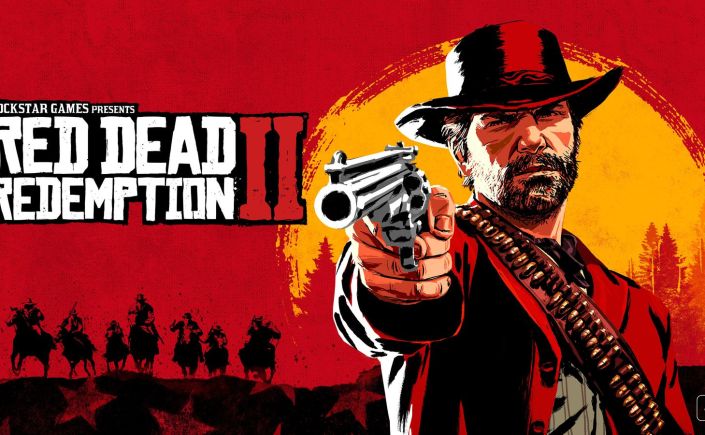
Red Dead Redemption 2 Review: Your Own Private WestWorld

I ride up to the crest of a hill, my trusty mare stamping at the earth as we come to a stop. Across the valley (modeled after Colorado, it seems), a stagecoach pulls into view, rolling down the deep ruts of a well-traveled road, unaware of the danger that awaits it.

I check my pocket watch. It’s right on time, like my informant at the train station promised. Through binoculars, I can see two men riding atop the wagon, one driver, one riding shotgun. A few riders flank the vehicle, rifles in hand.

Nothing too serious. With the right tool, I’ll make quick work of the guards and the driver. If my lock-breaker won’t do the trick, a well-placed stick of dynamite will open the strongbox that holds my reward. I just need my lever-action rifle to kick things off, the one I’ve customized with dark wood covered in dark leather, black metal accented with gold engraving.

Unfortunately, I have to open up a menu and scroll through more than a dozen longarms to get what I’m looking for. It’s a game, so maybe I could live with that, but I’m tacitly asked by to ignore the massive hammerspace my horse must have in the invisible quantum field that surrounds my saddle. Having to choose what to take with me when I leave camp would have been far more interesting.

That’s been my experience of the game in the (frankly embarrassing) amount of time I’ve spent on it. Things seem great until the game’s systems ruin the immersion with rigid, often-nonsensical responses.

On an HD TV and and Xbox One X, the game is stunningly beautiful–except for the people. Their expressions are just a bit much, their faces waxen and on the wrong side of the uncanny valley. Not too beautiful, but still inhuman.

The physics of the game veers from the believable to the frustratingly sudden. I’ve lost a number of horses (typically after reaching the max level of bonding–and thus unlocks–with them) to having them suddenly run headlong into trains or wagons (after I’ve jumped onto said train or wagon). Likewise, in the midst of thrilling chases, I’ve been launched ragdoll-like, my horse crumpling beneath me on some unseen sharp edge of the terrain.

But it’s not the physics of the game that really destroys the immersive potential. It’s the asininity of subsystems of the game that infuriate. For a game about the last outlaws of the Old West, it makes little sense to include an “Honor” system that rewards not doing many of the game’s draws–robbery, theft, gunfights and bucking the law. What’s worse, the Honor system has nothing to do with getting caught by others. Even without witnesses, you lose Honor for looting a body or taking something that’s not yours. That’s not fun.

This is exacerbated by the fact that “restoring” or improving your Honor to a high level (where there are in-game perks) is tedious and uninteresting. Help people in radiant events while traveling, kindly greet all the people you come across, perform repetitive and dull chores (“move this from here to there” in camp). There’s nothing interesting about being a white-hat in the game except for mechanical benefits. Being a roleplayer first and foremost, I see that as exceptionally bad form in design.

The “law enforcement” system also makes little sense. There is one fun/interesting aspect: witnesses to crimes will try to run away and contact the sheriff or other members of “the Law.” You can chase them down and threaten them to keep them from tattling. Unfortunately, everything’s downhill from there. The witnesses don’t actually have to run to a specific point to summon the Law–once they make it far enough, they simply disappear to be replaced by lawdogs.

The excitement of this is further diminished by a number of other flaws: rob a store and an alert automatically goes up to the law when the robbery begins (unless you’re robbing a business’s secret side business). Wearing a mask only slightly delays identification of you as the perpetrator, even in a place where no one should know your name. Of course, if you can evade fast enough, you can leave the scene of the crime, hide out for a few minutes, and come back like nothing ever happened. Without changing your appearance.

Be identified while committing crimes and a bounty will be placed on your head–this bounty increases for each infraction, but killing an officer of the law only raises it by $20. According to the internet, the 2016 value of that amount is about $2,891.65.

If your bounty gets high enough, bounty hunters will start to seek you out–though they appear randomly and without cause for being able to track you down in the wilderness. Of course, you can avoid this by going to any Post Office and paying off your accumulated bounty. Apparently the Old West works off of the ancient Germanic weregild system rather than 19th century American justice.

This is complicated by the fact that many of the “iconic” outlaw activities of the Old West net very little income compared to bounty you’re likely to generate during the activity. For instance, robbing a train got me about $100 in goods and cash while generating a bounty of $380 for defending myself from the near-instantaneous onslaught of lawmen from their hiding places in the wilderness where they must have been waiting for just such an offense to occur.

Playing the game, I can’t help but compare it to WestWorld. The game seems more like an Old West themepark than any verisimilitudinous experience. Scripted actions, often clearly weighted toward “game balance” rather than any sense of authenticity serves as a constant reminder that the whole thing is a conceit, a game. NPCs are robotic and caught in activity loops, wooden and predictable. Actions have only short-term consequences before everything is reset to its “natural state.”

The story missions are mostly good and the characters within Dutch van der Linde’s gang have at least a modicum of depth–though most of the dialogue is canned and you have very little opportunity to control Arthur Morgan’s treatment of his companions (which, again, makes the Honor system seem arbitrary and ridiculous).

Red Dead Redemption 2 is being hailed as a massive success in open-world gaming, but I just can’t agree. The game doesn’t do anything that Witcher 3 didn’t do better–and more believably. And when a fantasy setting feels more real than a pseudohistorical one, its hard not to think that the creators have strayed pretty far from the goal.

Is the game fun? Yes, yes it is, but only as a game. Does it feel like the systems of Grand Theft Auto have been conveniently ported to the Old West without much scrutiny. Yep. If you’re looking for immersion that gives you an easy time imagining yourself in Arthur Morgan’s shoes, you’ll find ocassionally satisfying bits (particularly while hunting, where animal behaviors are linked to some real-world expectations–at least in terms of diurnal/nocturnal cycles) but you’re ultimately going to be disappointed. I don’t regret picking up the game (even in limited edition at full price) and I have enjoyed the time I’ve spent on it, but I just can’t help but feel that the game could have been much more.

I’ll probably keep playing it for the time being to kill time, but not without the feeling that I could be employing my time to higher and better purpose. If I manage to finish it before Fallout 76 drops, then I’ll finish it. If not, I doubt I ever will. Certainly not in the near future given the games set to release before the end of the year or in 2019.

42

Maybe Douglas Adams was right when he wrote that “42” was the answer to “Life, the Universe and Everything.” Personally, I lost interest in the “everything is meaningless and isn’t that funny?” game about four books in, but after this weekend, maybe I have a newfound respect for the author.

My dad has been invested in Kairos Prison Ministry for a few years now. About a year ago he told me that he’d be leading one of the Kairos weekends in November 2018 and asked if I’d participate. I said I would and mostly forgot about it until trainings began a few months ago.

If you’re not aware, Kairos International is ministry that equips Christians to carry out “Kairos Weekends” in prisons across the world. For us, that meant about four hours inside on this past Thursday, about twelve hours inside each on Friday and Saturday, and about eight hours inside yesterday. It is an intensive program first and foremost designed to communicate the love of Jesus Christ to inmates through the actions of the faithful who volunteer with the program.

Thursday night is largely an introduction. A lot of the volunteers had been involved in Kairos for years, but for those of us who had never been, we did not know what to expect. It was my first time to set foot inside a prison.

And, of course, for the inmates involved, they have no idea what to expect when the weekend starts. Our Kairos Weekend was the third to be held at the Jester 3 unit here in Fort Bend County. Jester 3 is a relatively laid-back prison (as far as they go); inmates are sent to Jester 3 primarily either because they have medical issues or because they are taking college courses through the programs offered at the site.

Most of the men have been incarcerated in other prisons within Texas, many of them much harder on the inmates than Jester 3–not only because of the Correctional Officers (COs) but because of gang activity, drugs, and violence within the prison itself. I heard some stories from the men about their previous experiences that made me feel like Piper in the first episodes of Orange is the New Black.

And Jester 3 is not without its fights, rivalries, disputes, and dangers for the men inside–not to mention the shame and guilt, rejection, isolation and worthlessness felt by those who are incarcerated no matter the location.

So, on Thursday night, it’s understandable that many of the men came in with their “shields up.” Because of their backgrounds and their experiences in the system, they’re used to viewing all (or nearly all) relationships as transactional–everybody’s out to get something for themselves in every association with another person, and nothing’s ever offered for free. It was plain on some of the faces that there were those who did not want to attend, and I later heard from a few of “my guys” that they almost didn’t come at all.

My understanding is that Jester 3 houses somewhere between 1200 and 1400 prisoners. Only 42 were selected to come to our Kairos Weekend after submitting applications (though there were a few who had applications anonymously submitted on their behalf!). Of those eighty-something men who had participated in the previous Kairos Weekends, about fourteen of them served their brothers in the latest weekend, bringing out food and drinks, working with outside volunteers on logistics, and generally making sure everything went smoothly.

Most of the men had heard something about Kairos before the weekend started, but like so many things that are deeply significant in our lives, those who had come before couldn’t explain what they’d been through–it had to be experienced. Accordingly, what most of the men knew about the program was that it was something to do and that the food was good (it was, and it offered the inmates food from the free world that they rarely or never had access to in the commissary or the chow line). There were fresh fruits and vegetables–a rare delicacy in prison–over 1000 cookies (I don’t want to think about how many I ate in those four days), and meat that wasn’t pork. The guys put ranch dressing on everything. As it turns out, the commissary used to sell it, but when the system switched to a cheaper (and not very tasty brand) the inmates stopped buying, so the commissary stopped carrying it altogether.

I think I mentioned in a previous post that part of our preparation (in addition to the four training days) was the writing of a letter to each participant. For efficiency, we wrote the bodies of the letters in advance. Friday night after the program we went home and added personal details and messages to eight of the forty-two (the six guys who were in our “family” for the weekend and the two for who we were personal greeters and hosts), addressed and signed all of them, and put them into envelopes. We couldn’t do this until Friday night because the roster is subject to change up to that point (not to mention that the names given to us on the prison’s official roster are not always how the men want to be called).

In prison, mail call is a big deal. It is tangible evidence that the outside world hasn’t forgotten you, that there are still people who care about you and who are willing to have a relationship with you after you have been labeled “criminal.” But I’m getting ahead of myself.

The weekend itself is a collection of talks and meditations, followed by discussion time, fellowship at meals, and singing of hymns (often with silly hand motions or dances: flapping of arms and “flying” around the room for “I’ll Fly Away,” and a number of moves for that painful classic, “Pharaoh, Pharaoh”).

As I alluded to above, there are six men from the inside in every family, along with one clergyperson (if possible) and two lay volunteers. The talks are intended to guide each participant into asking questions to develop an understanding of self, that God is love and that they are all worthy to be forgiven of their pasts and to be called God’s children, and to equip them to develop spiritually and to build a community on the inside that centers around living in love and following Christ. It’s a lot to pass on in a weekend, even if it is a longish and intense one. And that’s what the volunteers are there for: to demonstrate God’s love for them.

At first, it’s a confusing and disorienting thing to be confronted with. One of my guys kept telling me that he just couldn’t believe that someone (especially young-ish like myself) would take the time from the things I could be doing to come inside and spend time with them. They had to let their guard down to accept that kind of acceptance and treatment–its nothing short of miraculous to watch.

We ask them to share about themselves and to open up, but there are certain things we don’t ask–why they’re in, how long they’re in for, and the like. Quite frankly, it just doesn’t matter. Not once did I really find myself wondering why any one of the guys had been incarcerated. That kind of willingness to be accepting was strange to me when I experienced it, even when I always considered myself a pretty accepting person in theory.

I notice that I’m putting a lot of words on the screen and probably not saying too much. I’m certainly not conveying the depth and profundity of the experience and the extent to which I myself have been changed by the experience. I left the experience yesterday with sadness that it was over, and the feeling that I’d become brothers with the men at my table over the weekend. We plan to write one another and I hope to be able to visit them.

I was told before the weekend that I’d get more out of it than I put into it. That certainly proved to be true. As my writings likely suggest, I’m typically a cynical, sarcastic and skeptical person in many things. My experiences inside a prison with men who had been waiting to be able to let their guard down, who wanted to have faith in God and that love was the answer to the lives they’d been living (which, if we’re honest with ourselves, could be a life any of us could have been born into or could stumble into on our own), and who had courage to do things that were existentially frightening to them (like forgiving people against whom they had long held grudges), refreshed my faith in humanity and my faith that God can redeem and refine any person no matter who they are. I was put face-to-face with the reality that all people have real value, that people can change and that our existence was created in such a way that the selfless love demonstrated by Jesus Christ is the most joyous state of being there is. In the free world, those opportunities for our hearts to be “strangely warmed” (as John Wesley put it) often seem few and far between. This weekend, that feeling set in early Friday morning and still hasn’t worn off. I see clearly why my father is so passionate about this ministry.

It didn’t hurt that the volunteers who came in with me (most of whom are my father’s age) provided both examples of men of faith and stories about how God had worked in their lives.

If you have the opportunity to participate in Kairos (whether the original version of the program for incarerated men or Kairos Outside for the female family members and loved ones of incarcerated men), I cannot recommend it highly enough.