Christianity and Fallout (Part 2: Redemption Stories)

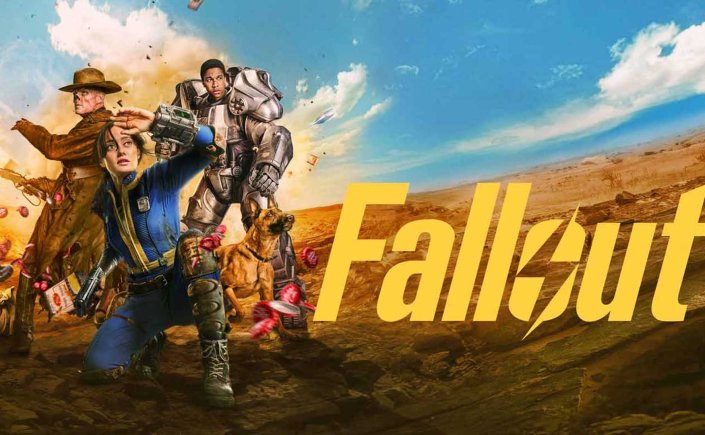
Let’s start with a warning: if you haven’t played Fallout 4, or watched the TV show, this discussion may not make a lot of sense. I chose characters from 4 and the TV show in the expectation that the greatest amount of people were likely to have played that game, if any of them, or to have become interested because of the television program. Also, of course, spoilers for both the game and the show, so if you’re not caught up, you might want to avoid this post until you are.

The Fallout world is full of redemptions, both minor and major, amongst characters you encounter and those you only hear about. I think it would be difficult to avoid these kinds of stories–a post-apocalyptic world certainly carries the atmosphere of a fall from grace, and the struggle to survive in light of scarce resources and centralized civilization or authority begs the question of what people are and are not willing to do to others–and for what purposes.

I’m interested in examining some of those stories here, but not in some allegorical way. I don’t think you find any analogue of a sacrificial Christ in the games or the TV show (maybe there’s an argument based on your choices at the end of Fallout 3), but that’s just fine. In fiction, I’m more interested in investigations into the human experiences and struggles relative to morality and redemption than in having a symbolic retelling of the truth I already believe in (sorry, C.S. Lewis).

Hancock (Fallout 4) – The Redeemed Rogue

As one might expect for Fallout, this example’s a little ragged around the edges, as Hancock remains a somewhat questionable character given his prediliction for violence resolutions and, if you are persuaded that drug use is inherently immoral, add that to the mix. Maybe that’s why I’m starting with him: to show that, as is often the case in real life, redemptions are not black and white, and no human (or ghoul, as the case may be) becomes perfect. We do well to remember that all of our mortal heros have their moral failings.

Nevertheless, I think there’s a credible redemption story for Hancock. If you’re not familiar with Hancock’s back story, or need a refresher, here it is. Hancock was the younger brother of Mayor McDonough in Diamond City; he left Diamond City when he failed to stop his brother from expelling all of the ghouls. He became a drifter and a heavy chem user, eventually landing in Goodneighbor, a town ruled by a mobster. Hancock tried to get some of the displaced ghouls from Diamond City to take refuge in Goodneighbor, but this didn’t work out as well. The mobster in charge of Goodneighbor, Vic, ruled as a tyrant, allowing his goons to torment civilians for fun. Hancock witnessed these goons murder a fellow drifter and failed to intervene, further driving him into despair. It was this despair that drove him to take a unique chem that gave him the best high of his life and turned him into a ghoul. In conversation, he’ll tell you he’s happy he’s a ghoul now because he didn’t want to see his old face in the mirror ever again.

When Hancock came to from his bender, he was in The Old State House in Boston next to some of the clothes from the historic John Hancock–this is when he took on the name by which he is known. Returning to Goodneighbor, he organized a massacre of Vic and his goons before taking over the government of the settlement himself, where he seeks to protect those who need protecting under the maxim, “Of the people, for the people!”

In a certain sense, Hancock’s redemption has already occurred by the time you meet him. One of the reasons he chooses to accompany you in the wasteland is to avoid letting the power of his mayorship corrupt him into becoming the tyrants he finally found the strength to fight against. If you peek behind the scenes to the in-game actions that award you affinity with Hancock, it’s almost entirely about protecting the innocent or weak (with a smattering of delivering wasteland justice to those who would prey on them). His journey is not about discovering right from wrong–he knew this from the beginning. His redemption is about believing in his own agency to do something about the injustices of the world.

Hancock’s redemption is, tangentially, about the turning away from sloth. Although this category of cardinal sin formulated by the early church varied in its specific meaning from one theologian to the next, I think it’s safe to settle on two parts to the idea–particularly if we go back to the original word used, acedia. The term means either an apathy toward God and God’s desires for us or a knowledge of what is just and right but a reluctance to work for those things. As usual, I have some caveats. First, we must be careful in using this category, because there are places of significant overlap with mental health struggles, particularly depression. Second, when, as in Hancock’s case, the issue is a lack of courage or self-confidence rather than a desire to do what is just, I think we need to keep some charity in mind for the frailties of the human condition. This latter point, is exactly what I think Hancock’s “redemption” tells us.

In a game in which you play the redoubtable hero, expected to overcome any violent encounter, trap, puzzle, or ambush, the primary question is not about what you can accomplish (at least not in the long-run) but the choices that you make. Hancock stands as a reminder that that’s not the case for everyone. It’s not the case for the vast majority of us, especially when acting alone.

In the present time in the U.S., I think we can sympathize with both fear of standing up for justice and a lack of confidence in one’s ability to actually make a difference against the tide of hate, selfishness, greed, corruption and anti-democracy that has taken hold in this country. When ICE seems to be able to kill peaceful protestors with impunity, when trumped up charges are brought against political enemies and dissidents, when due process has been ignored and the rights of the people trampled upon, the danger of standing up for justice has become palpable in a way that I have never before seen in my lifetime. The dangers faced by the heros and advocates of the Civil Rights movement are the closest I can think of.

Had you asked me a decade ago, I would have foolishly thought that we (at least most of us) had moved beyond such discrimination, hatred, and exclusion as those faced by Black Americans, indigenous persons, people of color, members of the LGBTQIA+ community and all others who have been discriminated against because of race, ethnicity, nationality, skin color, gender, sexuality, self-expression or religion. But even now, Governor Greg Abbot and his cronies raise the old canard about “Sharia law coming to the U.S.” and the pathetic assumption that any organization related to Islam must be linked to terrorism so that they may use governmental power to deprive real people of real rights that they are guaranteed under our Constitution.

Both the costs of and the need for action in the pursuit of justice are very real in this country–and undoubtedly elsewhere abroad. Hancock’s redemption is about willingness to take the risks to make change, however, small, because it is the right thing to do, despite it not being the easy or safe thing to do.

To be clear–as is hopefully obvious to those who have read much of this blog, or even the first post in this series–the analogy and example ends where Hancock uses violence to achieve his ends. Morally, I do not believe that violence and evil can be truly defeated with more violence and evil. Pragmatically, violent protest in the U.S. would feed into the narrative that those in power want us to believe about those who are standing up to the totalitarian tactics of ICE and protesting the other outrageous actions of the current government and escalate conflict in an unproductive way. I think we’ve seen that non-violent protests where the protesters accept their vulnerability (despite it not being just that they should need to do so) and that have used creative tactics rather than aggressive ones (I think of the inflatable costume protests in Portland calling to attention the utter surreality and nonsense of the beliefs and actions of anti-immigration apparatus) have been most effective.

For me, my return to this blog is in part my attempt to do something, however small, to push back for justice. It is my hope that I can help lay out a Christian theology that wholeheartedly rejects the actions of those who are doing evil in our country without rejecting the people themselves–a hard line to walk, I fully admit. But, let’s onward to continue the point of this post in particular.

Cait (Fallout 4) –

Fallout 4’s Cait is a redemption story that follows all of the usual tropes–but it’s also the one that potentially hits closest to home. Here’s the recap:

Cait was born into an abusive family that tormented her until she was 18, and then sold her into slavery. That the designers made her Irish seems a low blow and a lazy stereotype given her story. As a slave, Cait was used for the “entertainment” of the slavers, only adding to the already significant emotional trauma she must’ve experienced as a child. She eventually bought her way out of slavery, tracked down her parents, and murdered them. She then became a cage fighter and a drug addict in attempts to stave off her pain, developing the tough outer shell to protect a fragile interior that makes her believable as a character despite the stereotypes. She is also the most sexualized character, or at least the one who makes the largest number of comments with innuendo (sometimes not so subtle); for someone who has come to view relationships as transactional, this rings true.

On its surface, Cait’s companion quest is about getting clean; you’re tasked with taking her to Vault 95, which possesses a machine that can remove even her deep-set addiction. But it’s not really about that, or at least not only about that. Your assistance of her in a time of need gives her, at least in theory, someone who cares for her without expecting something in return. It’s the first non-transactional relationship she’s experienced, and it shows her something about the world that she had stopped believing was true or possible. That, experiencing love (I mean this more in the sense of philia or agape than eros, despite her being a romanceable character), is her redemption.

I admitted that Hancock’s redemption, as I argued it, wasn’t really a sort of salvific redemption. Is Cait’s? I’d argue that it is, or at least the start of one. Let’s start with what I call the “transitive property of love.” That is, if God is love, and one knows love, then one knows God. Usually, I use that as an argument that people who practice love have a share in God’s redemption whether or not they speak particular words about what they believe theologically. Here, though, let’s flip this. If a person has never known love, real love rather than affection doled out as a means to an end, have they ever known anything of God? If there is no belief in the possibility of love, can there be a possibility of belief in God? Imagine the profundity of such despair if you have not experienced it directly; there are undoubtedly those who have suffered such a fate. Now imagine that someone breaks through the armor you’ve donned to protect you from such despondence and plants the seeds in your imagination of a world full of love instead of dark. Such an experience must necessarily be transformational. A theologian or biblical scholar would call this transformation metanoia.

Cooper Howard/The Ghoul (Fallout TV)

Now we get to what I think is the most interesting example. This could be a matter of my esteem for Walton Goggins as an actor, or it could be because the more traditional narrative format makes this arc easier to see. Maybe its that we’re getting to watch it unfold in realtime. Maybe, and this is what I’ll stick with, it’s because Cooper Howard’s story–provided the writers stick the landing–has a poetry to it that sings a harmony that suits me on some level.

Before the Great War, Cooper Howard is an idealist. He’s a war hero, an American patriot, an example of the American dream, and a man of principles. We watch as his naivite sloughs off and those principles are challenged. His wife, Barb, is instrumental in his fall. First, she convinces him to star in commercials for Vault-Tec. This is already a compromise of his values, as he’s never worked in advertisements before–and admits that he’s only doing it for Vault-Tec because his wife asked him to. As Charlie Whiteknife introduces him to Moldaver, the facade of the American ideal begins to crumble. At the same time, as he learns about Barb’s role in Vault-Tec, and Vault-Tec’s own plans, any hope of returning to the good ol’ American cowboy retreats from sight.

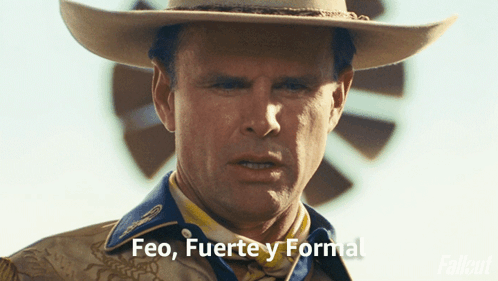
Two examples of the “poetry” (or at least good writing) in the story here. First, when Cooper is filming the movie scene in which he reluctantly shoots the bad guy instead of arresting him, pay attention to the short speech he gives: “Feo, fuerte y formal…it means he was ugly, strong, and had dignity.” (This phrase comes from what John Wayne wanted inscribed on his tombstone, which itself creates some interesting connections we won’t explore here). This is exactly what Cooper becomes when he transitions into The Ghoul. Dignified, yes, but also morally questionable (if not deplorable, which seems to be Lucy’s point of view), having lost all of the ideals he held as a human.

Second, the conversation between Barb and Cooper in the hotel after Cooper’s meeting with Robert House. He questions whether Barb was always a monster or became one working for Vault-Tec. When he incredulously asks whether she’d kill millions, billions, of people to save her daughter, she responds by asking, accusatively, “Wouldn’t you?” He may not be operating on Barb’s scale (Eddie Izzard might comment that she must get up very early in the morning), but as The Ghoul he certainly succumbs to her logic.

Here is the arc as we have it for Howard–weltschmerz has rendered him nihilistic, amoral. Can his view of the world, and thus himself, be redeemed and returned to the man of ideals and principles he began as? It’s a classic story of “the Fall” writ large in the blood of countless raiders and wastelanders.

With the latest episode (S2, E6), Howard says his real name as The Ghoul for the first time. We’ve learned more of his history with Hank MacLean, and he’s rejected an alliance with the super mutants for the war that is coming. In the latter act, he’s shown us that he has not fully succumbed to his nihilism, and I expect that his betrayal of Lucy, subsequent defenestration, and need to be rescued will function as the low point from which he begins his redemptive climb. I’m excited to see!

In the last post in this series we’ll look at the Fallout universe’s satire and criticism of late-stage capitalism, particularly in comparison to the Gospel according to Luke.

Christianity and Fallout (Part I: Violence)

One of my most popular posts (maybe the most popular) was a post about Christianity and the Warhammer 40k universe. I thought I might write on a similar subject with another beloved setting.

I cut my video-gaming teeth on Fallout, playing both 1 and 2 when they came out, and pining for Van Buren until it was finally cancelled. I’ve played through Fallout: Tactics, 3, New Vegas, and 4 multiple times, the non-canonical Brotherhood of Steel games (set in my home of Texas) spent more time fooling with Fallout Shelter than I ought to have, and have had my share of adventures in West Virginia (the only place I’ve lived outside of Texas, coincidentally) in Fallout 76 (although that’s been long enough I ought to go back, as there’s a lot of added content I’m haven’t played). I’ve loved the TV show so far; Walton Goggins has become one of my favorite actors (and the show has given him a character with a wide range in which he can shine), and I’m decidedly less grognardian about supposed retcons and changes to canon the show has made (I just don’t think it ultimately matters if Shady Sands was located in a slightly different place in the games than in the show, for instance). With my bona fides established, let’s talk about the setting and where it might or might not intersect with the Christian faith.

At the outset, I want to address a question that I see with some frequency on the internet: does Christianity survive in the late 23rd century of Fallout? The answer, emphatically, is “yes,” though the extent to which it does probably cannot be known. Rather than lay out the examples, I’ll point you to an article on the subject on the Fandom Fallout Wiki (which, I’m given to understand, may not be as reliable or accurate as some of the other available wikis, but it has plenty of citations from the games to make the point on this subject).

But, unlike my discussion of Warhammer 40k and Christianity, there will be fewer direct theological comparisons of in-setting ideas. Instead, Fallout provides a potential for examining Christian values in a setting that takes some of the moral dilemmas of our own world and dials them up to eleven.

If Warhammer 40k is “grimdark,” how should we categorize Fallout? Is it “grimlight?” I’d certainly argue it’s a grim setting; if you doubt that, read up on the Vault-Tec experiments in the vaults. Or consider the body horror of forced conversion into a super mutant or unexpected conversion into a ghoul. Or the things the raiders do to people for fun. Or maybe just the state of America before the Great War. Like cyberpunk settings, we daily find the ideas more prescient of the current history than is at all comfortable.

Here are a few additional examples: (1) Vault City is a slave-owning society; (2) New Reno is a hive of scum and villainy; (3) the Enclave represents the worst facets of American government and political discourse; (4) the Brotherhood of Steel, for all its initial ideals, is a fascist and intolerant organization that has deviated significantly from the spirit of its initial purpose.

But, while it’s certainly dark, there’s a lot more light in Fallout than in Warhammer 40k. There’s a lot more humor, and while “war never changes,” we’re beyond there being “only war.” Both the games and the TV show have a smattering of the comic, the satirical, and the “wacky” parts of the wasteland to balance out some of the grim and grit. But more than that, there are many examples of goodness in the Fallout world that do not exist in the same quality or quantity within Warhammer 40k. Naive as she may be, Lucy (as well as most of the other vault dwellers not in on Vault-Tec’s schemes) wants to do good. Shady Sands was a place of hope and tolerance. The NCR in general attempted to rebuild some semblance of a civil society.

These are beacons of hope in a largely corrupt world, good people fighting against the weight of the world for something better. And here is where the Fallout setting shines, I think: it doesn’t shy away from tough moral decisions and doesn’t leave decisions without their consequences. Neither do the games judge you for taking the low road and, in a fictional setting, it’s worth being able to explore the nuances of immoral or amoral behavior as a practical thought experiment or maybe just to let off some misanthropic steam–fantasy is a much better place to do that than the real world. That same factor–that Fallout is primarily encountered as a video game–is also its major weakness. If you don’t approach the game with the discipline of roleplaying a developed character encountering the Fallout world for the first time (and I don’t think most people do this or want to do this, and that’s fine), then meta-considerations creep in. Instead of asking “What is the right course of action in this situation?” or “What would my character do in this situation?” the question often becomes about the choices necessary to get the best game items. While there’s a potential investigation of amorality there, I think it largely breaks down the value of the moral quandaries that can be thought through in the Fallout world. This requires a sense of immersion.

I’ve been listening to Tom “Robots'” Fallout Lorecast the past week or so as a break from reading for school. If you just want to explore the lore of the Fallout world, I’d recommend you just follow rabbit trails on the several fan-made wikis. But what Robots does differently is that he often asks you to step into the shoes of someone in one of the Fallout situations: What would you feel and do if you were Paladin Danse upon his life-changing discovery? How would you feel and respond if you were a member of Vault X and discovered the experiment being conducted on you there? Robots’ background in philosophy comes to the fore as he uses the Fallout world to create immersive thought experiments.

It’s one of his podcast episodes that became the impetus for this post, in fact. If I remember correctly, it was his episode on Vault 3, where he discusses the naivite of the vault dwellers, their takeover by Fiends, and the philosophy of violence as necessary (with a mention of just war theory thrown in). Those of you who’ve followed the blog for a while know that the Christian ethics of violence is a topic that continues to fascinate and confound me. I think the Fallout setting is a great place in which we can look at the topic again.

If I understood him correctly, Robots’ core argument is that violence is necessary to keep evil from winning. I think that’s a commonly-held belief. Certainly, it’s the justification used by the “good guys with guns” argument in America, to which I once subscribed. But are things that simple?

Let’s except from consideration the Tactics and Brotherhood of Steel games which, by their very nature and design are fundamentally based in violence. In the true RPG Fallout games, the world seems like one in which violence is inevitable. You’re given weapons early on, and the wasteland is replete with creatures and people who unambiguously wish to do you harm. Within the genre itself, there’s an expectation that combat and violence will be aspects of the experience. There’s a whole ‘nother conversation to be had with why we often want combat and violence to be part of the games we play as a matter of interesting and high-stakes conflict, but this is a long post as it is.

If you’ve played through any of the Fallout games, did you ever consider that non-violence might be an option? I took for granted that violence would be part of my experience in every single one of the games–hopefully with me doing more of it than receiving. And yet, there are discussions and demonstrations of pacifist runs of the Fallout games all over the internet. Some people, whether through moral righteousness, creativity, or the simple love of a challenge, had the thought that they might survive the wasteland without becoming its moral victim. Until the most recent episode of the TV series (Season 2, Episode 4, “The Demon in the Snow”) and with the possible exception of her treatment of Snip-Snip, this was the journey Lucy trod. With the Ghoul as a ready foil, her character arc seems to be devoted to the question of whether one can maintain one’s values upon encountering and living in the wasteland.

Certainly, by “common” standards, much of the violence in the TV and the video games seems to be “justified.” There aren’t a lot of ways to talk a super mutant or a radscorpion out of violence, and–as with Vault 3–the raiders are an ever-present threat to those who would seek to live in the wasteland in peace and mutual cooperation. But terms like “justified,” and “just war” are often confused with “good violence” and “good war.” Is there ever really such a thing? Here’s maybe the more difficult question: is it ever acceptable to make a potentially immoral choice in favor of survival–yours or someone else’s?

Let’s take an example from Season 2 of the Fallout TV show (SPOILERS AHEAD!). Let’s look at Maximus’ killing of Xander Harkness. He does it to save lives, the lives of children no less, and in opposition to what amounts to racism. Certainly, in the moment, killing Xander and thereby preventing the murder of children is justified (and, in meta-narrative, I think the writers intended this moment to be a callback to the fact that the first Fallout games faced pushback and censorship because of the possibility of doing violence to children, but perhaps I’m reading too much into it). But every character who comments on what happened is clear that Xander’s death means war with the Commonwealth Brotherhood.

This, I think, is a good example of the theological belief I’ve come to (the argument for which must be relegated to another post) that one of the most profound messages of the Incarnation is that, on a cosmic level, evil cannot be overcome with violence or force; it can only be overcome by love. Violence begets more violence.

If we turn to very recent events in the U.S., let’s consider the violence perpetrated by I.C.E. Every tear gas cannister, every pepper-loaded gel round fired point-blank in the face of a peacefully-protesting pastor, every murder of an innocent woman, every violent arrest in violation of civil rights, every unnecessary use of force increases the likelihood that someone responds with more violence. I applaud the restraint and discipline of the many, many, peaceful protestors who have endured all of this violence without responding in kind; I believe that truly is the only way to achieve justice. If nothing else, it makes clear who the “good guys” and the “bad guys” are, and both the rest of America and the world are watching.

Not only is the response of non-violent protest the moral one, but it’s also the practical one. Should someone respond violently to I.C.E., our government will use that incident, no matter how limited, to justify the deployment of greater violence against the populace. Which will engender more violence from the populace. So on and so forth. When Ron Perlman’s gravely voice opens the early Fallout games with the now emblematic “War…war never changes.” This is what he means. Violence only begets more violence, one war only sets up the conditions from the next. It’s only when we choose non-violent resolutions that we truly move toward the peaceful world God wants from us, where no one “studies war anymore.”

But the brilliance of Fallout as moral thought-experiment is that it does not simply leave us with satire of the violence in human nature. Let’s consider Vault 3 again. Even accepting my argument that, at the level of eternal redemption, on non-violence drives out evil, the question remains of whether violence is necessary, acceptable, perhaps even “good” to buy some time for love to win out. Put another way, if we have to choose between the naive but generally moral vault-dwellers to survive or the violent, immoral, and–we’re tempted to say despite not knowing the truth of the statement–irredeemable raiders, is it moral to allow the raiders to kill the vault-dwellers?

The question may perhaps be boiled down to this: do we prioritize the possible redemption of the raiders over the current moral superiority (in a general sense, of course) of the vault-dwellers? The knee-jerk response is an easy one. Theologically, though, the question is extremely complex.

Our soteriology frames the question. If we believe that the only possible salvation comes through the confession of Jesus Christ as Lord and Savior, there isn’t a salvific calculus here: those who believe in Jesus are saved and those who do not are not, and that’s that, no matter who kills whom. But if we’re willing to consider a God who is more compassionate and less arbitrary than that (particularly in a world where the raiders may never have had an opportunity to hear the Gospel, depending on how things played out for them), the question is more complicated. And, if we consider the morality as a separate (but still theological) question from salvation, we cannot escape some sort of judgment at all.

Let’s work through this. If, arguendo, God redeems those who know and practice love in addition to those who have faith in Jesus as God1, we have to look more closely at the original question.

One might argue that, if one is assured of their own salvation and God’s promise of eternal, abundant, life, the determination of a need to kill someone else, however bad that person may be, to survive, is a rejection of faith in God’s ultimate justice. That, I think is where all of the complexities enter in. If moral questions prioritize this life over belief in eternal existence, then the idea of “just war” and “just violence” is easier to come to. But, if we believe in eternal life and cosmic justice over temporal concerns, what does it matter if someone assured of their eternal life is unjustly murdered by an immoral person? Faith in God’s promises is vastly more important. This idea lies behind the actions of the martyrs. What if God’s idea of justice is not about people “getting what they deserve?” I’ll argue that its not in another upcoming post, but even without those arguments, the sacrificial salvation through Christ of undeserving mortals seems to discount a cosmic justice as a matter of dessert.

And yet, if we’re called to make this world like the Kingdom of God (I need to discuss alternatives to this phrasing in a separate post and soon), doesn’t that include protecting the innocent against the iniquities of predators? Is there a sort of “double justice” we must try to pursue simultaneously–a “worldly” or “temporal” justice and a cosmic and eternal justice? How would we balance such an idea?

There is no easy answer. In this life, we have to weigh the possibilities and do the best we can, never knowing until we’re face to face with our Creator whether we did the right thing. We can say that violence is never the best or righteous act while acknowledging that, in a fallen world, it may sometimes be the lesser of two evils. But it’s also possible to reject that position in favor of unflinching pacifism. We might believe, as Aasimov tells us in Foundation, that “violence…is the last refuge of the incompetent;” that we only ever choose violence because it’s the easier option, never the better one.

Fallout as the best fiction does, gives you space to consider the possibilities, not with a heavy-handed resolution in view, but as a thought experiment to help you determine where you might best position your belief. Fallout unflinchingly gives us views of the best and the worst of humanity, it acknowledges both the baseness and sublimity of human nature, just as life does. It reminds me of a quotation from beloved Christian author Frederick Buechner: “Here is the world. Beautiful things will happen. Don’t be afraid. I [God] am with you.”

I’d hoped to make this a single post, but my loquaciousness again gets the better of me. Two more posts on Christianity in Fallout will be forthcoming: one about the many examples of the journey to redemption that Fallout gives us, and one about the meek and the powerful, particularly with reference to late-stage capitalism.

  1. For those who read this sentence and assumed we’re falling into a works-based or “Pelagian” idea of salvation, I disagree. There are several ways to get to my point. We might use simple logic through the transitive principle: If we accept the doctrine of the Trinity, then Jesus is God. If God is love, and those who believe in Jesus are saved, then those who believe in love are saved. We might also argue that the knowledge of Jesus as God and Savior is itself a transformative vehicle through which one achieves the totality of salvation, but if it is the transformation and not only the knowledge of God that is operative here (with Jesus being the clearest and most direct way to transformation, I’d argue) then the soteriological question remains complicated and mysterious in ways that should give us pause in going beyond attempting to “work out [our] own salvation through fear and trembling.” Yes, in making the argument above, I’m doing just the opposite, but this is one of the reasons I think we ought to hope for, if not definitively believe in, as expansive a view of salvation as possible–while perhaps holding in tension that God respects our free will and independence so much as to never force anyone into the acceptance of salvation. ↩︎

Athena

(So that it’s clear, the picture above is not Athena. We’re not allowed to post pictures of her online and, given that I’m changing her name for her privacy it would be shortsighted of me to post a picture of her even if it were allowed.)

As those of you who have read my previous posts as a foster father, I don’t give my childrens’ names on the blog as both a matter of protecting them (their story as much as their physical safety) and compliance with the requirements of the Texas Department of Family and Protective Services. So, my latest child, we’ll call “Athena.” I chose this name because, according to legend, Athena sprang to life as a fully-formed adult and my Athena, well, speaks so well that I forget I’m arguing with a three-year-old who has little sense of reason and an overblown sense of whimsy (may she never lose it!).

Athena fits right in with K and I. She’s extremely intelligent, very creative, and stubborn as all get out. She’s maybe a little weird sometimes, but definitely our kind of weird, so I see that as evidence she’s found the right parents and we’ve found the right daughter. She has no issues with confidence, cannot help but comport herself with a mixture of “main character energy” and pure sass.

In this short post, I wanted to share a few anecdotes about her to help you all get to know her.

Athena loves to pretend things are cell phones. She’ll do it with Duplo, with building blocks, with just about anything vaguely the right size. She’ll hold it up to her ear and tell us she’s calling us and we have to answer. Typically, she’ll then stand in silence for a few moments before making the motion of tapping the button to end the call without ever saying anything. If we ask questions, she might answer, but these answers are as likely to be non-sequiturs as anything else. She finds non-sequiturs hilarious.

In furtherance of this fascination, and something I’m sure we’ll never grow to regret, we got her a toy cell phone for her first Christmas with us. Not long after one evening, K and Athena are sitting at the dinner table. Athena is playing on with her cell phone toy and K tells her, “Athena, put down your phone. You don’t need your phone at the dinner table.” Athena looks up, sees K with her phone in her left hand, and says, “Mommy, do you need your phone at the dinner table?” She keeps us on our toes.

For some reason, Athena did not like, at least at first, the initial caseworker she had with DFPS. Athena is already queen of the side-eye, and there was no shortage of it when the caseworker came to visit. If the caseworker asked for a hug, Athena would turn her back on her. The caseworker would took take it in stride and reinforce her bodily autonomy and choice about whether she wants to give hugs or not. But it didn’t end at this. Once, while the caseworker is sitting on one of our living room couches talking with K and I, Athena brings her her shoes, places them in her lap, and then gently grabs her hand as if to lead her to the door. None too subtle, this one. Of course, we told her is wasn’t yet time for the caseworker to leave, so Athena returned to giving her the side-eye. When she did finally leave, Athena wanted to be the one to shut the door behind her. “Good riddance!” she seemed to say. Fortunately, Athena did finally warm up to her, but not long before a new caseworker was assigned.

Our child may be an “old soul.” For a while, she’d talk about her “grandson” in a way just clever enough to make us doubt that she was simply confused about the difference between grandsons and grandfathers. On several occasions, she talked about having done things we are almost certain she has never done–like the sensation of riding a motorcycle–and events we’re sure have not happened to her.

She may also be a wizard; I’m not sure what Hogwart’s tuition looks like these days. Once evening, again at the dinner table, she starts engaging in what can only be called glossolalia in a cadence somewhere between chanting and mumbling. After about thirty seconds of this, she pauses to throw her hands up in the air in a “V” of supplication while intoning the sort of “awwww” sound one typically associates with the appearance of the divine in comedic film. Continuing this for about ten seconds, she then returned to the glossolalia. K and I stared at each other in wonderment; one of us might have mouthed “WTF?” to the other.

K has a crooked index finger, which we call her “witch finger.” She likes to point it at me in the manner of hexing me when she’s playfully cross. Athena picked this up very quickly.

This past November, the church K and I grew up in had a pumpkin patch as a fundraiser. Someone brought an mid-twentieth-century tractor as a set piece to sit in the middle of the patch. Stairs were erected for visitors to easily climb to the seat for pictures. For whatever reason, Athena is fascinated by tractors. She spent most of the time we were there (on multiple occasions), sitting in the tractor seat and attempting to hotwire it. If I’d known the tractor was fully functional, which I only found out after the fact, I’d have been more concerned. As it was, I was mostly amused.

Athena has a good heart. She often apologizes when she bumps into inanimate objects. For a three-year-old, she learns the words to songs quickly, keeps melody well, and makes up her own songs. Best of all, she has good taste in music. Early in her stay with us, I played a Leo Moracchioli cover while in the car. If you’re not familiar with Leo, go look him up on Spotify or–better yet–on YouTube, where you can see his videos. He’s the owner of a recording studio in Norway called Frog Leap Studios, and he makes heavy metal covers of all kinds of songs. My first exposure was his version (with Mary Spender) of Dire Strait’s “Sultans of Swing,” one my all-time favorites. Leo has a deep grasp of the “tropes” of metal-style guitarwork and a gift for arrangements that introduce those tropes while preserving the core “feel” of a song. It was probably his version of “Sultans” that I’d decided to play, mostly for a lark. As the distortion kicks in, I hear a squeal from the back seat and turn to see her rocking out as much as she can while in the confines of a child-safety seat. I’m hoping I’ll have a drummer to drown me out while I poorly play guitar; she does seem to have a penchant for percussion.

Just yesterday, on the way home from picking her up from school, she asks for music. The quickest thing I can safely pull up at a stoplight is an EDM playlist on Spotify called “Cyberpunk Night Club.” We’re sitting at the next light, listening to one of the songs (me nodding along to the song), and she says, “This is my favorite song! I love this song.” She’d never heard it before, so, I’m thinking, “okay, kid,” but at least she likes the genre!

Athena names her stuffies, like most children do, but her names are always in flux. Ask once what a stuffed animal’s name is, and she’ll give you one answer. Ask twenty minutes later, you get a different one. Some of these names are complete gibberish, sometimes they’re the names of children she goes to school with, sometimes, the name is “Taxi.” Why, “taxi?” I have no idea. The only constant name she consistently returns to is “Ellie.” Sometimes, all of her animals are named “Ellie” at the same time.

There are two things other people constantly tell us about Athena. The first is how beautiful she is. People literally stop us in the middle of the grocery store to tell us she’s beautiful, and forget the administrative staff and nurses when she goes to the doctor or the dentist. She knows how beautiful she is, and she’s already learning how to be cute to be manipulative. With her high intelligence (she had to go in for a state-required testing to see if she needed any developmental supports and the psychiatrist doing the review told us she was the smartest little girl she’d met) and good looks, she’s going to be dangerous indeed.

The second thing we’re told is how intelligent she is. Often, it’s suprise at just how articulate and eloquently she can speak. Since she really started talking at two, it’s been complete sentences with a large vocabulary. I thoroughly approve. She makes up stories. Simple ones, but they have basic structure and resolution. She learns things very quickly. We’ve been in the habit of saying the same prayer at dinner time before we eat. When it became clear that Athena was getting bored with the one we’d been doing, K suggested we start singing the Wesley Table Grace; she learned it and sang along on the third night after we started.

If it’s not obvious, I’m smitten. Unfortunately she knows it. In the parental chain, as much as K an I try to maintain solidarity and a unified front, Daddy’s the sucker and it’s no secret. I probably should have expected as much.

Back in the Saddle

As I logged in this morning, I noticed that it’s now been more than two years since my last post. I feel a mix of nostalgia, excitement, and–honestly–embarrassment to get back to writing on the blog after so much time. But getting back into this habit is long overdue.

Where Have I Been?

Well, the last two years have been something of a blur. K and I have had a beautiful, brilliant, and exceptionally sassy little girl (now three-and-a-half) with us since February of 2024. Nothing is done until it’s done, as I’ve said before, but things are now looking as sure for adoption as they possibly could. We’re waiting for an appeal in her case to be resolved and then we should be able to finalize. I’ve had so many experiences with her (and she’s said so many hilarious things!) that it’s something of a travesty I’m only now starting to post about her.

K’s father passed away in November of 2024 as well. It has been, and continues to be difficult, both with the grief that necessarily accompanies such a change (he is the first of our parents to pass) and the additional responsibilities of familial support that come with these kinds of life changes.

As you need no one to tell you, the world, including America, has been in a state of turmoil since I last posted, and for so many unnecessary reasons. The state of government and justice–or the lack thereof–in our country is something that needs more voices calling out, and I intend to do so. I feel this responsibility especially deeply as the misunderstanding, often willful, and misuse of Christianity had been used to justify the daily erosion of democracy and human rights. It’s high time for me to turn my feeling the collective moral trauma of the present into something useful.

In August of last year, I went back to school! I’ve started attendance in the Master’s of Theological Studies program at United Theological Seminary. One semester down and I cannot tell you how much I have enjoyed a return to studying, attending classes (remotely; the program is entirely online, which is something I needed to make seminary work for me) and writing papers. Many new thoughts to share with about this experience and the further development of my theology.

Recent Projects

Between work, life events, and fatherhood, it’s been difficult to find as much time to devote to writing and creative pursuits as I’d like to. But I’m becoming better about managing and utilizing my free time for what is most meaningful rather than what is easiest, and returning to the blog is a part of that effort.

My novel continues in the rewrite. I’ve been working on replotting it for quite some time now, but I’m still not finished with this stage. That said, I’m proud of the progress made; it’s becoming more complex, more developed, and tighter in the story it presents. I’m thoroughly enjoying working on it in spite of how slow the progress has been. I’ll be sharing about some of my experiences and discoveries in the rewrite; I definitely feel I’ve learned a lot more about being a writer and the craft of writing fiction as I’ve been going back and reworking the story. My proficiency with Scriviner has expanded, and I’m excited to share some of that. As important, I’ve been able to turn one of the rooms in my home into a home office and, in addition to giving me a great place to work from home, serves very well for my creative endeavors!

As might be expected, I’ve been reading a lot of new books, recently adding those assigned for seminary. Before classes started, though, I read some works that had profound impact on how I “do” theology. Walter Brueggeman’s Prophetic Imagination has been a welcome inspiration on how Christianity might respond to current world events, and Amy-Jill Levine’s Short Stories by Jesus has drastically changed how I read the parables. Other books that I’ve enjoyed (both read with my Sunday school class) recently are Miroslav Volf’s Life Worth Living and E.P. Sander’s The Historical Figure of Jesus.

I’d, for a time, returned to working on a roleplaying game system of my own design, but I’ve again set that aside, at least for now in favor of using my creative time toward other endeavors. I’ve generally returned to the Fate system as what I intend to use for most games I’ve run, but I’m also trying to be intentional about trying out some new systems (new to me, at least) in the near future. My approach to Fate seems to have changed in the past few years; my desire to return a lot of crunch to the system has yielded to a more profound respect for the simplicity and flexibility of the core systems and an allowance for the narrative details to carry the nuance rather than needing mechanics to do so. Especially, I think I might have only recently realized how important the idea of “Aspects are always true,” is to the system’s ability to stay light and handle deep and complex narrative. Nevertheless, I’ve got some new systems I’m working on and will share–a system for cyberpunk-style human augmentation intended to capture Shadowrun-style complexity with Fate’s mechanical minimalism by relying on Transhumanity’s Fate‘s “traits” as sub-Aspects and the occasional use of Tachyon Squadron’s “min and max” dice; and a spaceship design system for a sci-fi game I’m worldbuilding.

Worldbuilding for a number of different settings continues sporadically, so look for comments on the process, the results, and some of the tools I’ve tried along the way: Nord Games’ Oracle and Elements of Inspiration decks and The Story Engine’s Story Engine, Deck of Worlds, and Lore Master’s Deck in particular.

I’ve managed to keep up with my regular gaming group, so I’ll have some things to share from there. We’ve been playing through WFRP’s Enemy Within campaign and recent video games have been Jump Space, Space Marine 2, Ready or Not and Darktide and the recent Mechwarrior games. Over the past few years, I’ve managed solo plays through Alone in the Dark, Avowed, Clair Obscure: Expedition 33, Borderlands 4 and Dragon Age: Veilguard and have recently gone back to dabble with Fallout 4 and Starfield. I have thoughts.

And, of course, there’s this whole school thing. For my first semester, “Introduction to the New Testament” class, I wrote about the Parable of the Clever Steward; I’ll at least be posting my thoughts on the topic, but I’m considering posting the whole paper for anyone who is interested.

A Note about AI

It feels like, in this day and age, something has to be said about this. I will never use AI in writing on the blog (or anywhere else for that matter). I may use some art generated by AI (Midjourney, specifically) for post pictures, but will generally continue to resort to free stock art as I have above. While I definitely support the use of human artists whenever possible–and always in commercial ventures–I am less concerned about AI art in non-commercial contexts for small projects where the realistic alternative is someone like myself drawing stick figure art.

I acknowledge that AI can be a useful tool in some circumstances, but I’m highly concerned about how its developers are recklessly pushing it and how unquestioningly consumers are accepting it despite its many (many) failings. There’s a lot to be said about the ethics of AI use, so I expect that’s something I’ll take up at a point in the near future.

Conclusion

Remarkably, the blog has maintained a steady level of engagement despite my failure to provide new material. Viewing posts is not alone enough to say that people want more, but I’m hoping that’s the case! If you’ve read something on the blog that you’ve been hoping I’d say more about or revisit, shoot me a message and let me know!

Book Review: Open and Relational Theology, by Thomas Jay Oord

In getting back into work on my theological writing, I’ve been reading a lot more theology, perhaps to avoid falling under Samuel Johnson’s warning, “I never desire to converse with a man who has written more than he has read.” I’d like to say that it’s really a matter of humility; the more I learn, the more I realize how little I know. But, ultimately, I just love learning, especially about theology. Over the past weeks, I’ve felt much like I was back in graduate school: reading multiple books a week, and happily, always with highlighter and fine-pointed (.35mm preferred) pen for marginalia. I’ve been reading or re-reading Julian of Norwich, Theresa of Avila, Dr. Elaine A. Heath, Brian McLaren, Tillich, and now Thomas Jay Oord.

Second-hand information about Thomas Jay Oord and his thoughts on God’s passibility have been influential in the formation of my own theological arguments (which you’ll see below, at least in part), so I was excited to sit down and get some first-hand experience with the man. Unfortunately, I relatively quickly found myself thinking of him as I typically think about the comedian Dennis Miller; I can agree with most of his conclusions but want to argue with him the whole way to them.

So, this post will focus on my criticisms of Rev. Dr. Oord’s arguments laid out in this book. In a matter of fairness, I must say that this book is clearly intended for a popular audience and therefore adopts a brisk pace and high-level approach that does not give Oord time or space for laying out the details and nuance of his arguments. However, Oord makes sweeping assertions about the nature of God and the Cosmos in this book that simply cannot stand without support. As often as not, no support is given whatsoever, with the precept stated as undeniable factual revelation. When argument accompanies an assertion, it often suffers from the use of rhetoric to conceal the lack of substantive argumentation, or the argument given doesn’t actually follow to the assertion being made.

As I said above, while I agree with Oord’s framing of God as relational, and I also agree with Oord’s arguments about the importance of free will to God’s intentions for humanity, the roads walked to these conclusions lead down problematic paths before they reach their destinations, however good (or correct) those destinations may be.

God Can’t
Right off the bat, Oord writes about what “God can’t” do. Some of these statements are intended to call out inconsistencies in “conventional” theologies. For example, Oord writes, “A timeless God can’t do anything new or continue doing anything He did previously.” The idea of “time” is unsettled in both philosophy and science; to use words like “timeless,” especially without any definition, in such absolute statements, is insupportable. The usage supposes that (1) that “timeless” is absolutely and incontrovertibly incompatable with being “in time,” (2) that Oord understands how time and timelessness work, and (3) that anyone who calls God “timeless” does not.

Aside from the intellectual hubris of such positions, the failure to address any epistemology whatsoever to delineate assumptions and arguments for how we can know about time and eternity with any certainty, much less what we can know about time and eternity as finite beings, would not pass muster with anyone with more than a passing knowledge of the issues of philosophy, theology, experience and metaphysics. This is the extreme opposite of what Tillich often does in his writings; where Tillich writes in a way that presupposes you have the same definitional understandings of philosophical concepts that he does (whether as a matter of trust of his audience or to demonstrate his intellectual brilliance, I can’t say), Oord presumes the reader doesn’t have sufficient philosophical training to even ask such questions. Thus, they need not be addressed.

This epistemological issue is the first major problem with Oord’s “God can’t” arguments–the history of Christian theology alone (to say nothing of the equally developed philosophies and theologies of other religions) bears two millennia of epistemelogical arguments about what we can and cannot know about the nature of God. Oord’s definitive statements attempt to cut through such problems like they’re the Gordian Knot, but the blade of confidence is not sharp enough to cleave the collected arguments of brilliant thinkers who have yet proved unable to establish definitively what we might know about God.

Oord is certainly aware of all of this, but he only addresses these issues in reference to “absolute apophaticism” (which reference seems to imply that he, personally, created the term when it’s simply the proper words long-used to describe such a position. It’s a strawman argument (as many of his arguments in this book are).

This approach demonstrates exactly why apophatic theology bears fruit, even if we are engaged in cataphatic theology: the apophatic doesn’t simply say we can’t know anything about God (at least not in its less-than-absolute forms); the apophatic approach reminds us that we must be cautious about overstepping the epistemological and logical limits about what we might say about the nature of God. Here, specifically, I think of Tillich’s argument about the “God beyond God.” Tillich warns us of the intellectual problems of describing God as “a being” when God is the “source of all being.” If God is the source of both time and eternity, how could God be limited by either? Our limitations in understanding time and eternity are not God’s limitations in understanding them.

Likewise, Oord later argues that God “learns to love better.” If we’re to take most seriously the statement (and others like it) in scripture that “God is love,” Oord’s statement simply cannot work. If God is the source of love itself–if there is no such thing as love without God–then logic does not follow that there is something about love that God does not already know. To put things more broadly: if God is the source and sustainer of all things, abstract and the specific, potential and realized, how could God not know all things? We’ll turn to arguments about God’s omiscience momentarily in dealing with free will.

The second major argument against the “God can’t” stance is the issue of omnipotence. Oord casually tosses the idea of omnipotence aside, favoring an argument for “amipotence” (we’ll return to that). “Conventional” theology argues that if there is anything that can control or limit God, that thing stands above God. Oord’s arguments rest upon the unspoken idea that existence has rules that did not originate from God and that God must follow–but the only arguments as to why the conventional view might not be correct (again, ignoring thousands of years of philosophical and theological work) is that Oord wants different consequences or results than the one he sees flowing from omnipotence. His intent in moving away from the idea of God as not fully omnipotent, I think, is an attempt to “rescue” God from responsibility for suffering and evil, though it does not, and cannot, accomplish that goal, as we’ll see.

The shame with the “God can’t” argument is that it’s not even necessary to make it. We can more safely speak about what “God doesn’t” or, at least, “doesn’t seem to do,” without disturbing the conventional views of omnipotence and omniscience, and without falling prey to vicissitudes of epistemelogical quandries, and, in doing so, we can arrive at the same conclusions. In fact, the conclusions have greater profundity when they are the result of God’s choices, not God’s limitations. It is far more powerful–and better coincides with the understanding of God that we have in Jesus Christ–to believe that God is omnipotent but refrains from asserting that omnipotence out of love for Creation. That God is more relational than the God who cannot be other than relational. That God truly demonstrates what mercy and grace are better than the one who does not have the choice not to show mercy and grace.

As I’ll argue in the book I’m working on, I believe that the two fundamental aspects of faith that are necessary to support the eternal hope we have in the promises of the Christian God are that: (1) God is omnipotent, thus no other factor or force could thwart God’s plans for us, and (2) God chooses to be good, to be love rather than fear or hatred. These are the most basic arguments about God we find in scripture. The “God can’t” argument rejects both ideas.

Free Will and God’s Foresight
Oord stresses that the free will of humanity is of deep importance to God; I wholeheartedly agree. But Oord again oversteps by making unnecessary arguments. In this case, Oord confidently asserts that God cannot see the future, at least not absolutely, because God’s ability to do so would deprive us of our free will. Oord is certainly not the first person to make this argument in Christian theology; both Judaism and Islam have addressed the same apparent conflict between the foreknowledge of God and the freedom of human will. The debates continue.

Nevertheless, the existence of both human free will and God’s foreknowledge of events does not necessarily conflict. It cannot be conclusively shown that (and is intuitively not the case) that the foreknowledge of an event causes the event. This is the point of David Hume’s thought experiment about the movement of billiard balls: causation is always assumed, never known definitively. If I know what my wife is going to say before she says it, that doesn’t mean I have caused her to say the words; I simply have a privileged position in seeing a little farther down the road than someone who doesn’t know her as well.

One can argue that God’s omnipotence means that God’s foreknowledge does have a causal effect where human foreknowledge (which is imperfect) does not, but it doesn’t follow (and again would not seem to match logic or experience) to assert that God could not refrain from using God’s power.

Ultimately, like the “God can’t” argument, this argument about God’s foreknowledge and our free will is unnecessary; we don’t need God to be blind to the future to be assured that we have free determination and agency in our actions. The only assertion about God to which this argument would be necessary is the argument that God is limited by forces outside of God. Again, the value of apophatic theology is instructive here–why make unnecessary assumptions about God?

A Note about the Trinity
After a brief mention of the idea of the “social trinity,” Oord moves into an argument that “because the social trinity portrays God as essentially relational, it implies that God is essentially timefull.” I’m don’t follow the logic, in part because I’m not sure what Oord means by “timeful,” but my best guess based on the sentences that follow is that time and “sequences of events” (perhaps causation or change in general) are the same thing, which is far from clear. Even more, I’m not sure whether Oord supports this view or not.

In the next paragraphs, Oord employs the poorest of argumentative tricks, reference to ambiguous and unknown authorities, to argue against the trinity. He says “some Christians” don’t believe in the trinity, as if the fact has some bearing on the truth. He later states that “the trinity isn’t in scripture” (the doctrine came out of the belief and practice of the early church and in the analysis of early scripture starting before the finalization of canon), resorting to a sort of literalism when it suits.

Which brings me to the next issue:

Nonsequitur Answers
In Chapter 4 of the book, Amipotent, Oord argues that God is not omnipotent, God is “amipotent.” By amipotent, he seems to mean that God works through humans through means of persuasion and subtle leadership. That piece, by itself, is common in Christianity; we frequently preach and teach about God using humans to advance God’s plan. It feels like half of sermons about the Old Testament at least touch on this idea–Noah, Moses, Saul, David, the Prophets, etc.

But it’s one thing to say that God allows humans to participate in God’s plans for the world and another to say that God lacks the power to do things otherwise. I think of a scene from Game of Thrones, were Petyr Baelish tells Cersei Lannister that “knowledge is power.” She responds by commanding her guards to step forward, then to seize Petyr, then to slit his throat; at the last moment, she feigns a change of heart and tells the soldiers to stand down. She stares Baelish in the eyes and tells him, “Power is power.” Political and social theorists separate “hard” power–Cersei’s kind of power–from “soft” power–the kind Oord assigns to God. Massive problems in the definition of what we mean by God, assumed arguments about the nature of creation and God’s place within it, and then all other aspects of theology emerge when we start from a position that God is not omnipotent, in ultimate control of all things (whether that control is exercised or not), and therefore God’s promises are trustworthy because God necessarily has the means to fulfill them.

Again, it’s assuming that what God does do indicates the limits of what God could do. If we make the argument that, while God could be resurrected after dying, God could not have prevented death on the cross, we necessarily come to a radically different understanding of the incarnation and passion than those still-varied interpretations and views that are “traditional” or “common.” I want to be clear that I’m not pearl-clutching and reacting to the implications of Oord’s arguments as anathematic simply because I don’t like them. I’ll admit, for all that I know and from what little I can prove, Oord could be right. But if he is, we live in a very different universe than the one we see in the greater scope of scripture considered together and through the lens of Jesus. That universe doesn’t have the same kind of hope in God that I believe Christianity reveals.

For what it’s worth, Oord does explicitly reject my particular argument on this matter, though he does state that other “Open and Relational” theologians ascribe to my view. For him, though, he writes, “Nor does God voluntarily self-limit.” The sentence before that states that Oord does not believe that outside forces do not constrain God, but he really makes no argument in favor of this position. And that’s because, ultimately, logic fails to answer the question here. We’re left with the “Could God create a rock so heavy that God could not lift it?”question. If Oord wants to argue that there are “rules” that God must follow (things “God can’t) but that God is not constrained by outside factors or forces, the question becomes: “Can God make a law so strong that even God cannot break it?” Here, the argument becomes circular, because, if the answer is “yes,” then God has necessarily self-limited.

The argument about God’s “amipotence” is, rather transparently, an attempt to relieve God of responsibility for suffering and evil. Later in the chapter, Oord gives us five ideas that “together…solve the problem [of evil and suffering].” Unfortunately, only the first of these ideas actually even addresses the problem. The first precept, the only one on point, simply states that “God can’t prevent evil singlehandedly.” There it is again: God simply can’t. It’s worth noting that this is not–or at least Oord does not explain it as such–a subtle argument that God has created an existential scheme such that God’s other goals for humanity would be prevented if God singlehandedly prevented evil.

Oord’s earlier focus on free will does partially address the problem of evil (though with a “traditional” answer): God has allowed us free will, and some people will use that to do evil. But it does not address the “real” problem of evil and suffering: Why does God allow suffering at all? Natural disasters, disease, old age: all of these are causes of human suffering that are not brought about by free will. If God created the universe, God created in a way that tectonic shift creates earthquakes, that the molten core of an earthlike world gives rise to convective heat that sometimes breaks forth in volcanoes, that we require water to live but can all too easily be killed by it. Did God create in a way that made God occasionally say “oops!” The modifications of stories in Genesis that were taken from earlier Sumerian or Mesopotamian tales indicate that the scribes who wrote the Old Testament were intentionally arguing the opposite. In the Sumerian flood story, the gods overdo it, trapping themselves against the sphere of the heavens as the waters continue to rise toward them. The God of Noah’s flood has no such problem with controlling events.

Before returning to the problem in general, here are the other four arguments Oord gives: (1) “God suffers with us;” (2) “God works with us to heal;” (3) “God works to wring good from bad;” and (4) “God needs our cooperation.” The first three are attempts to mitigate suffering and have nothing to do with causation. The last is simple a repetition that “God can’t.”

The desire to solve the problem of evil and suffering is a very human one. But, in my epistemological skepticism, I believe that it’s not one we can solve. Oord is quick to make definitive statements about the nature of God and the cosmos, but I am not. That said, I find it especially poignant that what is probably the oldest text of the Old Testament provides the best answer available. At the end of the book of Job, God finally shows up to respond to Job’s questions. But few of God’s answers are explicit. God does specifically state that the arguments of Bildad, Zophar and Eliphaz are wrong. Job’s friends have argued that bad things only happen because of sin–that bad things only happen to bad people. God rejects this whole cloth. But the only answer that God gives to the greater question of why there is suffering at all is a rhetorical monologue in which God asks Job if Job has the omnipotence and omniscience of God. Job responds:

“I know that you can do all things, and that no purpose of yours can be thwarted. Who is this that hides counsel without knowledge? Therefore I have uttered what I did not understand, things too wonderful for me, which I did not know.”

Book of Job 42:2-3 (ESV)

Job realizes that Gods ways are higher than his ways; that he is not capable of understanding the true complexities of dessert, evil, and suffering, and that the choice before him is not one of understanding but of trusting that God understands and is in control of what he does not and is not.

Perhaps the answer that we cannot understand and can only choose to trust or not to trust that what and how God has created represents the best way for things to be, even if we cannot see that now, is not a satisfactory one. But it is an answer that finds purchase throughout the Old and New Testaments. I’ve written elsewhere on the blog about the benefits of ambiguity and doubt in both Scripture and faith in general, and I’ll write about the theodical problem more in later posts. For now, I’ll say that it is not for us to “rescue” God from culpability and, at least on this side of the veil between life and resurrection, we’re not going to find a definite answer with our finite minds. Here, though, Oord’s arguments about God’s mitigation of suffering do have value–they demonstrate that God does not allow suffering for no purpose or without a teleological end, even if we can see what that end is from where we stand.

So Close, So Far
I don’t want to leave you with the impression that I believe this book to be of little or no value. Oord has a number of insights with which I agree, at least in principal if not in all the details. The arguments I’ve made above are mostly in matters we need not resolve to get to Rev. Dr. Oord’s larger points that God is about relationships, God interacts with the world and with us individually, and the core of God’s being is love.

While I quibble with the details, and I think there are problematic consequences of Oord’s arguments that ought be addressed, the intent of this book was to reach people and get them to ask some questions that challenge the “traditional” (I’d say conservative) view of Christianity and to see that the God of Jesus is a God of love and hope, not of fear and wrath. It is not intended as a methodical argument of Oord’s views and, I’ll say again, it’s potentially unfair that I’ve used his brief summaries of ideas as methodical arguments to dissect and oppose.

I do think that there are better books on the topic. I’d highly recommend Brian D. McLaren’s A New Kind of Christianity as an alternative to Open and Relational Theology. McLaren’s book is not intended for academics in particular (I don’t think), but it makes detailed and cogent arguments for the positions it asserts. Like Oord’s book, McLaren’s leads the reader to a truer, better, and more hopeful understanding of Christianity than most people (especially without the church but even for many within it) expect. But, it stands up better to scrutiny than Oord’s book and doesn’t rely on strawmen or other rhetorical techniques to assist in convincing the reader.

I will say that I intend to read more of Oord’s work. Whether or not I agree with his ideas, he provides alternative views to mine that lead to similar destinations, so engaging with his work will help me to think about the details of my own arguments. I expect that there are more worthwhile ideas to learn from him.

The Last Word
If by some happenstance, you have read this far, and have enjoyed my rather longwinded and unfortunately critical review of this book, please let me know. As I’ve engaged in deepening my research for my own theological writing, I’ll be reading a lot more theological books. It might be helpful for me to review many of them on the blog as I do, so if there’s an audience for that, tell me!

The Wheel of Time’s Wheel as Cosmology

Let me begin by saying that I’ve only ever read the first book of The Wheel of Time series, and quite some time ago. I found it too much a rehashing of The Fellowship of the Rings to move me much, so I never progressed to the later books. I suspect I’ve missed out, as the series seems to come into its own as it continues. Nevertheless, for the sake of transparency, the knowledge that is the basis of this post is mostly limited to the television series (what gave rise to the ideas here) and my review of wiki information specifically about the Wheel and the cosmology it represents. If I mistate the facts, or leave out some critical piece of information, I hope that someone will let me know and I can revise appropriately.

I’ll also remark that I had difficulty determining where to place this post on the blog–whether it should be in “theology” or “worldbuilding,” because both topics overlap and meet here. I hedged my bets and put it in both categories.

That said, I find the Wheel within the series (at least as I understand it) to be a pessimistic and depressing cosmic structure.

One final note before we dig in: the Wheel of Time uses the analogy of a “loom” for the eponymous Wheel as it weaves a Pattern of events and existence. If I understand correctly, that’s a mistaken metaphor–a spinning wheel is not a loom, being used to create thread or yarn from multiple strands, and I’m not aware of any looms that use a wheel structure, since a loom is intended to create fabric by weaving vertical and horizontal strings together.

Time, Eternity, Immortality and the Wheel

As described, the Wheel eternally rotates in a form of cyclical time, with mortal spirits being reincarnated once they die into new persons without a memory of their past live(s). Neither a cyclical view of time nor the idea of metempsychosis are original to Jordan. Indeed, he was clear that he was borrowing from world mythologies and religions (mentioning Hinduism in particular). But the way that Jordan implements these ideas in his world are, I believe problematic. That is not to say wrong; he can build a world with whatever cosmology and ultimate reality he likes and it’s not for anyone else to say he’s chosen incorrectly. Instead, I’ll only argue my position that the choices he’s made end up with a depressing–dare I say hopeless–result. As you all know, I’m a fan of the Warhammer Fantasy and 40k universe(s) (though not without serious criticisms), and the view of the cosmos in that setting is about as bleak as can be.

So, again, there’s no reason any worldbuilder cannot choose a bleak cosmic structure. If your genre is “grimdark” (whatever that actually means) or existential horror, or if your themes are nihilistic–or about heroic defiance in the face of a nihilistic reality, for that matter–such cosmologies might be appropriate, even advised. Certainly, Lovecraft made great use of such a grim view of an uncaring universe. The problem then, is when you create a cosmic structure for your world that you intend to be “good” but that, when viewed as a totality, is not. I think that’s where Jordan ended up, and I have the feeling that, in a series about the cosmic struggle between good and evil, that’s not really what he intended.

Here’s the argument in detail. Any form of eternal life, persistance of the spirit, afterlife, what have you, must have some foundational stability and consistency to be classifiable as “good.” If you are born over and over without ever remembering your past lives (your past “selves”), there’s as good an argument as not that you’re not really the same person that died before being “reincarnated.” I think of the Buddhist saying that “you can never step in the same river twice.” The idea is that change is the only constant and there is no continuity of self; that is only an illusion. With this in mind, we might just as equally say that the person who died and the person who is reborn are not, in fact, the same person. Some part of the soul may be eternal, but personhood is not.

This raises a common theological question/problem in the idea of immortality of the soul. When we talk about eternal life, an afterlife, immortality or even reincarnation, we need to be more specific. Do we mean an experientially-continuous existence beyond death (what I’ll call, revealing my bias, a “real immortality”) or one in which the continuity is in some part of the soul other than the person and consciousness, the self (I’ll call this “metaphoric immortality”)?

This post is not intended to resolve that question. I have my beliefs and my arguments, but no human is capable of proving the reality of one possibility over the other. Instead, I want to look at the consequences of those possibilities.

Fundamental to this discussion is the often-avoided question of what a “soul” is. Are consciousness, introspection, experience, personality and personhood synonymous with the soul, or not? Various religions have answered the question in different ways.

The ancient Egyptians believed the soul to be made up of many parts. The khet or physical body, was a necessary part of the soul and of the experience of an afterlife, hence the practice of preservation of remains and mummification. But there is also a sah or spiritual body, which is the body used by a person to directly interact with the afterlife. There was also the ren, indicating the identity of the person. Like the body, preservation of the ren was necessary to the continued existence of a person after death. This made the remembrance of names central, as well as giving rise to the practice of defacing names inscribed on funerary items to hinder an enemy in their afterlife. It’s important to note, I think, that the khet and sah both have aspects external to the person but nevertheless affecting the “condition” of the soul. In Western thought, I think we tend to assume, rightly or wrongly, that all conditions necessary to the existence of the soul come either from within the soul itself or from God, but that the state of a soul is not contingent upon external factors within the living world. But let us return to the Egyptians.

There is also the ka, the vital source that, when dwelling within a corporeal body, makes that body alive and that leaves the body at death. Perhaps curiously, the idea was that one of the Egyptian gods breathed into a body at the instant of birth to give them ka and life, similar to the idea of the Judeo-Christian God breathing spirit into Adam in Genesis. All of the previous aspects of soul are accompanied by the ba, the “personality” or uniqueness of the person. I gather that the understanding of the ba is nuanced and complex, with views of the ba joining the ka to experience the afterlife and beliefs about the ba having a sort of spiritual form that is the being to which votive offerings are made–the ba absorbs not the offerings themselves (the food and drink) but the ba of those items. Some scholars argue that the Egyptians really had no concept of the un-incarnated or immaterial soul, perhaps further distancing Egyptian thought from the Western (read “Greco-Roman”) idea of the soul as “being” itself. Even with the personality of the person being defined by the ba, there is also the akh or intellect of the person as an entity. Suffice to say that I am no Egyptologist, much less an expert in Egyptian religion, but that the ancient Egyptian religion represents a very different view–at least potentially–from Western thought. I wonder, but do not know (and think that it is most likely that this is a misguided attempt to Westernize Egyptian thought), whether there is some belief in this system in the unity or consubstantiality of the aspects of the soul in a sort of Trinitarian sense, where there are individual soul parts, but they form a single person, with the aspects being bound together in some inseparable way.

All of this is to raise the question of how the subjective experience and “personhood” is related to the soul and to provide an example that they need not be thought of as so. This is how a “metaphorical” immortality is possible to conceive: there is a part of the soul that is eternal, but it is not the subjective personhood. This seems to be where Jordan’s concept of the Wheel ends up, but there are alternatives.

Those alternatives might include Hinduism and Buddhism. In Hinduism, the ultimate goal is to escape the cycle of reincarnation and to return to unity with the divine. The Hindu faith an pantheistic, seeing all things as God. In such a case, one can argue that there was never a “person” to begin with, only a manifestation of God seemingly and temporarily separate from the divine unity. Here, then, the entire experience of the individual is (arguably) illusory. Likewise in some forms of Buddhism, where, as mentioned above, the idea of self at all is likewise viewed as illusory, with an utlimate goal, similar to Hinduism, to escape the cycle of reincarnation to experience nirvana, which may or may not be a subjective experience of the unity of all things. Pure Land Buddhism does include belief in a subjective eternal life; one must be careful not to describe Buddhism (or any religion for that matter) as monolithic–there will always be some variation in specific doctrines, dogmas, theology, practice and belief.

For me, the lack of the independent existence of the individual leads to a lack of meaning. And likewise, I consider it a misnomer to call anything that does not include the continuity of subjective experience of individuality and active agency “eternal life” or “immortality.” I do want to be careful here to state that I do not belive that religions like Hinduism and Buddhism are themselves meaningless–these faiths have given comfort to many, made many better people than they might otherwise be, and have supported many experiences of the divine. Therefore, while their concepts of the ultimate fate of individuals may disturb me, personally, I cannot, and will not, discount them as invalid forms of belief or think of their believers as “less than.” My God is bigger than any one religion and I think there are valuable things revealed about the nature of God in other religions, even if I believe that Christianity (with the caveat of being properly understood, which precludes conservative and fundamentalist interpretations of the faith) offers the clearest, best, and most hopeful of all possible ultimate realities.

Apart from that (significant) caveat, I’d also like to state that there are some theologies within Christianity that deny a subjective, experiential. eternal life and confirm only a metaphoric immortality in the “memory of God.” These theologies often lean toward pantheism as well. I just want to be clear here that this isn’t an argument necessarily between Western and Eastern religions–it’s an argument of theologies within any religion.

To return more closely to the topic at hand, let’s look at the idea of reincarnation without continuity of memory. Here, I’d create two categories. The first is which reincarnation without continuity of memory is only a step along the path, with an ultimate fate of being made whole in mind and memory in an eternal existence after that point. Here, the ultimate consolidation of self means that, while memories were “locked away” for a time (as we often expereince within a single life as memories fade from direct consciousness only to be unexpectedly revived by a smell, or person, or place), they are not, ultimately, lost. This allows for, in the eternal sense, continuity of self.

The second category is where previous lives would will never be remembered. Without any contiuity of memory ever, we have the Theseus’ Ship problem–when does new experience (or the forgetting of old experience) change a person so thoroughly that it would not be truthful to consider the person in a current incarnation the “same person” as the same “soul” in a previous incarnation. This is the same problem I’ve mentioned with the idea of consciousness uploading in other posts–it might be fairer to say that reincarnation in such a state is really death by another name (hence “metaphoric reality”). The Rand al’Thor of the novels is not really the same person as the Dragon in the previous age, they’re just similar versions of an archetype, different material manifestations of one of Plato’s perfect Forms. I would argue that memory is a fundamental aspect of personhood–this is why dementia and Alzheimer’s are so feared, and rightly so.

To be fair, the TV show makes some allusion to the idea that people occasionally remember bits and pieces about their past lives–Ishamael remarks frequently about the past encounters between him and Rand. I don’t know whether this is accurate to the book series. Some individuals, mostly the Forsaken, do seem to have continuous consciousness regardless of the spinning of the Wheel. Again, whether this is a mistake in transalating the books to TV, an internal consistency problem, or a nuance of the cosmology I cannot say.

Even so, I’ve seen no indication that, ro most people, there will be an ultimate resolution in existence where the Wheel stops turning and individuals are able to experience an eternal, subjective immortality with the people who they love. The series leaves me with the idea that the Wheel represents an eternity of brief reunions with beloved ones punctuated by long absences. In addition to the problem for the individual in such a continuity, for the Wheel to keep turning eternally means there is no ultimate resolution in the problems of evil, suffering, and justice. One could argue for a cosmology that preserves balance in all things rather than one that seeks ultimate good, but I’d argue that any cosmology that does not seek the ultimate good isn’t actually good (and, for the record, that includes versions of Christianity that believe in inescapable eternal punishment as a potential afterlife). Of course, there could be an ultimate resolution to the Wheel that takes place upon the final defeat of the Dark One that would potentially obviate all of the above. If there is, someone let me know!

I think that this ultimately demonstrates an important aspect of any belief in the immortality of the soul (here, by soul, I mean “person” the essential being that has subjective consciousness). Specifically, immortality is necessary, but not sufficient, to a “good” afterlife. The inability to die isn’t necessarily good if the result is immortality in a broken, fallen world means an eternity of depression, nihilism, suffering and ennuie. My understanding of Ishamael’s character (at least in the TV show) is that eternal ennuie is the reason he wants to stop the Wheel (and destroy all of Creation) in the first place. My understanding of the Wheel seems to indicate that Ishamael might be right–but that, itself, can’t be right, can it?

Where is God?

I’m told that, in the style of the watchmaker god, the Creator in the Wheel of Time world created the Wheel and the Pattern but then just kind of stands back and lets everything unfold as it will, uncaring and aloof from all created things. Now, one can argue that the existence of the Dragon and ta’veren (which we’ll get to momentarily) represents a pre-ordained intervention of the Creator in Creation, I have not seen any indication that any character in the series ever, Job-like, questions why the Creator has allowed things to be this way, with an immensely powerful individual representing evil personified and a contingent, not entirely reliable, champion representing the power of Good (the problem of Men and the use of the Power itself is the readiest indication of this).

As I mentioned at the outset, it seems that Tolkien was a major influence on Jordan. Yet, Jordan seems to have ignored what makes Tolkien’s treatment of the divine in his world so potent. For one, the divine is active in Middle-Earth, even if in subtle ways. The existence of Tom Bombadil, the ultimately angelic nature of Gandalf, and many other things deep within the legendarium make this clear. At the same time, Tolkien is relatively explicit that the God of Middle-Earth (Eru Iluvatar, as the God is called) intentionally allows mortals to be instruments of good within the world (Tolkien might say that this is part and parcel with his ideas of “co-creation”). Again, admittedly, Tolkien has a profoundly Christian worldview influencing his creation of Middle-Earth and its cosmology, which biases me.

But I think that it nevertheless raises a fair point: if your setting is going to deal with problems of good and evil writ large, or if religion will be a significant part of your setting, characters or plots, you can’t just pick and choose parts of world religions and mythologies and mash them together without taking the time to fit the pieces into a congruous and believable whole.

There is, of course, the option of writing fantasy that does not deal with religion and cosmology, and if that’s not your focus, no one should make you deal with it. On the other hand, one of the ways in which fantasy fiction can be “high art” is the way in which it allows us to probe existential questions. Where a setting vastly different from the world we live in nevertheless reveals truths about experience and existence common to both the fiction and the real, we’ve unveiled some sort of cosmic truth, however small that truth may be. This, I think, may have been a large part of Tolkien’s point.

The Pattern and the Ta’varen

The relationship between the Wheel and free will is not clearly defined. While it might have been too heavy-handed to devle into the details of that relationship, its one thing when a fantasy setting contains a religious system whose relationship to absolute truth is ambiguous. No definitive answers may be possible with such ideologies, nor may they be desireable. On the other hand, when you have an explicit ultimate truth, like the one represented by the Wheel, it becomes harder not to address those issues and have that cosmology be believable.

So, we are left wondering whether the Wheel’s Pattern represents predestination. I think there’s strong indications that it does (and this is a problem to address with any use of “prophecy,” whether in this world’s theology or that of a constructed setting), but such predestination robs the story of much of its import; it deprives the characters’ “choices” of depth and meaning.

This is further complicated by the existence of “ta’veren.” The wiki-based information about the Wheel of Time indicates that “ta’veren” are those people who are especially important to the “Web of Destiny” weaved by the Wheel and that they are used to “correct” things when events are straying from the “Pattern.” Not only does this push us toward the predestination view of the Wheel, but it also forces us into less chauvinist version of the “Great Man Theory of History,” but one that nevertheless privileges the role of the privileged and elite over that of common man. Of course, that’s also a problem with any “chosen one” narrative and a good reason why fantasy writers should move away from it.

Summary

Based on all of the above, we’re left with a view of mortals who, for all practical purposes cease to exist when they die. Their lives are entirely, or mostly, predetermined in advance, depriving them of real agency and meaning in the short lifespans they do have. Whatever part of them does survive death is then eternally subjected to the Wheel of Fortune (as the medievals might call it), rising and falling in a fallen and difficult world, where the sum total will likely be more suffering than enjoyment.

That feels pretty bleak to me. I look forward to some comments that provide some correct and lead to a better view of the Wheel of Time cosmology.

Cyberpunk 2077, Phantom Liberty: Agent 0010101001

As usual, I’ll lay out my biases first–unlike many, I enjoyed Cyberpunk 2077 when it first came out. I played it on an Xbox One X and really didn’t have too many glitches or infuriating experiences. I played it enough then to play through the entire main story. In fact, I wrote a review of the original Cyberpunk 2077 back in 2021 (click here for that).

Later, when I’d sold the Xbox and returned to a gaming PC, I bought the game again. I liked it enough to start a few new playthroughs (that I didn’t finish), mess with some mods, and generally muck about in the game. I’d played a lot of Shadowrun tabletop in my youth, and my proficiency in math is probably due more to FASA games (cyberware calculations in Shadowrun and mech-building in Battletech) than formal education. I make no claim to be a math wiz, it should be said. But the RPG Cyberpunk I was familiar with had a lot of fantasy mixed in, and I’ve still never played a TTRPG in a cyberpunk setting without all the fantastic elements–though I’m convinced of the value of those settings and I’m starting to wonder if I’d like a tabletop cyberpunk game that doesn’t deal with the fantastic better than something like Shadowrun. Remains to be seen. In that way, Cyberpunk 2077 was an eye-opener for me.

So, I was excited for Phantom Liberty to drop and started a new Cyberpunk 2.0 playthrough in advance of the release. Y’all, I liked Cyberpunk 2077 in its original form, but 2.0 made a lot of wonderful changes. The choices of cyberware are more interesting, and the “allowance system” for cyberware more closely matches tabletop Cyberpunk (though it’s far from exact). Crafting was vastly improved, cool new weapons were added, removing the link between clothing and armor allowed for style to be a more prominent feature of the video game, as it is for the tabletop. Here, it’s worth a brief aside that the “style” aspect of Cyberpunk is a little lost on me–I have no sense of style, nor care for one, whatsoever. I’m morally opposed to the “style over substance” mentality in real life, though it fits well for the cyberpunk aesthetic.

Happy with the new changes to the system itself, I was in a good mood when my V got the call to venture into Dogtown to see if I was a bad enough dude to save the president. Not sure that mattered–Phantom Liberty throws you into the deep-end, with a true in-media-res insertion into a confusion but undoubtedly epic course of events. With a brief introduction to the situation and a vague promise of saving you from the Relic, hacker-extraordinaire Songbird, pushes you in the direction of a crashing Air Force One (I don’t remember what they actually called it, and it was an orbital craft, so it may well have been Space Force One).

What ensues is a protracted action sequence as you race against the forces of Kurt Hansen (Captain Kurtz of Heart of Darkness/Apocalypse Now, anyone?), the de facto ruler of Dogtown, to reach the NUSA president first. At least, it was a long running-gun-battle for me, but I was rocking a Sandevistan instead of a cyberdeck, so there could definitely be a stealthier approach available. I don’t remember being excited about a video game fight like that in a long time (frustrated, made anxious and paranoid, sure, but excited? Nope). It’s not that Cyberpunk has particularly innovative gunplay–the cyberware makes things interesting, but I much prefer something like a Tom Clancy game for gunfights, or, if I want to get serious, Ground Branch. Nevertheless, the frenetic pacing, the amped up music, the neon signs backlit by muzzleflashes, it was a good time.

From that whirlwind introduction, the storyline moves into a veritable wilderness of mirrors. You’re linked up with several burnt NUSA spies ready to get back in the game and everyone’s motivations, words, and promises are suspect. As I’ve said many other places on the blog, as uncomfortable as it can be in the moment, I love a game (whether tabletop or digital) that puts characters and players into tough situations without adequate information and difficult moral choices thrust upon them–this makes for the most interesting stories, I think and, you’ll keep thinking about whether you did the right thing (or even the “best” thing under the circumstances) long after you’ve left your chair. Video game designers may like that for its replay value, but I like it for its artistic and philosophical value (unfortunately, I have no brandy to swirl while making such a snobbish statement).

It’s almost like the writers of Phantom Liberty started by going to TVTropes.com and taking note of all the tropes of the espionage genre–in the best of ways. Phantom Liberty takes you through action-movie over-the-topness (see above), gives you Mission Impossible-style encounters where high technology and assumed identity are the name of the game, puts you in fancy dress and lets you meet your opponents at the gambling table, sets Tom Clancy-like political stakes, and introduces you to the gritty backgrounds of characters who’d be at home in a John le Carré novel.

As with a good spy story, nothing is what it initially seems, and it’s not really clear who the “good guys” and “bad guys” are. That plays well with the cyberpunk genre, anyway, n’est pas? So, there are really three ways you can make decisions as you progress through the plot as V: (1) you can look up which decisions get you the best iconic weapons and gear (or at least the ones you most want) and follow a meta-mercenary approach, (2) you can wade into the ambiguity and follow your whims and impulses in the moment, or (3) you can play a character. In this last approach, you’ve got to decide what V really believes in (if anything), and make your choices according to the ideology you’ve assumed in playing the character. That, perhaps, is the best part of Phantom Liberty; it truly invites you to step into V’s head and become the character for a time–that’s really the only way to have coherence to the (many) choices you’ll be asked to make in the story. Many of those choices are truly significant, both for V and for others.

The set-piece battles are amazing, don’t get me wrong, but it’s the humanity of the story that really won me over. In a cyberpunk setting, there’s something about that that feels right. There are four endings to Phantom Liberty (I’m told, having only played through once and personally experienced only one of those endings). The one I got seemed meaningful, poignant–and very cyberpunk.

Not only that, but you get some denouement as well–you’ll get some after-the-fact contacts from characters you encountered in Phantom Liberty and get an idea of what happened to them based on the choices you made. More than a “here’s the consequences of your playthrough” tidy wrap-up (something Starfield does), this gives a sense of living in that world, and living with the consequences of your choices.

Phantom Liberty also adds an inexhaustible, procedurally generated side mission involving boosting cars. These missions are fun, usually net you some skill experience that might be hard to get otherwise (like Netrunning for my V) and earn discount coupons that reduce the price of a single vehicle purchase. These “coupons” stack up to a total 95% discount (meaning you’re buying the Aerondight “Guinevere” for under 10k) but all are spent when a purchase is made and then you start collecting them over again. Between the new Gigs and Side Missions, improvements to crafting and weapon ability, and potentially unlimited funds through grand theft auto, money is no longer an issue for V in Cyberpunk. I’ve got just about all the cyberware I want to be able to use, I’ve rented all of the apartments, and I’ve purchased most of the vehicles (at least the ones I want), and I’m still sitting pretty on four hundred thousand EB.

My enjoyment of the auto-theft missions and the style of cyberpunk missions in general has made me think that we’re in for quite a treat when AI gets more closely integrated with our video-gaming. Imagine endless procedurally-generated but detailed and varied missions available to make a merc career on. I envision something like Cyberpunk 2077 crossed with the “career”-style play of Sid Meier’s Pirates, where each playthrough could be an entirely different experience.

The Side Missions and Gigs added through Phantom Liberty are characterful and interesting–you’re getting more new playtime here than just the main story.

If you enjoyed Cyberpunk 2077 at all, or even if you tried it when it first dropped and didn’t like it, I highly suggest you return to Night City to see if you, too, are a bad enough dude to save the president.

Starfield: Void Between the Stars

At the outset, I must admit that I had very high expectations of this game; probably unrealistic and unfair expectations. That said, I can’t help but feel disappointed after having put about 60 hours into the game. My opinion of the game may not comport with broader criticisms; I haven’t checked. But, as you already know, my opinions don’t have to be yours.

For background: I completed the main story, the companion missions for several of the characters, the Freestar Ranger questline and the Vanguard questline. I spent an inordinate amount of time taking bounty missions to neutralize Crimson Fleet ships or Ecliptic Mercenaries so that I could level up.

That last part was, perhaps, one of the most frustrating parts of the game. Character progression is locked between 82 different skills, each with four levels. Some of these skills–many of the combat ones–aren’t necessary. I found myself doing just fine at the hardest difficulty level with only about six points spent in the Physical and Combat skill trees. On the other hand, I dumped lots of points into the Science and Tech trees because some of the parts of the game I’d looked forward to most (building outposts and spaceships) required a great deal of investment to fully enjoy. The missions I completed in search of the next skill point were repetitive–just fine if I wanted somethign to do while listening to an audiobook, but insufficient for enjoying the thing itself.

In most things in life, I value substance over style. In Starfield, I loved the visual style of the game, with a mostly low-fi feel of hardscrabble colonists trying to make it among the stars. But I found the substance greatly lacking. Each faction has one main “city” (which is far too generous a word, as these were more like well-established villages), and the entire explorable system only has about ten “hub” locations where you can manage your ship, resupply, find story missions, etc. In general, for having 1,000 planets you could land on, the galaxy felt really empty, both of people and of stories. I understand that a good portion of that is a matter of the realities of programming, storage size, computing power, etc.

The factions that govern those locations seemed all too cliche as well. You have the United Colonies, your generic “democracy in space” faction with its UN-like governing council and penchants for militarism and capitalism. To counter that, you have the Freestar Collective, a generic affiliation of liberty-loving space cowboys. The third “major” faction is the Crimson Fleet, a group of space pirates. While they are a joinable faction, I shot too many space pirates too early in the game to ever have a chance of being welcome at their HQ space station. There’s also Ryujin Industries, but I lost interest in the game prior to starting their storyline.

Then there’s the House of Va’Ruun, a generic and poorly-defined space cult that likes serpents; the Ecliptic mercenaries, your generic “bad-guy” mercs who seem to be doing a lot of things across the galaxy without much reason; the Trade Authority, a generic syndicate dealing in illicit goods behind a semi-legitimate storefront; the House of the Enlightened, your generic do-gooder space atheists; the Sanctum Universuum, a generic faith organization without much explanation of actual beliefs; and the Spacers, an eclectic group of space crazies removed from Firefly’s Reavers only by a lack of grotesque body-modification and unshielded reactors.

If I’ve used the word “generic” overmuch, I hope that offers some microcosm of what I felt playing the game.

I did not form a connection to any of the characters in the game. I had to double-check to see if the voice actor for Barrett was the same person who voiced Preston Garvey in Fallout 4 (he’s not)–Barrett annoyed me to such an extent I had convinced myself they were one and the same, perhaps an intentional (and cruel) joke played on Starfield players who’d come from Fallout.

Speaking of Fallout 4, I couldn’t help but make comparisons, particularly as I got closer to the end of Starfield‘s main story. I really disliked the main line of quests in Starfield, which made me think, briefly, of how far Bethesda’s writers had fallen since the last Fallout game (not counting Fallout 76, of course, which I actually enjoyed, but more because of playing with friends than the game itself). I quickly remembered that I’d hated the main story in Fallout 4 as well, so this was probably just par for the course. But I really enjoyed individual quests and many (maybe most) of the side quests in Fallout 4, where Starfield‘s quests felt generic (there’s that word again) and, frankly, uninteresting. It was the gameplay loop of gear and gaining skill points that kept me playing the game, not the setting or the story, which ultimately left me feeling like the time spent on the game had been wasted, not used to indulge in a deep and entertaining fantastic world. As gameplay loops are intended to be addictive, and my discipline in resisting them is relatively low, the game began to feel like a hated dealer to whom I consistently returned for just one more hit, chasing a vaguely-remembered high I’d probably never find again after the first few hours of the game.

If you’ve played Fallout 4, add some quality of life improvements, then add some new quality of life problems, and then add starships and space combat, and you’ve basically got Starfield. I understand that the game was built on a “new engine” (or at least an iterative improvement on previous engines used by Bethesda), but the game looked and felt much like Fallout in its menus and UI. Also like Fallout, resource management for building outposts and improving gear was mind-numbingly cumbersome.

I did enjoy the spaceship building–modifying my existing spaceships and building new ones from scrap was my favorite part of the game–but it just wasn’t enough to overcome my other disappointments. In terms of gameplay, I really enjoyed boarding and taking enemy ships. For extra hilarity, hanging out on a planet until a Crimson Fleet or Ecliptic ship lands, running straight up their boarding ramp and inside, a jacking their ride while they’re standing around wondering what just happened proved highly amusing, if only for the first two times.

It did give me an idea, though–I’d love to see a sci-fi, less-cartoony version of Sea of Thieves set in space, with emergent story and satisfying gameplay that doesn’t need character improvement loops to make the game entertaining. Maybe we’ll see something like that in the future. I spend a little bit of time playing No Man’s Sky, which has some of that, at least.

Despite my disappointments, I see a great future for Starfield. It’ll make an amazing platform for modders to work their magic and add wonderful content (and some questionable content) to the game as they’ve done with Skyrim and Fallout. My suggestion, then, is to wait a few months or years for a plethora of mods to fill in the gaps in the base game and then venture into the stars.

One other good thing came from my playing the game–it inspired me to finally start getting Cortex Prime rules and a detailed setting together for a sci-fi game of my own. I’m calling the setting Astra Inclinant; I’m sure you’ll hear about it on the blog soon.

I’ve turned now to slowly playing through Cyberpunk 2077’s Phantom Liberty, so I’ll review that once I’m finished. Already, though, I’m enjoying it more than Starfield, and the “2.0” version of the game makes great changes, so if you’ve never played Cyberpunk 2077, or if you haven’t played it in a long while, now’s the time.

Jumping Back In (and Updates)

My posting to the blog has become especially sporadic (and maybe even that’s a generous description), but I’m going to make an effort to get back into the habit. A lot has happened in the past year or so, and I expect I’ll set aside some post to address particular events and experiences. But, perhaps, there’s some summarization to do here.

I turned 40 in August. I’m still not sure what that milestone really means, or how I should feel about it, but neither of those things stopped it from happening. Half-jokingly, I started my “mid-life crisis while I was 39–I figured if I were intentional about it and got the jump on it, I could maintain control over all of the stress, weirdness, and sudden confrontations with mortality and human frailties. That’s been mostly true, I suppose.

That decision was, perhaps, two-fold. The first part of it was that I decided to learn how to play guitar. I’ve long wanted to, and I wanted to take on a project that was difficult and out of my typical skillset for the next stage of my life. So, I bought an old Squier electric and inexpensive amp from one friend and traded a bottle of scotch for an old Fender acoustic with another back in March of ’22. More than a year later, and my collection has expanded to four electric guitars, a few more amps, and a rotating collection of pedals and peripheral gear. The picture for this post is of my 40th birthday guitar, a Fender Player Plus HSS strat that I really love.

After about a year of learning, I’m comfortable calling myself a guitar player–so long as I quickly qualify that with the caveat that I’m nowhere near a good guitar player. I’m picking things up relatively quickly, I think, and I tell people that the more I play guitar, the more I want to play guitar. I’m not sure if there’s a better thing to be said for a hobby. I’ve got a great support network for it–a trio of cousins who are or have been professional musicians, a brother-in-law who seems to me a guitar virtuoso (and who will send me bespoke instructional videos when I have questions!), a number of friends who play and can either send me tips, or, as I get a little better, come “jam” with me.

If nothing else, I’ve come to a greater appreciation of music through my experience. Previously, my musical experience was the customary forced-lessons in piano as a young child (the only thing I learned from which was a habit to keep my fingernails very short) and an especially painful year of “playing” French horn in middle school. K’s proved especially patient with me as I geek out over the history of guitar pedals or musical styles and techniques. Before picking up the guitar, I hadn’t spent much time on YouTube, but I’ve found a collection of guitar-related channels (60-Cycle Hum and Josh Scott’s JHS Pedals channel being among my favorites.

Picking up that hobby has taken up a lot of time, and that’s a reason (but not an excuse, mind you), for my silence on the blog. In other events:

In May, we got our third placement of a foster child, a beautiful baby girl who came to us straight from the hospital. As seems to often be the case, we were led to expect a high likelihood that this would go to adoption. But, after a month of holding, feeding and cuddling a newborn, thinking about a future where I’d walk her down the aisle one day, and all of the things that accompany all of that, the Department of Family Services decided to place our baby with someone else–not because of anything we’d done, and under circumstances that seemed neither fair nor to follow the law in considering a child’s best interests. We were powerless to do anything about it–that’s just part of being a foster parent.

It was heartbreaking; soulcrushing. I can’t remember the last time I’ve hurt that badly, nor can I think of a time in decades that I’ve cried that much. On the other hand, that pain means that I did things right–I loved that child with everything I have, and to do otherwise would be failing as a foster parent. I might write more about that experience, but it’s still raw, and I’m honestly just not sure I’m ready to. We’re just about to open up to take our fourth placement, so we may be starting over with a new child or new children in a week or in several months.

And that experience led to the second step I took in preparation for turning 40–I started seing a therapist. As someone who’s suffered from depression for more of my life than I haven’t, it does seem odd, I suppose, that I haven’t seriously seen a therapist before. But, since my depression seems to be linked to my brain chemistry more than cognitive issues, I haven’t really felt the need. As a strong believer in mental health and the value of therapy, as someone who very much values continuing to grow as a person, and as someone who expects that the next phase of my life will introduce new stresses and different kinds of life events to address, I figured it was a good time to jump in. So far, so good–while I wouldn’t say that I’ve had any dramatic breakthroughs in seeing a therapist, it has given me opportunities to think about who I am, why I am the way I am, and how I might become a better person and achieve more of my goals. Overall, it’s been an empowering experience.

K and I spent almost two weeks in Cochabamba, Bolivia in the second half of July on a church trip. Bolivia was not a place I’d ever expected or planned to travel, but it was an eye-opening, humbling and enjoyable experience. I plan to have a full post on this experience soon, so I’ll leave it at that for now.

In other news, perhaps because of turning 40, perhaps because of therapy, or perhaps just because it’s been a long time coming, I’m turning back to writing with a renewed focus and a strong belief that it is the most important thing for me to do as a matter of contributing to the world at large. As part of this focus, I had to pare away some of my hobbies and distractions–things that aren’t bad by any means, things that I enjoy, but things that, at the end of the day, aren’t as important to me as the things I’ve chosen to prioritize. So, I’ve let go of miniatures games, shooting sports, and a long-sitting desire to return to playing airsoft so that I can devote my free time to writing, roleplaying games, guitar and video games (though I intend for that last category to receive less time than it has in the past, but we’ll see).

I’ve recently returned to several writing projects I’m excited about. The first is a dramatic rewrite of my fantasy novel, Things Unseen. The longer it sits, the less satisfied with it I am, and I’ve spend a good deal of time thinking of ways to improve the story. I’ve recently begun to replot the novel and work on more background for characters; with the goal of finishing the planning for the rewrite by the end of November and starting the rewrite in December.

The second project is the expansion and rewriting of a theology book I started to work on quite some time ago. As I’ve read, learned and studied more theology, and worked out more of my own ideas (some of them through writing on this blog), I think it’s time for me to put pedal to the metal and get a full functioning draft written on this. For me, personally, writing theology seems to be an easier task than writing fiction, particularly since these ideas are largely already developed and just need to be organized and written with clarity, so I expect this project to progress at a faster pace than the Things Unseen novel

I’ve also been spending some time building some new settings and genre-rules for the Cortex Prime system, with the intent of streamlining some of my RPG work (and play) by using one system for all games I run, allowing me to focus more on setting-building and storytelling rather than endlessly tinkering with rules (which I’m wont to do). I haven’t seen a commercial license for Cortex yet, so I don’t know whether I’ll be putting these settings and rules hacks out under the non-commercial license or waiting until I can generate some revenue (mostly as an indication of how well-received the work is) with the commercial license. I’m sure I’ll be sharing setting details in future posts on the blog–I’ve been working on a cyberpunk setting called What We Are and a hardish sci-fi setting called Astra Inclinant.

I think the next posts to come will be a review of Starfield (which I’ve finished) and of Phantom Liberty (which I have yet to finish). Regardless, the plan is to get back into a regular schedule of posts to the blog on all the usual sorts of subjects I’ve written about previously.

Running Heists in Cortex Prime (using Doom Pools)

I’ve been working on some Cortex rulesets for a number of different settings and games that involve dramatic heists, espionage, and the types of tense action found in as varied places as Andor, For a Few Dollars More, Heat, Inception, the Gentlemen Bastards series, Mission Impossible, the Ocean’s films, etc., etc. I also recently watched most of Netflix’s Kaleidoscope (very much worth seeing), which might have been the direct catalyst for this write-up.

Regardless, these are the rules I’ll be using to run heists in my Cortex games until playtesting moves me to modify them. Maybe they’ll be useful for you, as well. If you’ve got criticism, thoughts for expansion and improvement, or stories of using the system, I will very much look forward to hearing them.

Heists

Rather than the default difficulty rules, Heists use a variation of the Limited Doom Pool system as well as Crisis Pools (Cortex Prime Handbook, pp. 32-33). Note that this system is only one in the toolbox for resolving actions—some “heist-like” activities (like a smash-and-grab) may be better served by the Narrative Action or Combined Action systems.

The Heist itself has a Doom Pool, starting with dice that represent the difficulty and complexity of the Heist (a low-level job begins with d6, d6; while breaking into the highest security facilities may start with a d12, d12 (such facilities should likely be the grand target after a series of set-up heists and should be used sparingly). We will call this specialized Doom Pool the Heist Pool.

Play starts with a brief Legwork phase as the players take actions to discover the countermeasures, security, and particular nuances of the heist they’re planning, then proceeds to the heist proper, and then to the aftermath.

Legwork

In the Legwork phase, each player describes an action their character is taking to learn about the target person, object, or facilities. The GM and player determine the Traits applicable to the test and then that pool is rolled against the Doom Pool.

If the test is successful, the character’s Effect Die is added to the characters’ collective Plan Pool. At the same time, the GM may purchase hitches from the player’s pool to add to the Heist Pool, representing security features identified, the target getting some indication of a potential attack, etc.

Each participating player should get at least one Legwork test. Once each player has had a chance to make a Legwork test, the players may discretionarily make additional rolls. Bear in mind that each roll carries the risk of increasing the Heist Pool as well as providing additional dice to the Plan Pool. Regardless of the number of tests made, no test may duplicate the action of a previous test made by another player; each new test must involve a new method of inquiry or course of action.

The GM should allow the players to see both the Plan Pool and the Heist Pool. If, after conducting their Legwork, they look at the relative pools and decide not to proceed, jump to the Aftermath phase.

Execution

Once the Legwork phase is complete, the players determine the general layout of the plan; they do not need to go into too much detail—the broad scope of who is doing what should suffice. Once established, the Plan Pool is rolled against the Heist Pool; this is called the Position Test.

If the Plan Pool beats the stakes established by the Heist Pool, the Effect Die may be used to reduce or eliminate a die from the Heist Pool. However, the GM may purchase hitches for the Heist Pool as usual.

The general result of the test should be interpreted to determine the general situation when we jump into the action of the heist. If the Plan Pool defeated the Heist Pool, the heist is going relatively smoothly when detailed play begins. If it failed, an unexpected complication has thrown a wrench into the works, part of the plan didn’t pan out, or something else has happened to leave the players scrambling to react and adapt to complete the mission.

At this point, use the Doom Pool to play out the heist. In addition to the other options, players may spend Plot Points for a Flashback; this allows a player to create Assets representing previous actions taken before the heist to set up the current action even though they had not been previously described. This ability is essential to ensuring that play keeps moving and that players don’t get incapacitated trying to plan for every possible scenario in the Legwork phase.

During a heist, the expenditure of d12, d12 (to end the current scene) indicates that the heist has failed and moves play to the Aftermath—with the characters all having successfully escaped without further consequences over those suffered during the heist. If the initial difficulty dice in the Doom Pool were d12, d12 (which should be an exceedingly rare event), do not spend those dice to achieve this effect.

The expenditure of d12, d12 is not the only way the heist may end unsuccessfully. If a series of failed tests against the Heist Pool results in a narrative where failure makes the most sense, declare that to be the result and move to having the characters attempt to escape before being capture, killed, identified, or otherwise inconvenienced.

Once the characters have escaped, move to the Aftermath phase.

Aftermath

Some consequences of the heist (including but not limited to injury) will undoubtedly occur during the heist itself. But no heist goes entirely smoothly, and here is where the GM gets to put some additional pressure on the players and their characters.

The mechanics of this are simple: the GM may transfer the remaining dice from the Heist Pool to one or more Crisis Pools representing continuing consequences of the heist. These may represent an institutional response to increased crime, investigation by law enforcement, a team of hit men dispatched by the target to recover lost goods, the betrayal of a fence or other trusted person, the ignition of a war between criminal or other factions, etc.

The players may attempt to address these crises per the normal rules—taking actions to throw pursuers off the trail, getting revenge on traitors, etc. They may also attempt to avoid these consequences as best they can—lying low for a while, fleeing to another jurisdiction, or taking other actions to let the heat die down. If the narrative militates that a crisis pool should no longer exist, take it out of play whether or not the characters have acted against it directly. Cases and trails go cold, new crises of the day emerge, the news cycle refreshes, and even the biggest of jobs becomes history eventually.