The UMC’s One Church Plan: Pragmatic Grace

The United Methodist Church’s Council of Bishops recently released a report after the progress of the Commission on a Way Forward, detailing three potential plans for the United Methodist Church regarding sexuality issues and recommending that one of those plans be adopted.

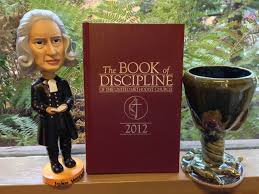
If you’re not part of the UMC, you may not be aware of what all this means; I’ll summarize briefly, and you should feel free to skip down some if this is all old hat. The United Methodist Church polity is governed by the Book of Discipline–essentially our canon law. The BoD describes our core theological beliefs, our social principles and devotes a great amount of time and space to the labyrinthine workings of the Church as a whole, from the governance of churches at the local level to the election of bishops to the various conferences and the operation of the Judicial Council for handling complaints agaisnt clergy for violations of the Discipline.

Prior to 1972, the UMC Book of Discipline contained the phrase, “persons of homosexual orientation are persons of sacred worth.” The UMC General Conference of 1972 initiated an unfortunate period of oppression of and prejudice toward the LGBTQ community. (As an aside: I understand that the language about homosexuality in Book of Discipline does not truly address the full spectrum of persons, identities and orientations that are included within the LGBTQ moniker, but for practical purposes, I think that we can treat it as intending to do so). That conference saw the addition of the language, “We do not condone the practice of homosexuality and consider it incompatible with Christian teaching…”

If that condemnation were not bad enough, in the 1976 General Conference, despite an attempt by some delegates to remove the 1972 language, the conference passed three measures to ban the use of church funds to “promote homosexuality,” whatever that means, and added to the Social Principles the statement, “We do not recognize a relationship between two persons of the same sex as constituting marriage.”

In 1980, conservative delegates attempted to add the language “no self-avowed practicing homosexual therefore shall be ordained or appointed in The United Methodist Church.” On a positive note, the language in the Social Principles regarding same-sex marriage was removed, but replaced by a statement that, “We affirm the sanctity of the marriage covenant…between a man and a woman.”

Further insult and injury occurred at the 1984 General Conference, where the delegation passed a change adding language to the BoD that, “Since the practice of homosexuality is incompatible with Christian teaching, self-avowed practicing homosexuals are not to be accepted as candidates, ordained as ministers, or appointed to serve in the United Methodist Church.” Coincidentally, the 1984 General Conference also added language to show grace to divorced heterosexual persons, recognizing “divorce as regrettable” but also recognizing “the right of divorced persons to remarry.” Strange that there was a movement toward grace on one issue but not the other.

I think that it is more hurtful than helpful that th 1984 language allowed LGBTQ persons called to ministry in the Church to serve, but only if they renounced any chance for meaningful romantic relationship–a sacred gift from God to which all God’s children are entitled.

Since 1984, attempts have been made to remove, soften, or change the Book of Discipline’s statements about homosexuality. The history of the polity shows that, since 1972, there have been advocates for equal standing and treatment for homosexual persons (and the greater LGBTQ community) within the church–but they have remained a significant minority compared to conservatives.

As the Church remained mired in injust and ultimately unjustified traditions of the past, the world changed around us. As a matter of conscience, LGBTQ rights have become increasingly accepted in the world at large. C.S. Lewis’s “natural law” comes to mind here–when our conscience tells us that something is an injustice on a visceral level without the need for an application of logic, we might do well to consider that the movement of the Spirit within us (and for Lewis, this is evidence of God’s existence and active role in Creation).

Other churches (the Episcopal Church and the Presbyterian Church) have already addressed the issue–though it has lead to much difficulty and even a congregational split in the Presbyterian polity.

The Northwest Conference of the (U.S. Jurisdiction of) the United Methodist Church elected an openly-gay Bishop in 2016, Karen Oliveto. Although the UMC Judicial Council ruled that her election was a violation of the Book of Disicpline, it wisely chose to allow her to remain in her episcopal seat.

Young Methodists who are informed of the Church’s official stance see it as backward and wrong, going so far as to wonder why it’s such a big deal in the first place. Many young pastors I know in the UMC are in favor of full inclusion within the Church, but many keep their feelings private either because they are commissioned but not yet fully-ordained or because they fear (perhaps rightly so) that being outspoken on this issue will hurt their future appointments or take away from their ability to minister to all of their congregants.

I also find that many of the conservative laypersons on this issue are generally conservative in their political and theological positions, often such that they would be extremely surprised and frustrated if they took the time to find out what the UMC’s official Social Principles say about things like immigration, the environment, and abortion.

As I’ve written elsewhere, this issue has become (at least since I have been active as a delegate to the Texas Annual Conference of the UMC, but most probably well before that) a proxy war for the larger theological issue of Biblical interpretation, with conservatives on the homosexuality issue generally having conservative theological positions that tout the phrase “authority of Scripture” as a buzzphrase for their more literal interpretation of the Bible while those who are more liberal on the homosexuality issue (myself included) tend to put forward arguments about the primacy of love in counterpoint to the conservative position.

Of course, nothing is so simple. The phrase “authority of Scripture” does not really mean anything without a lot of unpacking, and it’s grossly unfair to say that theological progressives have rejected the authority of Scripture, though their approach to its authority certainly differs from conservatives. Likewise, the question of what it means to “love your neighbor” as Christ commands is also so complex that it’s unfair to claim of conservatives that they do not have loving intentions in their position on homosexuality either (however misguided, ultimately wrong, and actually based in fear I may argue those intentions to be).

With respect to the issue of full inclusion (including the performance of same-sex marriage and the ordination of LGBTQ persons), the conflation of that argument with broader issues of theological hermeneutics is not helpful, but only further divides us.

We should certainly, I think, see the divisions on this issue as heavily influenced by the at-large divisiveness and demonization of those who disagree that currently grips this nation. As Christians, that’s exactly the sort of thing we should be rising above, but neither side of the debate has accomplished this.

This is the context into which the United Methodist Council of Bishops announced at the General Conference in 2016 that a Commission on a Way Forward would be formed to offer potential solutions to the divide in the UMC.

The amount of time that the Commission and the Council of Bishops have taken in preparing their recommendations, though absolutely justified given the gravity of the situation and the far-reaching consequences of any recommendation to the Church at large, has given the various interest groups time to maneuver without them. The Weslayan Covenant Association and its affiliates have prepared for an exodus from the Church if there is any change to the Book of Discipline except for stronger enforcement against LGBTQ persons and those ordained persons who do not fall into that category but who perform a same-sex marriage. Even since the Council of Bishops has released its summary of the three plans being sent to the special called General Conference in 2019, the WCA has threatened to “pick up its ball and go home” if it does not get its way (the “Traditional Model” included in the three plans).

While pushing all three plans to the delegates of the General Conference, the Council of Bishops has made clear that a majority of them support the One Church Model, even if they really would prefer a more conservative or progressive plan to be put in place.

Under the One Church Model, the “incompatibility” language of the Book of Discipline–including the prohibitions on the performance of marriage for same-sex persons and the ordination of “self-avowed practicing homosexuals” would be removed. In its place, however, would be placed protections on those persons who, “as a matter of conscience” refuse to perform same-sex marriages or to ordain LGBTQ persons.

The idea of this model is to preserve unity wihin the UMC (to the extent possible) by allowing ministry to be conducted “contextually.” More simply put, it allows local congregations and pastors to decide their theological approach to issues of human sexuality and gender identity.

I am disappointed that this approach will–as I see it–allow discrimination to continue in the guise of “conscience.” When the Methodist Church changed the Book of Discipline to integrate people of color into the Church, or to allow for the ordination of women, this was done in the name of social justice and did not give room for certain parties to claim “conscience” and continue to discriminate. I believe that the current issue is more analagous to those than different.

However, I recognize that, at least in a limited sense (without making this a broader issue of proper Biblical interpretation or the practice of love), issues of human sexuality and gender identity are not core aspects of our faith–no particular position on the issue is required to be “a Christian.” That being the case, I would rather remain in communion with those with whom I disagree (where we can continue to share ideas in hopes of better aligining our doctrines and dogmas with God’s desires) than to divide from them. If this compromise is necessary to do that, I’m happy to make that compromise.

I do believe that the progressive side of this issue will win out and that, eventually, there will need be no more arguments about whether Christianity is “compatible” with homosexuality. I also think that this proposal, while not the giant leap I’d really prefer to see, helps to move us in that direction. Most of all, I think that the One Church Model demonstrates the kind of “pragmatic grace” that puts people ahead of ideologies, an approach Jesus Himself employed: we can tell one another to “go and sin no more,” but we’ll love one another regardless.

The other two plans (the Traditional Model and the Connectional-Conference Plan) will lead to a schism in the Church. I don’t believe that that is good for our witness or for our congregations. Only the One Church Plan allows for grace to be shown one side for the other in a way that actually does move us forward. And the world definitely needs more grace right now.



Christian Marriage, Part III: The Great Metaphor

For the previous post in this series, click here.

In the two previous posts in this series, I’ve discussed Jesus’s hard saying in Matthew 22:30 (Part I) and an argument that broken marriages in the Bible often serve as a metaphor for resistible grace (Part II). Now, it’s time to turn to the higher level, more abstract and theological/metaphysical. I’ve been looking forward to this.

The Primacy of Love and Relationship

Here, I’m going to make the argument that the marriage metaphor as applied to God and the believer (or more generally to God and the Church) turns on its head many of the things we’re often raised to believe about God’s nature. At its simplest, the metaphor reminds us that God’s primary concerns–regarding Creation as a whole and each of us individually, is love and relationship.

You might think, then, “How is that different from what I’ve thought about the issue my whole life?” And in truth, maybe it’s not. If so, maybe you’ve already been to where I’m going now. However, for many fellow Christians I meet, there is a core assumption of Christianity that the role of the human is merely to worship and obey. Admittedly, I’m in Texas, where, as one pastor friend puts it, “We’re all closet Baptists in some way.”

The truth is, however, denominational aspersions aside, most Christians are taught that worship and obedience is humankind’s primary place in the universe. I’m currently reading a book by Dr. Benjamin Corey called Unafraid, detailing his journey away from fear-based theology to love-based theology and everything that goes along with that (I’ll review this when I’m finished with it). The focus on worship and obedience is greatly tied up with the image of the angry God, the entirely unworthy human, and the fear of Hell as an eternal punishment for even slight offense.

I am not arguing that we should not worship or obey God. The preface of the Eucharistic Prayer in most Christian denominations includes language similar to, “It is just and right to give praise to the Lord.” Rightly so, for our God is greatly worthy of worship and praise for all that God has done in Creation and for us. Likewise, Jesus tells us that we must keep his commandments (revealed to be “Love each other as I have loved you” a few verses later). John 15:10. We are told in the Sermon on the Mount to strive to “Be perfect, as your Father in heaven is perfect.” Matthew 5:48. Also in the Sermon, Jesus tells us to “…let your light shine before others, that they may see your good deeds and glorify your Father in heaven.” Matthew 5:16. Both of these things should be important parts of the life of a Christian.

But they are not the prime focus of the Christian. One reason for this is a simple matter of causation–loving God and being in relationship with God necessarily leads to worshipping and obeying God. But worshipping and obeying God does not necessarily lead to loving God.

Additionally, let’s think about the nature of a God who created us simply to worship God. The word, “megalomania” comes to mind, and that clearly is not our God. Paul tells us that “love is not proud.” If God is love, God is not proud.

God is complete in and of God’s self (one of the reasons that God telling Moses to refer to God as “I am” or “I am that I am” is such a telling revelation). Because God is complete, God does not need anything from humans–especially worship. But that does not mean that God cannot desire, and in God’s desire for relationship lies the foundation of all Creation.

We can take a step back and see that relationship is a fundamental concern of God’s by examining God’s own nature (to the extent that such is scrutable to human minds). Here we find the mystery of the Trinity: one God in three persons, the Father, Son and Holy Spirit, all consubstantial but distinct from one another. Theologians refer to the relational movement of the persons of the Trinity around one another perichoreia, a Greek word that translates to “to dance around.”

If relationship is fundamental to God, and God created humans to be in relationship with them, then we ought to search for a good understanding of what that relationship should look like. Here enters the power of the marriage metaphor.

Independence as Fundamental to Relationship

To be meaningful, a relationship cannot be coerced but must be freely entered into of one’s own accord. This is true in human marriage, but also in the relationship with God. God is not interested in the mere appearance of relationship (which is what we might have when worship and obedience are focused on above love), but true relationship, which requires love freely given.

I need not repeat the arguments I made in Part II of this series here except to say that the image of dysfunctional marriage in the Bible as a metaphor for voluntarily turning away from God establishes that humans have the ability to do so–they have free will and are not directly controlled or determined by God. This is logically fundamental to the existence of a real relationship between God and God’s created. By contrast, then, the positive image of the marriage relationship requires both the existence of free choice in both partners and love between them freely chosen.

The Trinity exhibits this dynamic even between its Persons. As G.K. Chesteron writes in Orthodoxy:

“It is written, ‘Thou shalt not tempt the Lord thy God.’ No; but the Lord thy God may tempt Himself; and it seems as if this was what happened in Gethsemene. In a garden Satan tempted man; and in a garden God tempted God.”

In Gethsemene, Jesus prays, “Father, if You are willing, remove this cup from me; yet not my will but Yours be done.” Luke 22:42. In this short statement, Jesus asserts both some independence from and yet an obedience to or oneness with the Father. On some level, there is a mystery to this that human minds cannot entangle, but I believe that, without having to delve into Trinitarian conundrums, we can take this as a statement that meaningful relationship requires independence.

Independence and Unity

If good and righteous marriage is a metaphor for the relationship between God and human, what can we glean from the mortal analogue that is helpful? The most successful (and by that word I mean committed, happy, sacrificial and unified) human marriages I have seen hold in careful tension the importance of acknowledging and protecting the individuality of each spouse while operating in the firm belief that, joined together, the spouses are something entirely different and somehow better than either of them alone.

Paul treats with marriage in Ephesians 5:22-30, where he writes:

“Wives, submit to your husbands as you do to the Lord. For the husband is the head of the wife as Christ is the head of the chuch, his body, of which he is the Savior. Now as the church submits to Christ, so also wives should submit to their husbands in everything. Husbands, love your wives, just as Christ loved the church and gave himself up for her to make her holy, cleansing her by the washing with water through the word, and to present her to himself as a radiant church, without stain or wrinkle or any blemish, but holy and blameless. In this same way, husbands ought to love their wives as their own bodies. He who loves his wife loves himself. After all, no one ever hated their body, but they feed and care for their body, just as Christ does the church–for we are members of his body.”

Admittedly, there are a few issues here. Clearly, Paul had never encountered anyone with anorexia nervosa or body dismorphia. Second, he’s really mixing his metaphors between marriage and body/head (elaborated on further elsewhere). Perhaps most important for our purposes, his view of marriage seems to be well entrenched in the social hangups and cultural constructs of his day. Certainly, K and I purposefully omitted any reference to her obiesence from our wedding vows, as we believed (and still do) that equality between us is fundamental to our marriage.

Nevertheless, I think that there’s a good argument here that Paul is being revolutionary in his description of the marriage relationship for the context within which he’s writing. While he does not seek to abolish female servitude within the marriage relationship, he does make clear that, despite the lack of authoritative equiality wihtin the marriage, there does exist an equality of mutual obligations of one spouse to the other and the primacy of sacrificial love to the relationship.

Even if Paul’s words do not go far enough in dealing with equality in human marriage, they nevertheless work quite well for the metaphor of marriage between God and believer, where there can never be authoritative equality between God and human. Still, according to Paul’s description (taken as metaphor), out of love for us, God condescends to us (in the truest sense of the word) to be in mutuality with us if not purest equality.

We should also note that Paul makes the point that love (and sacrificial love at that) is the focal point and highest foundation of the marriage relationship. In Part I of this series, we discussed the arranged marriage system of Biblical Jewish culture. In arranged marriage systems, ancient and modern, the first concern in arranging  amarriage is the prosperity and socioeconomic well-being of the couple to be married. Surely, the parents want there to be a loving relationship between the spouses, but this seems to take a backseat to the foregoing concern. For Paul, though, love should come first, presumably even in the context of Jewish arranged marriage in the 1st Century CE.

Conclusion

So, if my arguments are correct, what we should glean from the marriage metaphor in the greater sense is the following: (1) that God’s first concern is relationship with the created and that this is especially true for humanity; (2) that such a relationship accentuates and affirms the independence and individuality of humans rather than telling humans to diminish themselves and wholly hide behind Christ to be shielded from judgment (though the injunction to strive to become more Christlike and to pursue santification remains as it always has with the only change that we should expect santification to change the individual into who God created him or her to be rather than pushing us into unoriginal and uninspiring conformity with all humans); (3) that love, as claimed throughout the Gospels, is both the foundation and goal of this relationship; and (4) that we should take from the marriage metaphor that our relationship to God is meant to uplift and celebrate humans just as we uplift and celebrate God.

In some sense, there is nothing whatsoever radical in these points. But at the same time, I think it’s clear that this metaphor calls us away from framing the relationship of the believer to God in terms of monarchy, fealty, obedience and faceless subservience. I would argue that this understanding calls us to a sort of humanist Christianity, by which I mean an envisioning of Christianity that celebrates humans as God’s good creation just as we seek to follow Christ to leave the stain of sin behind and worship and praise the Lord our God for the sacrificial love that God first showed us before we ever understood anything about our existence. In this formulation, God retains God’s rightful place at the center of our lives, as desire and focal point of truth, as the greatest relationship available to us in all existence, while giving us a positive view of ourselves rather than seeking the diminution of the value of humans to accentuate God’s holiness and worthiness above all else.


Ceci n’est pas un dieu.

One of my favorite paintings is “The Treachery of Images” by René Magritte, pictured below.

TreacheryofImages

Knowing that I’m an existentialist thinker and theologian, it should be clear why. If you do not read French or are not familiar with this painting, the text translates to, “This is not a pipe.” If your kneejerk response is, “Yes it is!” let it sink in another moment. You cannot smoke tobacco from this picture on a screen (or canvas). You cannot hold it in your hand or put it to your lips. It is not a pipe; it is a picture of a pipe. The two are neither fungible nor synonymous. If you’re working on home repairs and someone asks you for a flathead screwdriver and you give them a picture of one from a catalog, it’s not going to be a good day.

Hence the title of this post (in English: “This is not a god.”). For many fundamentalist or conservative evangelical Christians, the Bible is treated as if it is part of God–as if it is God. Or at least as if it should be treated as an absolute on par with God. Nowhere are the Scriptures proclaimed to be a part of the Trinity.

Theologian Karl Barth warned against making an idol of the Bible; this conflation of God and Scripture is exactly what he meant. I’ve often referenced in other posts his argument (with which I vehemently agree) that we ought to interpret all Scripture through the lens of the Living God, who is clearest to us in the person and life of Jesus Christ.

Scripture is either a living thing or a dead thing. By way of reference, many legal jurists approach the United States Constitution as a “living document.” That is to say that, when the Supreme Court makes a new ruling of law based upon Constitutional language, it is “discovering” a new way in which an old text manages to relate to modern legal needs and issues. This is perhaps the most amazing aspect of our Constitution–that despite its age it continues to apply to legal issues never foreseen by its drafters with relatively little change to its language over time. For instance, the Fourth Amendment continues to be applicable to searches conducted by cellphone intercepts and drone surveillance as it was to physical stops and searches in the 18th century.

So, when I say that the Bible is a living thing or a dead thing, I mean that either: (1) the Bible continues to be applicable to our lives in the present even though culture and society and the nature of human life has changed drastically from Biblical times (and partially because modern life and the long sweep of history have given us new lenses through which to understand the Bible); or, (2) the meaning of the Bible is not susceptible to any interpretation except that intended at the time it was first set to papyrus, vellum, parchment or whatever other medium was used to record the initial text (to the extent that we could ever hope to understand that original intent being so far removed from that time period).

Bear in mind that Jesus (described by John as the Living Word) tells us that “[God] is not the God of the dead but of the living” Matthew 22:32b.

I think, then, that we must view the Bible as a living text which we must interpret through the use of reason, our experiences and the revelation of God (which we would most likely interpret as the person of the Holy Spirit in such a case) acting upon us as we read. Admittedly, this is a patently Methodist approach (at least in terms of dogma), but I am sure that this idea is not restricted to merely one denomination–particularly because it seems to be so self-evidently truthful and there are so many intelligent theologians in other denominations (or perhaps none at all).

To do otherwise than to treat the Bible as a living text that must be interpreted–with the help of the Living Word of God in Jesus and the Spirit–devalues the profundity of the Scriptures and the ways in which disparate texts written over several centuries so often hang together so well (and, when they contradict, force us ultimately to the identity of Jesus for the answer). Thinking of the Bible as a dead, immutable thing, is in some sense a rejection of Paul’s claim that it is “God-breathed and … useful for teaching, rebuking, correcting and training in righteousness…” 2 Timothy 3:16.

And paradoxically, thinking of the Bible as simple, literal and in need of no interpretation or evaluation inherently puts it on a level with God–the only thing in all Creation that is absolute. Though he rarely does, Jesus speaks plainly when he says that he is, “the way, the truth and the life” (John 14:6). This is not prescriptive language (as it is often assumed); it is descriptive language–a statement of fact. Because, as the beginning of John tells us, all things that are (that are not God) were created through Jesus as the Logos, Jesus is inherently the truth that stands behind all Creation and its meaning and purpose.

When we say things like, “God said it; I believe it; that settles it,” (nearly always employed as a conversation-killer after asserting a typically unquestioning and literal interpretation of Scripture), we elevate the Bible to the status of God. Never were the two intended to be equal; we should not equate one with the other. The Bible was co-created by man and by God; God is uncreated. The Bible seeks to bring the reader into relationship with God, but it is not that relationship.

Interestingly, this same argument has been going on in Islam–although overtly and avowedly–since at least the 9th century. Without delving too deeply into the details and nuance (which I’m not qualified to do), the Sunni majority in Islam (to the extent that it’s fair to say that all of Sunni Islam is a monolithic construct–which is to say not very) believes that the Qu’ran is uncreated and co-eternal with God. On the other hand, Shia Islam (subject to the same caveat applicable to Sunni Islam) believes that the Qu’ran is created by God and thus subordinate. As mentioned above, I am sure that there is much nuance here with which I am woefully ignorant, but the allegory with Christian approaches to the Bible should be readily apparent.

To take us full circle in this post, we must remain cognizant that we do not confuse the depiction with the thing it represents or communicates. That is, we must remain aware that the Bible’s value comes primarily from its tendency to draw us into relationship with the Living God rather than its ability to simplify and define existential realities for us. Is there truth in the Bible? Very much. Is it always easy to get to? No; we must have faith in God to bridge the gap.

This is understandably a very uncomfortable thing–such a position necessarily introduces ambiguity and insecurity into our understanding of theological principles. On the one hand, the Bible does seem to be clear about the most important aspect of God: love. It is also clear that by the pursuit of sacrificial love we will come to better understand the Living God. And in that sense, our theological niceties are mere luxuries in the face of following Jesus; at best our doctrines and dogmas are explorations of what it means to love God and our neighbors.

At the same time, such an approach must necessarily create within us a sense of theological humility–an epistemological pessimism that should help us to avoid putting our theological convictions ahead of actually loving one another. When we see the Bible as God, or as equally positioned with God, we may use it to justify some extremely unloving behavior. Again, let us not confuse the appearance of faith, piety and love with the things themselves.

Sci-Fi Christianity, Part I: Inverse Xenotheology, or, Anticipating First Contact

Okay, I have to admit here that the title is a little bit of a stretch, and I’m using it more because there are so few opportunities to (seriously) write words like “xenotheology” in non-fiction work.

“Xenotheology” is the word for the burgeoning (yet speculative and perhaps still a little premature) field of the study of alien religious systems and theologies. By the inverse of xenotheology, I mean to look at the repercussions in Christian theology that might result in the instance that we make contact with other intelligent lifeforms in the universe (or multiverse, if the physicists are right). See; the title’s a stretch.

Nevertheless, I continue. I read an article this morning that piqued my interest and spurred me to write this post; you can find it here. In the article, scientists at NASA discuss the ways in which an ancient but advanced civilization might be detectable millions of years down the line–what they call the “Silurian Hypothesis” after Doctor Who (sounds like the name of a “Big Bang Theory” episode). That, of course, got me thinking about the Fermi equation, and the likelihood of eventually encountering some alien species. And that (again, of course, because most things do) got me thinking about Christian theology.

To be fair, there are plenty of scientists (and speculative fiction writers) who believe that if we find other intelligent life “out there,” we still might not be able to communicate with or understand them. Their existential position (as a perceptual framework or paradigm for understanding existence as a whole) might be so different from ours that there are so few common points that real communication might be difficult at best. How could that be, you ask? That’s perhaps the most troubling aspect of this thought–the whole point is that their understanding of existence would be so different from ours that we could not readily conceive of it (nor them of ours)!

This in and of itself would beg a deep theological question: if Christianity is the true faith, how could it be applicable and accurate to something so radically differently situated from us? I say this without intending to devalue other religions, which I do believe have valuable things to offer the seeker of truth while maintaining that the person (divine and human) of Jesus Christ gives us the most truthful understanding of God and the cosmos. A troubling prospect, indeed; a seed of doubt that, by its very nature, could not be resolved by human minds. Is that an insurmountable issue? Of course not, there are many existential questions that we humans are incapable of resolving without divine revelation–the problem of evil and suffering, for existence. Becuase of all of this, I can only point out the question without offering any potential resolution except to say that it, like many other things, must be a matter of faith.

Lesser (in terms of difficulty in resolving, at least) existential questions follow. In such a situation, we would have to work out a new understanding of the relationship of Scriptures and Jesus to our suddenly-expanded reality. Here are a few scary (and, thankfully, improper) resolutions: (1) Christianity is proof that God favors humanity, allowing for crusades and persecution of alien species, or at least latent and continuing racism. While we no longer live in a society of monolithic religion, it is possible that Judaism and Islam could reach the same conclusion (because of human nature, not because of the nature of those religions, just as with Christianity), resulting in a hostile stance for humanity as a whole. I think it’s more likely, though, that some maintain such a belief privately, resulting in continuing issues of race (though in a slightly-new context) for centuries or millenia to come. (2) The “baby with the bathwater” approach: Scripture doesn’t tell us about aliens and neither does Jesus, so none of it must be true. This, of course, is a logical fallacy–there are plenty of things Jesus doesn’t talk about (molecular biology, cars, computers, black holes, particle physics, string theory) that nevertheless exist and that have not (at least when intellectual rigor and honesty is employed) destroyed the plausibility of Christian belief, despite how much the Enlightenment (and modern materialists) may have attempted such. (3) Christianity is supplanted by alien religion (assuming we could understand it) under the idea that a culture more advanced than us technologically must be more advanced than us spiritually–one only needs to read the Old Testament and look at the world around us to know that people generally have not changed much, if at all, in their nature because of technology. There are more possibilities than could be recounted here; I’ll leave you to your imagination.

Additionally, there’s the possibility that an alien culture that is like us enough that we can relate to them has had their own revelations from God that mirror those from our own Scriptures and the Incarnation. If that were the case, the type of thought I’m concerned with in this post might be moot.

However, my understanding of God sees great purpose in God’s remaining often hidden from us and not directly revealing the nature of all existence to us in some undeniable way. This makes room for faith, and it is possible that some of life’s ambiguity is necessary for our free will to exist in the way that allows for meaningful relationship with God and for following Jesus on the path of sanctification. That’s a topic for another time.

I think it more likely that we find alien religion much like we find other human religions–not devoid of some existential truth and not without some ability to point the seeker to the reality of the Creator, but mixed in with misunderstandings and fallacies that result in a system of belief that misses more than it gets right. Again, being subject to human failings in interpretation, I certainly wouldn’t say that Christianity has everything right–far from it. But, God’s revelation through the Incarnation lays bear more existential truth and gives us more to work with in the search for capital “T” Truth than any other system of belief or understanding of God known to man.

Rather than revel in the negative possibilities (which doesn’t seem very Christian at all, does it?) perhaps we should discuss theological principles that might need adjustment to conform our understand of God and the meaning of Scriptures and Jesus in light of new experience.

The most fundamental question of all would be to decide whether Christianity retains applicability given the existence of other intelligent lifeforms. I think most Christians would unhesitatingly answer, “Yes.” If we believe that the God’s revelation through Christ is True, no new understanding of our universe should change that. The second question, then, is whether Christianity should be viewed as applicable to aliens. Again, if we believe that Jesus, as He claims to be, is “the way, the truth and the life,” we must answer this question affirmatively. Which means that we must come to an understanding of God’s salvific work in Jesus (and God’s overall Great Plan for existence) that applies equally to all sentient beings capable of understanding (I’m willing to believe and hope that my pet, Berwyn, is an innocent subject to Grace despite how frequently he’s a “bad little dog.”).

These questions answered, we must look to ways in which Biblical interpretation must change to account for the new situation. I’m going to argue that some (admittedly more progressive) interpretations of the faith would not have to change at all.

In light of the existence of intelligent extra-terrestrials, we would do well not to interpret the story of Creation literally. Instead, we should seek to understand what early Genesis tells us about the existential condition of sentient beings (I use this phrase as a more-expansive variant of “the human condition”), the foundation upon which God’s plan for all Creation builds. As we would by necessity need to presume that Christ had a hand in creating all alien species as well (following the beginning of the Gospel of John), we would need to accept that the metaphors contained within Genesis are equally applicable to aliens and that, likewise, the path to salvation is open to them.

Alongside this, we ought to be less concerned with historicity in the Bible and more concerned with what the Bible tells us about the existential condition, as the latter will be far more universally applicable than the former. The ancient context of the writings will continue to be an important interpretive tool, but even this is entirely separable from historicity.

We would also have to find ways in which the experiences of alien cultures and beings help us to better understand Jesus and Scriptures–otherwise, we prove ourselves hypocrites in the belief that there is divine revelation (however difficult to discern) through existential experience.

Certain things might need to be interpreted more generously than current trends allow. If there are species that are not biologically binary (as in, distinctly “male” and “female”), then our understanding of sex and gender ought to expand. Otherwise, we might have to exclude entire species as “against the law of God.” In such a light, finding that homosexuality, transgendered people and other non-cisgendered folk are somehow abhorrent to God seems downright foolish.

We would also have to find a new humility–if we find that the Incarnation is not a common feature somewhere within the religions of all alien societies, we will have to sort out why God chose to condescend to humanity and not some other species in a way that impresses upon us the need to “make disciples” while not becoming self-righteously arrogant or assuming that our species has some special favor from God. This, I think, would be a great struggle but a fascinating aspect of the path of santification.

There are many more (and more specific) aspects of Christian theology that will need re-evaluation (as they perenially do anyway) to account for such a new discovery, and this post is admittedly a stream-of-conciousness response to something I came across this morning, so I must admit that this post is a collection of initial impressions–not a researched and long-considered topic like some of my other posts.

Still, I find it interesting (though this could be my own bias), that it appears that a more liberal/progressive theology is already better situated to account for the existence of other intelligent life in the universe than a more conservative theology. That by itself cannot be considered proof of the superiority of one interpretation over the other, but it is something worth pondering.

Christian Marriage, Part 2: (Broken) Marriage as Metaphor for Resistible Grace

For the first post in this series, click here.

I’ve decided that it’s best to examine marriage as spiritual and metaphysical metaphor by breaking it down into several different “sub-metaphors.” In this article, I’ll talk about the image of the marriage–particularly the faithful husband and unfaithful wife–as a metaphor for the idea of resistible grace, with apologies to my female readers that I cannot write the above simply as “faithful spouse and unfaithful spouse.” The writers of the Bible were entirely (as far as I know) men, and the men of the Biblical era apparently had a lot of angst about what their wives were doing when they weren’t around. Maybe if they’d treated their wives as equals they wouldn’t have had to have been so worried, but I digress.

Resistible and irresistible grace. The Arminian view and the Calvinist view. In a nutshell, the question is whether man has the ability to resist God’s salvific grace. Under the Arminian view, grace is a gift freely offered by God, but it must be accepted by man, who has the option to refuse it if he will. Under the Calvinist view, God’s grace cannot be resisted; those whom God wills to save are saved and those who God decides not to save are damned, regardless of human action.

Arminianism runs the risk of becoming Pelagianism, a heresy in which salvation is worked out by the sinner himself rather than being received as a gift from God; but Calvinism envisions an arbitrary God whose sovereignty is not matched by God’s love, who is sometimes indifferent to God’s creation, who has left little of meaning in the lives and choices of man.

I think that the Calvinist view sets up an incorrect view of the relationship between God’s sovereignty and man’s free will, assuming that they are a zero-sum game. A God who is sovereign over all things may choose to forbear God’s sovereignty to allow free will to man–even in the matter of accepting grace.

There is a greater justice in this than in predestined salvation–the consequences for a particular person are based on the choice that person has made. This seems in line with what I’ll describe elsewhere as “natural justice.” More important, for a God whose desire is to be in relationship with the beings God has created, those creatures must be fully independent of God–without this, there can be no meaningful relationship. We’ll discuss that more fully in Part 3 of this series.

To take things a step further, I’ll admit that I believe that God never revokes the opportunity to accept grace from any person–before or after death. Once, I would have called myself a soteriological universalist (believing that all people will ultimately be saved). Without denying that possibility (and actively hoping for it), my time reading Barth has lead me to become an inclusivist–I believe that God’s love for us means that grace is offered to all, but that no one is forced to accept it, and perhaps some never will. I do not pretend to understand the details or mechanics of this–that is well beyond the scope of human knowledge. But I believe this firmly based upon my understanding of the nature and person of God through Jesus Christ. Let those who disagree say what they will–I’ve heard it all before.

Now, with all of this lead-in, let’s look at the ways the Scriptures appear to point to the existence of resistible grace in the relationship with God. In the Old Testament, we’ll look to the Book of Hosea; in the New, we’ll look to the marriage-feast parables of Jesus Christ.

It is potentially unfair to call the connection between human marriage and the relationship of man to God a metaphor in the Book of Hosea; it’s more of an analogy, really, given that the comparison is set up so intentionally and explicitly.

Here, God explicitly commands Hosea to marry the promiscuous and unfaithful woman Gomer as a symbol of the faithlessness of Israel to God. This may seem a surprising command, but in the context of the Old Testament prophets, we commonly specific action intentionally taken as a symbol of either what is currently happening or what is to come. Jeremiah is ordered to purchase a new linen garment, bury it under a rock and then go back and uncover it to show that it has been ruined as a symbol of impending ruin upon Judah and Israel. Jeremiah 13. Jeremiah also wears an ox-yoke as a similar symbol. Ezekiel eats a scroll and lays on his side for three-hundred, ninety days as a symbol for the years Israel has defied God. Isaiah walks barefoot and naked as a symbol of impending Assyrian captivity.

But Hosea’s prophetic action in some ways seems especially harsh–particularly if we look to the names he gives his poor children by Gomer: Jezreel (after the breaking of the Kingdom of Israel in the Jezreel Valley), Lo-Ruhamah (“unloved” to show that God will not show love to Israel) and Lo-Ammi (“not my people,” to signify a rejection of Israel by God). Nevertheless, God promises restoration and blessing on the Israelites in Hosea 1:10-11 and commands Hosea to go after Gomer and to accept her back into his home in spite of her faithlessness.

If we are to follow Barth (and more recently, Bejamin Corey, who advocates the same interpretive hermaneutic in his book Unafraid), and use Jesus as the lens through which we interpret the action in Hosea, I think the result is that we see the condemnation of Israel by God as the human side of working through the story–an attempt at theodicy to explain why bad things (like the Assyrian destruction of the nation of Isreal and the Babylonian captivity from Judah) have happened to God’s favored people (this in Hosea 2>9-13). Allowing them to portray these events as punishment for their faithlessness allows them to call these events righteous and just retribution from God without demeaning God’s character (at least, so the argument goes).

But when we read God’s words about restoring Israel (as God has commanded Hosea to restore Gomer), we see part of the text that conforms closely with the understanding of Christ advocated through the Gospels. In Hosea 2:14-20, God says,

“‘Therefore I am now going to allure her; I will lead her into the wilderness and speak tenderly to her. There I will give her back her vineyards, and will make the Valley of Achor a door of hope. There she will respond as in the days of her youth, as in the day she came up out of Egypt. In that day,’ declares the LORD, ‘you will call me “my husband”; you will no longer call me “my master.” I will remove the names of the Baals from her lips; no longer will there names be invoked. In that day I will make a covenant for them with beasts of the field, the birds in teh sky and the creatures that move along the ground. Bow and sword and battle I will abolish from the land, so that all may lie down in safety. I will betroth you to me forever; I will betroth you in righteousness and justice, in love and compassion. I will betroth you in faithfulness, and you will acknowledge the LORD.'”

Such density of meaning and metaphor in this passage! First, some linguistics: the word for “master” in this passage is “baali” or “ba’ally.” As we noted in the first post in this series, the word Baal (strictly defined as “lord”) is sometimes translated as “husband” in the Old Testament. The more common word for husband is used in the above passage for the word that is translated as “husband.” This linguistic playfulness accentuates the metaphor in Hosea–God by using “baali” refers simultaneously to the unfaithfulness of the Israelites in turning away from God toward pagan deities (or, perhaps more importantly, misunderstanding the nature of God and the nature of the relationship God wants with creation) and also addressing the divine marriage relationship in contract to the traditional social concept of marriage of the Israelites–God’s statement seems to indicate love and mutuality rather than patriarchy and mere obedience.

Second, some geography (and more linguisitcs): “Achor” means trouble. The Valley of Achor is where the Israelites (led by Joshua) stone Achan son of Zerah for violating the command of God and keeping spoils from the conquering of the Canaanites. Joshua 7. So there, too, we see the reconciliation of God’s people to God despite their past transgressions. Not to put too fine a point on it, but God then commands (in Hosea 3) Hosea to go back to Gomer and “Love her as the LORD loves the Israelites, though they turn to other gods and love the sacred raisin cakes.”

Which leads us to the argument that this image provides support for resistible grace. Note how God says that God will woo back Isreal–not with force, not with fear, not with majestic display. With tenderness and kindness. With gifts freely offered. By showing Israel the splendor of right relationship with God, but not forcing it upon them. We Christians often talk of God continuing to pursue us when we flee from God into selfishness, and we have good cause to do so. We would also do well to remember here that God is calling us back to a relationship that uplifts us, not one that denigrates us into mindless obedience. (To be clear, an obedience to what is true and good is somethign God wants from us, and, I think the natural consequence of falling in love with and seekign relationship with God, but this kind of loving obedience is different from the obligatory and feudal obedience preached by many Christians).

Now, let’s turn to some of the words of Jesus (and a few about Jesus). John the Baptist describes himself as the friend of the bridegroom who makes the way for the bridegroom, who is of course Jesus. John 3:39. In this statement, we see the marriage metaphor clearly conveyed from the Old Testament to the New. Jesus Himself does this when He tells the disciples: “‘How can the guests of the bridegroom mourn while he is with them? The time will come when the bridegroom will be taken from them; then they will fast.'” Matthew 9:15, c.f. Luke 5:34-5.

Jesus’s words above use the continuing adaptation of the marriage metaphor employed by the Savior throughout the Gospels: we are here described as the guests to the wedding rather than the bride.

I’ll treat two of Jesus’s parables here. The first is the Parable of the Ten Virgins (Matthew 24:36-51). This parable appropriately follows the statement that none but the Father knows the day or hour of Judgment. The virgins are a greeting party for the coming bridegroom (but none seems to be the bride, mind you). We are told that five virgins are wise and five are foolish. The wise take extra oil with their lamps as they wait for the bridegroom, but the foolish do not. All fall asleep while waiting. Upon waiting the foolish find that they have run out of lamp oil and must go to get more–during which time (of course) the bridegroom arrives and they miss it, ultimately finding themselves locked out of the wedding banquet! The wise, the parable reminds us, keep seeking for the coming bridegroom and make sure that they are not distracted in the search.

The common thread between this parable and the next is the concern over who makes it into the wedding feast and who does not. Here, those who have–not out of malicious intent but out of lack of discipline and preparation–fail to be ready at the appointed time are left outside the festivities (which seems a ready metaphor for the Kingdom of Heaven). If this seems a harsh warning, I agree. But it is perhaps softened both by the fact that it is related to the preceeding passage (where the warning is to always prepare oneself for the end rather than planning on an expected timing) and by the message in the next parable.

That parable is the Parable of the Wedding Banquet, which appears in Matthew 22:1-14 (in the same [artificial] Chapter as Jesus’s saying that we looked at in Part 1 of this series). The same parable appears in Luke 14:16-24.

In Matthew’s version, Jesus begins by saying explicitly that, “‘The kingdom of heaven is like a king who prepared a wedding banquet for his son.” Then we are told that those the king invites to the banquet refuse to come, in Luke’s version giving excuses about their worldly concerns that prevent them from attending.  In Matthew, those invited even go so far as to kill the king’s servants (for which their city is burnt and the murderers destroyed!).

Then the king (or owner of the house in Luke) sends servants to collect any they can to come. In Luke, the house owner tells the servants to “compel” those in the streets and alleys (and then further afield) to attend, whereas in Matthew they are merely invited. Matthew further tells us that the servants “gathered all…they could find, the bad as well as the good, and the wedding hall was filled with guests.”

Matthew contains the additional (and odd) part of the story where a man not wearing wedding clothes is thrown out of the banquet and “into the darkness, where there will be weeping and gnashing of teeth.” and ends with the phrase statement, “For many are invited, but few are chosen.”

There is some difficulty in interpreting this parable because the two accounts of it vary in some important respects. Luke presents an overall “softer” version of the parable–there is no punishment for those who refuse to come (and neither do they do violence to the servants), there is no guest who is cast out, and we are told at the conclusion not that few are chosen, but that those who were invited (I think it’s safe to read this as “originally invited”) will get a taste of the banquet. Which version are we to believe is the more accurate to Jesus’s words?

At first blush, especially considering Jesus’s closing in Matthew, this parable appears to support election, not resistible grace. Not so with Luke’s version, which seems to favor an Armenian interpretation. I would argue that both, ultimately, require a belief that humans have choice in responding to or refusing God’s gifts (including the salvific gift).

Putting the passage in Luke in context, we find that it follows Jesus’s dining with a Pharisee and thus should probably be read as a condemnation of those who believe that they are holy and righteous but who do not actually respond to God when invited.

The passage in Matthew comes between the Parable of the Tenants and the question about paying the tax to Caesar. The former is likewise a condemnation of the Pharisees and the latter an (intellectual) attack on Jesus by the Pharisees.

And here, we see the common core of the passages–a dire warning to those of us who believe that we are righteous through our upholding of God’s ordinances but who refuse to follow the spirit and intent of God’s commands–loving one another. Put another way, taking this metaphor to its logical conclusion, those who do not love have no place in the Kingdom of Heaven. This, I think, requires an understanding of free choice in responding to Grace for there to be any justice in condemning such people.

Thus, we see resistible grace as a foundational aspect of the marriage metaphor in both the Old and New Testaments. We’ll carry this understanding into Part 3 as we look to the metaphysical meanings found in the marriage metaphor for the relationship between believer and God.

For the next post in this series, click here.


Christian Marriage, Part I: Matthew 22:30

Introduction

Recently, a friend of mine who is a retired Methodist pastor asked me to teach his Sunday-school class for a few sessions. I was, of course, flattered and immediately said yes. I haven’t had a chance to do much teaching about Christianity in the “real” world lately and–as I imagine you might suspect–teaching about my faith is one of my favorite things to do.

Then my friend told me that the subject would be “marriage.” K and I will have been married twelve years in June, and we’ve been together seventeen, but all of the members of this particular Sunday-school class have been married far longer, and some have been married longer than I’ve been alive. It felt like a trap, though I’m sure it was not meant as such.

Despite the danger, I wanted to teach too much to back out. Besides, it’s often a good idea to get outside of your comfort zone a little–the best learning is done there. Nevertheless, I needed to sidestep the pitfall of trying to give marriage advice to people who know far better than I.

So, I decided that, while I’d sure teach about Christian ideas of marriage, I’d do so from a theological perspective rather than a practical one. More in my area of knowledge, and safer. This led me to the topic we’ll discuss today: one of Jesus’s hard sayings in Matthew 22:30 (also Mark 12:25 and Luke 20:34-35, so it’s pretty clear that the authors of the Gospels thought that this saying was important).

N.B.: Because this has turned out to be a relatively long post, I’ve tried to insert section headings for ease of navigation and so that you, dear reader, can read or skip as much as you want. Trust me, I won’t be offended: I’ll never know what you picked to do. Unless you tell me, in which case I’ll do my best not to be offended.

Matthew 22:23-30

In Matthew 22:23-30, the Sadducees have come to Jesus to test him, and they present him with a hypothetical problem to solve (flashbacks of law school immediately followed). Specifically, they tell him of a woman who was married and widowed without a child, so her husband’s brother married her, but then he died, so the next brother in line married her, but then he died, and so on and so forth until the woman had been married to seven brothers before she died herself. The problem the Sadducees pose, then, is who will she be married to in the afterlife?

Jesus says, “You are in error because you do not know the Scriptures or the power of God. At the resurrection people will neither marry nor be given in marriage; they will be like the angels in heaven. But about the resurrection of the dead–have you not read what God said to you, ‘I am the God of Abraham, the God of Isaac, and the God of Jacob’? He is not the God of the dead but of the living.” Matthew 22-29-32.

Whoa! I enjoy being married. I love my wife. When we got married, we intentionally left out the “’til death do us part” language of our vows–we didn’t think that just this life would be enough for us. I want to be connected to her eternally. So what do I do with what Jesus says here?

Research. That’s what I do. And think. Because something’s going on here, and I’m quite sure that Jesus is not telling us that we will not be with those we love in the Kingdom of Heaven. This lead me to identify a problem, a relatively obvious one when you think about it. Our modern Western idea of marriage is not like the idea of Jewish marriage in the first century C.E. To impose our idea of marriage on this statement is to immediately miss the point.

Instead, I came to understand that Jesus is making a point about social justice. Let’s walk through it together:

Context

First, let’s but things in context–geographically, historically and literarily. As you might have seen in my posts about my profound learning experience with Dr. John A. “Jack” Beck, it has been ingrained on my mind now that, when I look at the Scriptures I ask: “Where are we when this takes place?”

Geography

In this instance, that question proved immediately helpful. In Matthew 21:23, we are told that “Jesus entered the temple courts.” So that means that Jesus is on the Temple Mount when speaking with the Sadducees. I soon learned that even that was not enough specificity for this passage of the Gospel. Matthew doesn’t tell us more about where Jesus is on the Temple Mount than that he’s there somewhere, so I needed to do some research to see if I could find some information to make a better supposition about where specifically Jesus might have been.

First, let’s talk about the geography of the Temple Mount itself. I recommend Googling to find a picture because one will be helpful, but I’ll try to do a good job describing with words.

Imagine a rectangle (Josephus described the mount as a square a furlong on a side, but I don’t think that’s quite right–it’s possible though that I am mistaken. For sake of argument, bear with me.) with the longer sides oriented roughly north-south. That’s the Temple Mount. The place now known as the Western Wall or the “Wailing” Wall is a part of the north west segment of the entire western wall.  The entrance to the top of the Temple Mount was made via ramps up from doorways in the southern wall–these doorways are now sealed up, but you can see parts of them. There was also a bridge entryway on the southern part of the western wall, connected to Herod’s Stoa on the south end of the Temple Mount. The impressive archway of the bridge and stairs of this entrance have since been destroyed, but you can find both pictures showing where the supports of the arch can been seen in the wall even today and diagrams showing what it would have looked like in the past.

Let’s return to Herod’s Stoa. While his lineage is a little complex, Herod was considered to be a Gentile. Therefore, he could not travel farther than the Court of the Gentiles in on the Temple Mount. The Court of the Gentiles is essentially the area of the Temple Mount outside of the walled-in Temple complex proper. Herod built the Stoa as an elaborate three-aisled arched and columned basilica where he could stay in luxury while looking out at the Temple–and reminding Israel who was in charge.

On the (outside of) the eastern wall of the Temple Mount with another set of gates was a colonnade or cloistered area known as Solomon’s Porch, so named because it was believed that that part of the Temple area had been built in Solomon’s time (I have not done any research to determine the likelihood that that belief was true).

Near the middle of the Temple Mount itself is the Temple complex, facing (very) roughly east-west. Think of the Temple complex as two compartments, with the entrance into the first compartment from the eastern outer wall of the complex and entrance into the second (western) compartment–where the Temple itself was–only through the first compartment. The first compartment is known as the Court of the Women (because it was the closest to the Temple women could get). The second compartment, the courtyard around the Temple proper, was known as the Court of Israel.

You’ll notice that I’ve bolded four places around the Temple Mount–the Courts of the Gentiles, Women and Israel and Solomon’s Porch. The scholarship I reviewed indicated that these four locations were the places where Jesus taught when he taught at the Temple. That’s a pretty easy statement to make since, combined, that covers pretty much everywhere but inside the Temple.

With this in mind, let’s look at some textual evidence. As I mentioned above, Matthew tells us that Jesus “entered the temple courts.” That rules out Solomon’s Porch, I think, as the location for this saying. But we can go farther than that.

The day before this confrontation with the Saduccees, Jesus had overturned the tables of the moneychangers at the Temple. All the texts I looked at stated that the moneychangers would have been located in the Court of the Gentiles. I see no reason to argue with that. When Matthew relates Jesus this previous event, he tells us again (before, really) that Jesus “entered the temple courts.” I think the connection there makes it quite likely that Matthew 22:23-32 also takes place in the Court of the Gentiles.

There’s a logic to this as well. Given that Jesus has come for Jews and Gentiles (although that’s only made explicit later), he would have wanted to teach in as public a place as possible most of the time (though how many Gentiles actually came to the Court of the Gentiles is hard to say). More important, I think, is that the Pharisees and Saducees would have wanted to challenge Jesus in as public a forum as possible–again making the Court of the Gentiles the likeliest place for this scene.

If I had to bet, I’d say Jesus was in the Court of the Gentiles, but there’s no proving that. On other grounds, I think it’s very likely that Jesus was not in the Court of Israel. Why? Because I think it was important to him (as I’ll argue below) that women be present to hear the words he speaks in this passage.

That’s the geography. Now, let’s talk about the historical context of Jewish marriage in which Jesus’s statement is made.

An Etymological Aside

One of the most surprising things I discovered in my research is a relatively minor etymological note, but one that immediately impressed me. The word baal (sometimes written and pronounced “ba’al“) is sometimes used for the word “husband.” The word itself is most often translated as “lord” or “master” and, when discussed in the OT, usually refers to pagan gods, who are called baals just as we would name our God by saying “the Lord.” There were many baals (though they’re often only referred to as baal): Baal Hadad of Tyre, Baal Hamon, and as a title for the Canaanite god El, just to name a few. Indeed, the probable etymology of the word is from the Mesopotamian god Belu and there’s no question that, whenever used by the Old Testament authors, the connotation of paganism was attached, intentionally or not.

Baal is translated as “husband” in Genesis 20:3; Exodus 21:3 and 22 Deuteronomy 22:22 and 24:4; 2 Samuel 11:36; Joel 1:8; Proverbs 12:4 and 31:11, 23 and 28 and Esther 1:17 and 20. It is by far not the most common word used for husband in OT Hebrew (that is “‘iysh” or, properly, אִישׁ, Strong’s H376). There’s not enough here to make a true argument that the use of the word means anything more than when we refer to a mortal “lord” as opposed to “the Lord” in English, but it is interesting to me.

Historical Context of Marriage

Etymological notes aside, let’s talk about the social culture of marriage. Jewish marriages were (and sometimes still are, though much less often, I think) arranged by the parents and particularly the father. Most of the usages in the Old Testament of the word “marriage” are in the context of a woman being “given” or “taken” in marriage. It’s easier, in fact, to refer to the times when the Hebrew equivalents of the English word are not used in that context–1 Kings 11:2 (“enter into marriage”) and Dan 2:43 (“they will mix with one another in marriage”).

As with many–perhaps most–premodern societies,  marriages were not arranged for love but for the maintenance or creation of economic, political or social ties between families. For farming families, marriage helped consolidate interests between families for farming larger areas cooperatively, a palpable benefit for surviving in hard times. For the elite, as we’re perhaps more familiar in the Western medieval context, marriages were about determination of succession, alliances and control of territory.

As evidence of this, the Old Testament has some relatively complex rules on where and how land can and cannot pass as a result of marriage and children–land cannot be transferred by marriage between the twelve tribes, for instance.

The marriage itself was not just an agreement between spouses, as we tend to think in the modern world–it was a contract between families with much more at stake than how the couple got along.

To marry a woman, a man would give her father a mohar (typically defined as a “bride-price” or “dowry”). We see this in Genesis 34:12, Exodus 22:17, 1 Samuel 18:25 and it is the basis of Jacob’s work contract for the hands of Rachel and Leah. Socially, though, this was not considered the “sale” of a woman but was meant to compensate the bride’s family for the loss of a productive member (through marriage). There was some expectation that a father would set aside some or most of the mohar for his daughter’s future, but there was no strict rule requiring this and a second gift was made by the groom to the bride.

Let’s talk specifically about Levirate marriage, since that’s the situation that the Sadducees are refering to in questioning Jesus.

Levirate marriage (which is described in Deuteronomy 25:5-10) was the practice where, if a man was married but died leaving a widow and no children, the deceased man’s brother was expected to marry the widow. The first child between the two would be deemed to be the child of the dead man, ostensibly assuring the descent of the man’s name and property. Despite the focus on “protecting the dead man’s name,” the practice was likely meant to be a social protection for women–now outside of their father’s house and without a husband or male children, the widow might be left without social protection or anyone to provide for her. Being a childless widow could be a precarious social position indeed.

If the stories of Ruth and of Onan and Tamar are to be taken as exemplars, it seems that it was more common for women to pursue the idea of Levirate marriage–and for men to sometimes resist it.

Under Mosaic law, women were expected to be absolutely subordinate to men. A man could divorce his wife, but not the other way around. A man could have multiple wives, but a woman could have only one husband (both Josephus and Justin Martyr–who wrote well after Jesus–described the existence of the practice contemporary to their writings). Under Levitical law, a husband had the power of life and death over a woman who committed adultery (as we see Jesus confront even in his time).

There is evidence that women purchased or sold land or otherwise participated in commercial enterprise, so (as always) we need to understand that there was some nuance and complexity to the social status of women but, for the most part, women were subjected to the will and whim of men and were used in marriage as a tool for the management of property and other “masculine” concerns. Women simply did not have the rights or freedoms that, in modern culture, we believe that they are entitled to (and Jesus, as I’m going to argue, would agree).

Literary Context

In the passage before the Saduccees test Jesus on the subject of marriage in the great hereafter, the Pharisees have tested him on whether taxes should be paid to Caesar. He tells them to “…give back to Caesar what is Caesar’s, and to God what is God’s.” Matthew 22:22. In other words, he turns the Pharisee’s question back upon itself by telling them, “you’re asking questions about money and power, but those are not the concerns of God. We’re talking about something much more important.” His Kingdom is not in contention with the petty kingdoms of man.

After the confrontation we’re discussing, Jesus gives the Great Commandments: “Love the Lord your God with all your heart and with all your soul and with all your mind….Love your neighbor as yourself.” Matthew 22:37-39.

It is significant that the exhange with the Sadducees occurs bookended by these two statements.

Interpretation

One of the commentaries I looked at mentioned (and astutely, I think) that, for the Sadducees at least, this confrontation really isn’t about marriage. The Sadducees did not believe in an afterlife (or angels for that matter), so what they’re doing is asking a question that they believe is logically unanswerable so that they can say, “Aha! Can’t figure that one out, can you? See, there is no afterlife, because it wouldn’t make sense!”

This is almost certainly the Sadducees’ goal, but that doesn’t mean that it’s the only thing that Jesus is talking about. If it were, he would only have needed to (after noting that they misunderstand the Scriptures) make the statement that God is the God of the living and not the dead–that assertion alone is enough to confound the Sadducees’ purpose.

Yes, the statement about marriage at the resurrection reinforces Jesus’s retort above, but it also does more.

Coming on the heels of the Pharisees’ question about money and taxes, Jesus is telling the Sadducees the same thing he told the Pharisees. Given the social background of Jewish marriage, what the Sadducees are asking, in a sense, is “who will own this woman in the afterlife?” or, to put it in a slightly more sympathetic light, “who will have rights over this woman in the afterlife.”

Jesus’s response says, “Asking that question shows your complete lack of understanding–you’re concerned about power and status in the world and thereby missing all of the important things with which God and the Scriptures are concerned.”

Jesus’s life itself is grand statement that the things that we humans chase so lustily after–fame, wealth and power–are not the more important things of God–relationship, love, creation, meaning. It stands to reason that his responses to doubters carry the same truth underneath them.

And with the Great Commandment(s) following after this passage, we certainly cannot read Jesus’s statement that people do not marry in the afterlife to mean the same thing as “people do not love” in the afterlife. The argument could be made (drawing twistedly on C.S. Lewis’s The Four Loves, I think) that the kind of love in the Great Commandment does not include eros/romantic love but only agape/unselfish love, but the use of marriage as a metaphor for the relationship between the believer and God (or the Church and Jesus) so profoundly throughout the Bible (this is the topic of the next part in this series) seems to indicate otherwise.

Conclusion

What we’re left, then, is a promise of a more socially just existence in the resurrection–the artificial human socioeconomic and political construct of marriage will be replaced by natural and divine relationship that is about those involved and not about power and wealth and land in the world. I can’t help but imagine that there were women in the crowd who heard Jesus make the statement and thought “Thank God!” not because they did not want to love and be loved but because they wanted to be equal–something the old system of Jewish marriage did not allow them.

P.S. – I do not mean any of the above analysis to be a disparagement against modern Jewish marriage practice. Until only recently in our history, Christian marriages were also arranged primarily for economic and political purposes. Even more important, it is my understanding that ideas about Jewish marriage have evolved through the ages so that modern Jewish marriages are every bit as concerned with love, respect and equality within a marriage as Christian ones are (ignoring entirely those fundamental and “evangelical” Christian sects that still maintain that a woman should be subservient in all things.

Topics Coming Up:

The next topic I’ll discuss in this series will be about marriage as metaphor for relationships with God–we’ll start with Scriptures and move into theology and metaphysics.

At some point in this series I’ll return to the two creation stories of Adam and Eve in Genesis and what they might mean for God’s original intent for the values that a marriage ought to uphold.

While my stance that homosexuality is not a sin and that the love between people of the same sex (or gender identity for that matter) should be viewed (from a theological perspective) no differently from that of a heterosexual couple has been discussed on the blog previously and should be relatively well-known by my readers by known, this series is probably a good place to include some comments on that front as well, so look for that in the near future.

For the next post in this series, click here.

Position Statement: Biblical Interpretation

I’ve made allusion to some of my underlying theological positions (my theological “givens,” if you will) in previous posts, but it’s dawned on me that I ought to have some posts that can be linked to easily that reveal my positions (and therefore biases) in my approach to theology so that my readers better understand where I’m coming from (whether or not they agree–there’s plenty of room for reasonable disagreement on many, many theological issues).

I’m going to start with a concise explanation of my position on Biblical interpretation–specifically, my attitudes toward Biblical literalism and inerrancy.

Let’s start with 2 Timothy 16-17: “All Scripture is God-breathed and is useful for teaching, rebuking, correcting and training in righteousness,  so that the servant of God may be thoroughly equipped for every good work.”

I do not reject this premise at all; I believe it. However, I absolutely disagree with the premise that this statement means that the Scriptures should be interpreted literally (there are times for a literal interpretation, to be sure–Jesus’s statements about the Great Commandments are uncharacteristically plainly stated and should be taken for what they are) or that they are infallible.

By way of argument, consider Adam and Eve. In the second story of the creation of Adam and Eve, God gives Adam spirit and life by breathing into him. He is literally “God-breathed,” and, yet, he is thoroughly fallible, mistaken in many things.

Further, God uses humanity to do God’s work, but in a cooperative, not a coercive manner (well, maybe Jonah). Moses is called by God to lead the Israelites out of Egypt, but he is not forced. Paul’s vision on the road to Damascus changes him deeply, but it is knowledge, not threat, that makes him a disciple of Jesus. Even Jesus Himself, in the garden of Gethsemane, has the opportunity to reject God’s call upon him, though He does not.

When read as a whole, we see in the Old Testament an continuing revelation of God’s self to the Israelites and an evolving understanding of the nature of God in the Israelites. At the time of Abram we see a man called from polytheism, but at the time of the Exodus we see an understanding of God that is henotheistic (there are many gods but ours is best/strongest/etc.)–even the Ten Commandments begin with a henotheistic understanding, “Thou shalt have no other Gods before me.” True, that statement remains metaphorically accurate in a monotheistic understanding, but because the rest of the Commandments are quite literal, I think we must see it in the henotheistic context.

The OT prophets seek to change the minds of the Israelites from henotheism to true monotheism and to shake off polytheistic ideas about the nature of gods. When Elijah battles the priests of Ba’al (Hadad, most likely) on Mount Carmel, he is making the theological statement (through derision of Ba’al in part) that the God of Israel is not a mere localized deity, is not possessed of human needs and limitations (like travel and sleep) but is rather transcendent and omnipotent.

In large part it takes the Bablyonian Captivity for the Isrealites to grow into the understanding of God to which God has been leading them for centuries (or, depending upon your preferred timeline, millennia). In Ezekiel’s vision we see the image of a mobile God who can follow the Jews to Babylon, who is with them even when they are not present at God’s temple in Jerusalem.

Given the record of the need for continued revelation from God to drag the Jews to a better understanding of God (just as revelation continues to do, whether this revelation proceeds from Scripture or elsewhere), it stands to reason that the writers of the Old Testament (and New, for that matter) sometimes get things wrong. When we read that God has commanded Saul to kill all the women, children and animals of the peoples he has conquered, we should be offended if we are being asked to take the statement literally.

Adam Hamilton’s Making Sense of the Bible makes very good arguments on this subject. For my part, I tend to follow the understanding of the German theologian Karl Barth. Barth reminds us (I am admittedly simplifying his argument for sake of time and space) that the Scriptures are not the capital “W” Word of God–Jesus is (see the Gospel of John). Therefore, we should read all Scripture through the lens of Jesus Christ. That in the Bible that does not comport with the person and teachings of Jesus is something added by man and not by God.

Does this make Biblical interpretation difficult? Absolutely, and humility in approaching the subject ought be the first lesson we learn in the practice of theology.

Jesus speaks metaphorically in the parables for a number of reasons–I think even the most literal of Biblical interpreters would admit to that. So why do we think that other parts of the Bible, particularly those written in styles of literature that rely upon metaphor and symbolism (the OT poetry, the apocalyptic and prophetic modes of both the OT and the NT) should be read literally?

When we believe that only God is infallible, why would we believe that the human contributors to the Bible were made so? When what we see in both the Biblical text itself and in the experience of our lives is that God creates opportunities for humans to work with God but does not force them to do so, why would we believe that God essentially put every word to paper with God’s self? When God came to earth in Jesus Christ as a sacrifice, a teacher, a prophet and an example to us, why would we assume that Scriptures are alone sufficient? When Jesus himself tells the Pharisees and the Sadducees and, yes, even the Disciples that they have misunderstood the Scriptures, why are we so ready to say that a single and narrow interpretation is the only reasonable one? In a world so complex that the head spins to think of it, why would we expect that the answers we find in the Bible are simple, straightforward, and without nuance?

On the other hand, when the Bible is so plainly full of Truths both existential and metaphysical, why should we assume that the proposition is all or nothing–that the Bible has no fallibilities or is completely worthless?

Easter After Israel

It’s now been about two weeks since I arrived home from Israel; as you might note, I haven’t written much since then. But a few days after Easter seems a fitting time to share some of my reflections over the past few weeks. The experience of Easter Sunday has spurred me to think deeply about how my experience of the places where the Easter story unfolded has changed my perception of the narrative.

As I’ve mentioned in previous posts, I tend to relate to my faith through intellect and intuition far more than through emotion. To a great extent, this is simply a matter of the way I’m wired, and while it makes me especially good at some aspects of theology, it doesn’t always prove terribly helpful on my faith journey. Since Maundy Thursday, in revisiting Christ’s death and resurrection through the Gospels, a few thoughts have dawned on me about my own failings in understanding the crux of our faith. Perhaps some of you, dear readers, might be helped by my reflections on weaknesses of my own that my pilgrimage is–I hope–working to remedy.

I have discovered within myself two places where–though I did not know it until recently–my understanding of the Passion and Resurrection were woefully insignificant.

The first of these, given my psyche, is perfectly understandable (I tell myself). I have allowed my understanding of Christ’s redemptive work to be too abstract and global without also realizing how palpable and intimate it is. Seeing the places where the events unfolded, being exposed to the nuances of the location and culture–to the extent that they remain available after 2000 years, has plunged me into the thick of the narrative to consider with great detail what the experiences might have meant to those who experienced them. Given my existential approach to theology, it’s actually rather embarrassing that I’ve for so long neglected the import and emotional impact of being personally involved in the story in favor of looking to the transcendental and eternal truth of the Gospel as if it were merely on of Joseph Campbell’s “myths to live by.”

Let me be clear: this is a story with mythopoeic–perhaps better stated as theopoeic or theopoetic–power. There is great and deep truth in the Gospels that needs nothing from historicity to be true. That said, some things, sacrifice especially, have more meaning when someone actually had to endure the suffering and loss. Otherwise the meaning is only a metaphor for the idealistic world, a fine point on our weltschmerz, that “suffering unto death” that underlies the human condition and the existential states that God’s redemptive work addresses and heals. Acts of sacrificial love are only well-intentioned ideas until they are acted upon. There are many of the Bible’s stories that have the exact same meaning regardless of whether they are histories or stories, because they speak to the nature of reality. With Jesus and the entirety of the Incarnation, the something would be lacking from the Gospel message if it the events described did not actually happen. Easter is not merely some celebration of the story; it is a celebration that God, through Jesus, actually did the things that redeem us. He is Risen, indeed.

Thus, the Gospel story should be encountered as personally as possible, because the redemptive acts of the Passion and Resurrection–under whichever theory of atonement we might choose to understand them–are deeply personal and we are living them out, each and every day, though we often fail to see this in the bright lights and constant motion of daily survival.

From a certain perspective, perhaps I should offer myself some grace, because I lacked the tools to place myself within the events before my journey. I had not seen much of Israel, even in pictures, so I had little my imagination could grasp (except for illustrations in children’s picture books, bad Biblical reenactments and fleeting glimpses from documentaries) to build an image of the action and setting.

And that is especially true in America, I think. As a recent comment I overheard about Sunday’s live performance of Jesus Christ Superstar demonstrates, the images we associate with the strength demonstrated by Jesus in the Gospels falls into the same problem that plagued the people who encountered Him directly when He dwelt on the Earth: we superimpose our social ideas of strength upon Him rather than seeing the true strength He demonstrates in His sacrifice. We want a warrior king instead of a humble servant to represent the things we should aspire to. A pastor friend of mine likes to point to the “P90X Jesus” as an iconographic example of this–the image of an Olympic athlete with .001% body fat displayed on the cross (and usually white to boot).

A better understanding of the particulars of the people who experienced the Incarnation, the culture into which Jesus came and the places where Jesus preached and died both brings the truth of the story home and reinforces the actual meaning of the story rather than allowing this to be a mutable myth that we can make to be a mirror of ourselves.

The second realization I had is that I take for granted knowing the ending of the Easter story. I know that the Resurrection follows Good Friday and never stop to consider what it must have felt like not to have known–no matter how much faith one might have had in the expectations of what would come to pass.

When the disciples watched Jesus die, watched His suffering without any power to stop or alleviate it, were forced to doubt the reality of all He had taught them. I imagine most of you have read the C.S. Lewis quotation arguing that Jesus was either God or a madman; now imagine having invested three years of your life to answer that question, believing that Jesus is God, and then watching Him die, yourself likely a criminal subject to personal persecution if you too much attention comes to you.

Kafka could not have written a story of greater absurdity, Satre one of more extreme existential strength. There is no avoiding, I think, that if you were a follower of Jesus on Good Friday, you felt your soul on that cross with him though your body remained free, felt each nail pounded slowly deeper into your very essence, felt your ability to breathe and not to panic slowly fade to oblivion, felt everything you ever knew or believed threatened, felt forsaken by the One in whom you placed all your trust.

How fortunate we are never to have suffered this dark night of the soul! Though, I suspect that most of us at one point or another in our struggle to come to faith have encountered something similar in substance though lesser in degree.

As we march toward Pentecost and the celebration of the coming of the Holy Spirit, let us try to feel the wonder and amazement when the disciples encountered the living Christ, how their faith had been fully, finally and undeniably affirmed, how nothing in the world could touch them or hold them after seeing the ultimate truth of Creation. That is redemption. That is grace.

Pilgrimage, Day 13: Reflections

For the previous entry, click here.

Today will be the last post journaling my pilgrimage to the Holy Land; early tomorrow morning, we set off for Tel Aviv to return home. This is an amazing place, and there’s still much more to see, but I’m ready to come home. The pace of our touring has driven me to the point of exhaustion, and my brain is supersaturated with new knowledge and ideas. Even today, a scheduled half-day on our agenda, seemed a chore.

I am sure that there will be a number of posts in the near future that are more theologically focused and that draw on the many things I’ve learned on this journey. For now, I’ll share some general reflections on the trip as a whole (after a brief run-down of the day’s sites).

We started the morning early as usual, traveling to the Mount of Olives and working our way down to the Church of All Nations (at traditional Gethsemane). Along the way, we discussed the reason for Jesus sending the disciples to fetch a donkey only when he’d already ascended the Mount of Olives and was ready to descend into Jerusalem, the course of Jesus’s movements through the Old City during Passion Week (while overlooking the city–this made things very easy to follow) and generally discussing the Crucifixion and Resurrection. After lunch, we went to the Garden Tomb (very unlikely to actually have much to do with the Passion, though there’s some evidence that the stoning of Saint Steven occurred there) to celebrate Communion. While the rest of our group took the bus back to the south side of the Old City to the hotel, K and I decided to walk through the nearby Damascus Gate and through the Muslim Quarter back to the hotel (she had not yet been that way). As has been the case with all of our experiences, all of the people we met along the way were friendly and warm.

Before we left, while working on the preparatory materials, I posted about my struggle with my position on the historicity of many Biblical events. I’d like to follow up on that now.

I’ve never really doubted the historicity of Jesus Christ, his ministry, death and resurrection (though I’d still be a Christian if I did, because there is something eternally True about who Christ is and what the Incarnation means for existence and about the nature of God even if the events described did not actually happen). It’s mostly been parts of the Old Testament that I see as more metaphorical or literary than historical.

The first comment I have on the subject after my experiences here is that visiting the places I’ve now been, seeing the things that I’ve seen, and knowing the things I now know, I feel an added realism and gravity to many Biblical events–they seem less distant, abstract and simply allegorical (even if I didn’t consciously think of them as abstract or merely allegorical) than before.

That said, I’m not sure that my overall position on historicity has changed. One reason for this my fundamental approach to scripture. As I’ve said before, I follow Barth in seeing the person of Jesus as the essential revelation of Christianity, the lens through which anything else in our faith must be viewed. This causes some immediate conundrums (conundra?) that must be resolved in reading the Old Testament, which will discuss momentarily. Secondly, I tend to see a greater emphasis on the human side of scripture than to look for a heavier divine hand in the text’s creation. This is a fundamental point on which I disagree with Dr. Beck, who by my understanding (based on hearing him speak for two weeks and fully admitting that I might have misunderstood, so if you’re interest in his ideas, I recommend skipping my opinion and going direct to the source) favors a reading of scripture that emphasizes God’s direct hand in the events described, sees a greater level of divine guidance in the writing of scripture than I, and looks more to divine providence in the outcomes of events described than I tend to attribute to them. Before I give an example of our differences, I would like to reaffirm that Dr. Beck makes some very strong arguments for his position that are well worth considering whether you end up agreeing with all of them or not–certainly you’ll find some that make perfect sense. His books are readily found on Amazon under “John A. Beck.”

By way of illustration, let’s look at the Book of Joshua–something we were confronted with in our visit to Jericho yesterday. When considering Joshua, Jack tends to take the position that the story as written follows–at least in the fundamentals–actual historical events. He is careful to look at the archeological and scientific evidence very objectively, I think, but (as is mine), his fundamental conclusions are influenced by his starting theology (as all interpretive acts are).

From the get-go, I am admittedly biased against the Book of Joshua. It is a book of the Bible in which God apparently condones killing and the removal of people from ancestral lands by force. This does not comport with my understanding of the person of Jesus Christ and therefore does not comport with my understanding of the Triune God. As such, I am inclined to believe that much of the “God told us to take this land from the Canaanites” reflects the broader theology about how gods worked at the time.

There is, however, a hitch to this. In Joshua 5:13-15 (an amazingly tightly written piece of scripture, I might add), before the siege of Jericho, Joshua encounters an angel who describes himself (itself?) as “the commander of the army of the Lord.” The angel is holding out a sword to Joshua, drawing on the ancient Egyptian motif of the “presentation of the sword” in which a deity presents the leader of an army with his sword as an endorsement of and prediction of victory for an upcoming battle, an example of which can be seen at the mortuary temple of Ramesses III at Medinet Habu (there relating to victory over the mysterious “Sea Peoples”). But when Joshua asks whose side the angel is one, the angel simply says, “No.” This is typically translated as “neither,” but the simple negative is more accurate. When we look at the pieces together–that the angel, not Joshua, is the commander of the army of the Lord, that the angel (and therefore God) is not on either side of the battle and that the fall of Jericho initially occurs without bloodshed (for God causes the wall of the city to fall without an assault), we see something pointing toward the message of Jesus: God’s victories are not achieved through the perpetration of violence. And then the next sentence, in echo of similar statements made about the Moabite god Chemosh, the Joshua tells his men that “the city and all that is in it are to be devoted to the Lord” (through complete destruction, returning us to a narrative that runs counter to the teachings and example of the Messiah. (Thanks is owed to Dr. John Harmon for pointing out to me this passage in Joshua and the ancient Egyptian practice it plays off of).

If the archeology were heavily in favor of the Joshua narrative, I admit that I would have to incorporate the likely historicity of Joshua into my theology, however much might have to change to do so. Currently, it is not. At Tel Es-Sultan, there is not sufficient evidence of the events described in the Bible ever having occurred, though Kathleen Kenyon’s modification of some of her early analysis leaves the possibility open. The next city Joshua attacks, Ai, also remains problematic historically and archeologically. The very name “Ai” means “the ruin;” thus the site of the city is most likely Et-Tell (Khirbet Haijah), whose name means the same thing.

The archeology at Ai shows that the city was occupied starting around 3100 BCE that was violently destroyed around 2400 BCE. Those Biblical chronologies offered by scholars who affirm the historicity of the conquest of Joshua place the conquest sometime after 1445 BCE and probably around 1400 BCE. Et-Tell was not resettled until Iron Age 1 (roughly 1300 BCE to 1000 BCE) and, even then, was probably settled peacefully. There are some scholarly opinions that the Biblical story has confused the conquering of Bethel with Ai; the two cities are only about 3 km apart. This is possible, but the uncertain archeology is further troubled by the fact that the beginning of the Book of Judges gives a different story about the Jews coming into Canaan.

The beginning of Judges, following on the heels of the Book of Joshua, describes a more gradual settling of Canaan by the Jews (lead by Caleb, as the book opens with the phrase “After the death of Joshua…”). Here, the Jews make incremental gains against the indigenous peoples, first settling the Negev Desert and only later capturing the hill country of Judah. Jerusalem is the first named city to be captured by the Jews, and though Jericho is mentioned (it is the “City of Palms” in Judges 1:16), it follows upon the mention of a gift of springs by Caleb to Aksah and Othniel. The spring at Jericho may be the link between paragraphs.

Current archeology sees the Israelites beginning to define themselves as a people relatively peacefully within Canaan and then eventually absorbing the Canaanites. Overall, though, the proper historical understanding of the Book of Joshua and the description of the Israelite conquering of Canaan is–while highly questionable–unresolved. Thus, it remains open to interpretation.

As mentioned, above, starting from different theological positions–each resulting from a prioritization of certain aspects of God over others–different results may be reached by reasonable people.

And so, I remain skeptical as to the historicity of certain events described in the Old Testament, though I do believe that the events described by the Bible do more accurately reflect historical events from the time of David onward.

I am completely convinced by Dr. Beck that an understanding of the geography of the Bible provides an invaluable interpretive tool in pursuing the meaning of any particular piece of scripture–regardless of historicity. Here, I continue to have some issues that I have not settled on an answer to, yet.

Why is the geography of the Bible so important. I don’t think that this is a mere artifact of the human influence on the writing of scripture–too often do the geographic details tie events together in ways that add to narrative complexity and create new skeins of interrelatedness for such a simple answer to be sufficient, I think. As I’ve said in other posts, I often find the “poetic” truth of the Bible to be one of its most convincing and convicting aspects–the geography of the Holy Land adds to the depth of this poetry in ways I cannot ignore.

As I noted earlier in this journey, standing in places where Jesus stood (or at least very nearby) and seeing the sites of many Biblical events (most of which I believe are historical, some of which I carry my doubts about) added a gravity and sense of realism (not historical but existentially tangible) to my relationship with Biblical events that lacked before I came here. That alone was worth the trip. The tools taught by Dr. Beck also would have been sufficient in isolation to make the travel well worth it. Being here has undoubtedly changed me, but I have yet to discover all the subtle ways that it has.

I also commented on previous entries how unsettled I have been by the conflict that bubbles in this land, occasionally erupting to the surface like some angry volcano. I still cannot say that I understand the complexities of the Israeli/Palestinian dynamic, but I must admit that, by knee-jerk reaction, this trip has given me far more sympathy for the Palestinians than the Israelis. But that must remain a personal observation–I remain too out of my depth to attempt any objective evaluation or to offer any solution. The current sociopolitical climate does, however, accentuate the need for Jesus in our lives to draw us away from conflict and toward love and mutual respect.

I feel that I must end this post with thanks to Dr. Jack Beck. It has been a true pleasure to hear him teach and preach and to be in fellowship with him these past two weeks. His passion is infectious, his faith inspiring, his knowledge daunting.

Pilgrimage, Day 12: The Lost

For the previous entry, click here.

Today, we had the good fortune (or perhaps divine grace) to travel parts of the West Bank that are often inaccessible to Westerners for security concerns. Specifically, we were able to travel in and through the area around Nablus, a city where bullet holes in many buildings, the proximity of aggressive Israeli settlements and the presence of Palestinian banners of a distinctly militant nature are a constant reminder of the tension in the region that regularly spills into violence. The most experienced of our group members who travel frequently in Israel said they had not been able to visit the region for the past several years (not that there was constant violence, but the timing never worked out).

That’s a shame, because the modern city of Nablus (from Greek Neopolis) contains several essential Old and New Testament sites. First among these is the town of Shechem. Shechem makes an early appearance in Scripture: in Genesis 12:6, God appears to Abram and told Abram that his children would be given that land, confirming God’s first covenant with Abram. In response, Abram builds an altar to the Lord there.

Jacob builds his well in Israel at Sychar, only a stone’s throw away from the site of Shechem. To this we’ll return for the most important episode that takes place here.

Later, in Joshua 24, Joshua assembles the tribes of Israel at Shechem to renew the Abrahamic and Mosaic covenants. The split between Israel to the north and Judah to the south also occurs at Shechem, when the Israelites rebel against Rehoboam after he listens to his friends instead of his elders.

Before we discuss Shechem’s most important event, we need to understand something about the Samaritans. Fortunately, we were able to do just that today.

Although the Samaritans appear frequently in the New Testament, only about 840 of them remain today. Where do they come from, and why is there so much animosity between them and the Jews in the Gospels?

When the Babylonians took the Jews into captivity, they did not take all of the Jews; some remained in the land of Israel. This caused a fundamental rift between those who went into captivity and those who did not. First, let us remember that in the 6th century, deities were largely thought of as localized. Those who remained in the land assumed that Yahweh remained with them and that the captive Israelites had been removed from God’s presence. Following the vision of Ezekiel (and the maintenance of their Israelite heritage during the captivity), the captive Israelites tended to see God as leaving Israel and traveling with them, leaving behind the land. The extent to which either group realized that God could be in both places simultaneously is unclear.

The return of the captive Israelites brought the brewing conflict to a head. In addition to this theological dispute, the two groups conflicted over the ownership of the land, as captive families returned to find ancestral lands occupied. Further, the captive Israelites distrusted the native Israelites for intermarrying with other local peoples who were pagan; they believed that such associated diluted the purity (of thought if not ethnically) of the natives. For their part, the natives asserted that the captivity had corrupted the Israelites who left by exposing them to Babylonian religion and culture. Both parties believed (and continue to believe) that they are the “true” Israelites and that the other group has been corrupted away from true faith.

When the returning captives began to rebuild the Temple, they refused to allow the native Israelites to take part. Correspondingly, the nascent Samaritans moved their site of worship to Mt. Gerizim, claiming that it was the original place Joshua had determined the Temple should be upon coming into the land. Perhaps coincidentally (but probably not), Mt. Gerizim overlooks Shechem. The area became known as Samaria.

Not only did we visit Mt. Gerizim this morning (where the ruins of a Byzantine church stand over the likely location of the Samaritan Temple (which was destroyed by the Hasmonean rulers), but we were able to enter into the current Samaritan worship space (and outdoor Temple in Nablus) and to converse with a Samaritan whose father is the second-highest priest in the religion.

There are “Five Ones” that define Samaritan belief. One God; one book (the Pentateuch); one prophet (Moses); one Temple (Mt. Gerizim); one afterlife (resurrection and paradise).

It was into this land, at Jacob’s Well in Samaria, that Jesus came. John 4:4 states that Jesus had to go through Samaria (he is going back to Galilee from Jerusalem). Geographically, this is patently untrue–it would have been easier and faster for Jesus either travel west to the “International” or “Coastal” highway along Israel’s coastal plain or to travel east from Jerusalem to the “King’s Highway” in the Transjordan Highlands. He goes north along the “ridge route” through Samaria for some other purpose. Resting at Jacob’s Well, Jesus encountered a Samaritan woman. After a bit of rather confrontational interaction (she is surprised that a Jew would talk to her at all and is therefore suspicious), the woman believes Jesus to be a prophet and tests him by asking whether the Temple or Mt. Gerizim is the proper place to worship. Jesus answers by telling her, “Woman, a time is coming when you will worship the Father neither on this mountain nor in Jerusalem. You Samaritans worship what you do not know; we worship what we know, for salvation is from the Jews. Yet a time is coming and has now come (emphasis mine) when worshippers will worship the Father in Spirit and in truth, for they are the kind of worshippers the Father seeks. God is spirit, and his worshippers must worship in the Spirit and in truth.” (John 4:21-24).

Sarcastically, the woman responds by saying that the Messiah is coming and will explain everything. Jesus responds by telling her that he is the Messiah. He has gone specifically to that well for that woman in particular and to show that his salvation (while it may come from the Jews) is not only for the Jews. The only other time that Jesus states specifically that he is the Messiah is to Peter near Caesarea Philippi–once for the Jews, and once for the Gentiles (at least as Jews would have considered the Samaritans). This mirrors the “feeding of the thousands” stories, where one feeding miracle is done for Gentiles and one for the Jews.

At the site of Jacob’s Well, I decided not to drink the water from the well. On the one hand, I was turned off by how commercial the site seemed (you could drink from the well for free, but you had to pay if you wanted to take some of the water with you). On the other hand, I believe Jesus when he told the Samaritan woman that “he who drinks from this (Jacob’s) well will be thirsty again, but he who drinks the water I give him will never thirst.” The well, then, seemed unnecessary.

After lunch, we visited Tel es-Sultan, the site of the earliest Jericho settlement. Dr. Beck shared some interesting insights with us (as he shared most of the information above with us), but I remain unconvinced about the historicity of the Joshua narrative. I’ll discuss why sometime soon.

We ended the afternoon in the Judean wilderness, getting a feel for the desolation meant in the wilderness stories in the New Testament. This terrain is different from the wasteland closer to the Jordan Rift Valley. We reviewed the story of the Good Samaritan and Psalm 23 before having some individual quiet time. Powerful stuff.

All along the way today, my heart broke for some of the living conditions of the Palestinian people. The factional strife, arguments over the rightful ownership of the land, and willingness to resort to violence to achieve some abstract ideological victory remains strong in this land, in some way unchanged since Jesus’s day.

Thank God for our Savior.

For the next entry, click here.