A First

I’m currently thirty-seven. In my early thirties, around an impending new year, I decided that I wasn’t very interested in making New Year’s Resolutions, but that I did want to set some goals for this decade of my life. One of those was to be published by the time I’m forty. For several years after that, my progress toward the goal was lackluster, at best.

If you follow my blog, you know that I have a tendency to take on a lot of creative projects and to jump back and forth between them, so that progress is being made, but bringing anything to completion takes much longer than it would if I’d just focus on one thing at a time. To this point I’ve: written semi-regularly for the blog, worked on a number of different roleplaying projects, started a novel during NaNoWriMo that I eventually need to return to, finished the first draft of a different novel (which is posted to the blog and is currently in the early stages of significant rewrites), and started collating and expanding the setting information for my fantasy setting Avar Narn.

I’m optimistic about rewriting my novel (Things Unseen) and expect that I’ll have it in a condition I’m much prouder of once the process is complete. I also expect that to take many months at a minimum.

In the meantime, I’ve been working on some short stories set in Avar Narn. This morning, I sent one of these to a fiction magazine for consideration. Other than a short short story contest I entered I few years back, this is the first piece of my fiction that I’ve submitted for professional publication.

As such, I’m realistic about the likelihood of publishing this story: it’s very low–especially on its first submission to the first magazine I’ve decided to attempt. Nevertheless, the step feels like a significant one in actually making progress towards the goals I’ve set for myself. At the very least, I’m trying instead of only dreaming! I’m currently working on a second short story–this one involving the main character of Things Unseen, and I’m excited about its prospects as well.

For everyone, it’s been a rough year, and I’m right there with you. As a small business owner, I continue to spend an inordinate amount of time worrying about the economy and my fate therein. Last week’s Texas winter debacle has only deepened my weariness for these times–and, whether or not you live in Texas, I know many of you are right there with me.

So, for me, this endeavor, this step forward toward achieving the goals about which I am most passionate, is a much-needed respite from the world-weariness we’re all constantly fighting against–however brief that respite may be. The fiction publishing market is a brutal one, and my eyes are wide open. But at least I’m officially on a path now that will take me away from the question “What if?”

More to come, and soon.

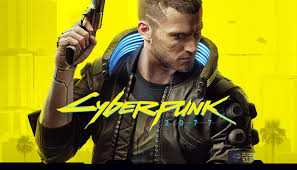
(Review) Cyberpunk 2077: This Isn’t the Future I Ordered

[I started to write this review back in mid-January, but I got distracted by life events and other writing projects and have only now come back around to finishing it.]

[WARNING: SPOILERS INCLUDED IN THIS ARTICLE.]

I waited a few weeks before I picked up my copy of Cyberpunk 2077. My brother had been playing since release day on a stock Xbox One and swore up and down he wasn’t having massive crashes or game-breaking bugs. So, about the start of the new year, I plunked my creds down and unlocked that deluge of bytes and bits that, a short time later, coalesced into the game on my Xbox One X. It seems only fitting to get the game through such a method, though I didn’t manage to find a way that I could download the game straight into my brain. Some of the things I was promised by the Cyberpunk of my youth are yet to come to fruition.

I played through most of the available content, having fewer than half-a-dozen side missions left and about as many of the available NCPD gigs. In that time, the game hard crashed fewer than tens times and, between the system’s assertive autosaving and my own constant backups, I never lost more than five minutes of playtime when a crash happened. I lost much larger chunks of play when AC: Valhalla crashed on me, which happened with less frequency than Cyberpunk crashes, but not by much.

I only noticed one other major glitch while playing, and that was that, once I equipped the Mantis Blades, they would never retract, even when I switched weapons, and continued to take up a good half of the screen. The issue resolved when I switched back to the monowire cyberweapon instead and I didn’t try the Mantis Blades again during my playthrough. There were a few minor visual bugs or errors–such as being unable to pick up certain (very low value) items that had been marked as pick-upable. Overall, the game played smoothly, was pretty to look at on an few-years-old Samsung HD flat screen, and didn’t suffer from the litany of problems I’d been led to expect. The game actually convinced me that upgrading to the Xbox Series X might not be as imminent a necessity as I’d previously thought. Your mileage may vary.

A subsequent second full playthrough (and about half of a third) had me see most of the rest of the game’s side missions, with fewer crashes or issues each time–thanks to consistent updates by CD Projekt Red.

Let’s Talk About Sex

Let’s talk about the ugly first; get it out of the way: Cyberpunk 2077 decided to resort to gimmick and shock value in its treatment of sexual issues. The range of gender presentations that had been promised in the character builder was lacking at best. Instead, you can pick your penis size, or have a vagina. None of the choices matters, and there’s really no purpose to them. I don’t mind sex and romance relationships being part of the story lines of video games–I’m a generally hard person to offend, so those things merely being there don’t incite me to anger. That said, I’m not sure that I’ve ever come across a romance system (or dialogue) or a “sex scene” in a video game that didn’t make me feel awkward and uncomfortable. You can find elsewhere a deep discussion of some of the sexualized gimmicks and mistakes made by the game designers. For my part, what I really want to comment on is the missed opportunity here, with the clumsiness of the shock-value choices made by the developers underscoring the lack of thought given to their approach. I’m not interested in the debate of whether sexual topics should have been omitted from the game altogether; with regard to such issues, my first question is always “what does the inclusion accomplish for the story” and, while the answer in Western media is often that it’s included only to pique the prurient interests of the audience, I also stand amazed, like G.R.R. Martin and others, that American society in general is simultaneously so uncomfortable with sexual issues and so comfortable with the graphic depiction of violence.

Cyberpunk, as a genre, provides us with warnings not just about technology used without regard for ethical considerations, but also the commodification of everything human by ultra-capitalist systems. While the former is certainly an increasing worry for modern society, the latter is the far more pressing issue in my mind–after making it through the widespread disaster that was Texas’s (lack of) preparedness for winter storms last week, which to my mind clearly demonstrates the problem with allowing profit-driven private interests to trump public welfare (as does the system of pharmaceutical development in the U.S. and its effects on the current pandemic)–the increasing dangers of a society caught in a death-spiral propelled by the veneration of capitalism above all other ideologies feels close to home. So, when Cyberpunk resorts to using sex and nudity only as window dressings, instead of commenting on the increasing commodification of sex and human desire, I honestly feel a little cheated about what could be meaningful narrative that could pull Cyberpunk 2077 from entertaining game into the realm of participatory literature. Even the plotline with Evelyn and her fate does little more than provide plot points without much consideration of what it means to be a “doll” sacrificing personal identity to satisfy the needs of others (sexual or not) and the plots that revolve around Clouds likewise use the profound sexual issues as a backdrop without making profound use of narrative potential.

You Get What You Give

I read another review of Cyberpunk 2077 that criticized the lack of defined personality for V, complaining that The Witcher had you play a character with a defined personality for whom you still had meaningful choices to make and further lamenting that V’s personality can swing psychopathically based on the whims of the player. I’d like to respond to that evaluation and, since it’s my blog, I will. My kneejerk reaction to this sentiment is that the critic needs to play more roleplaying games (pen and paper, preferably) to appreciate a video game in which you have the opportunity to create a personality for your character without having that personality defined for you. I, for one, would rather play a protagonist I get to design for myself rather than playing someone else’s character in a story. If the character comes across as inconsistent, that’s on the player more than the designers, because you have opportunities in Cyberpunk to make consistent character choices. If, on the other hand, you approach every dialogue option from the perspective of yourself staring at a screen where you have an avatar to wonder around in making choices according to your every whim, of course you’re going to end up with an inconsistent character. Feature, not bug, in my book.

That said, not all of the character choices have enough effect in the game to be meaningful. Some aspects work well without changing the storyline much or at all–the developing relationship between V and Johnny can be cathartic, dramatic and satisfying on its own (though this is undercut somewhat by having a “secret” end-mission option based on your relationship score with Johnny causing a split between immersively playing a character and meta-gaming the program). Otherwise, though, many of the choices are too limited in effects to truly be felt. Yes, some choices will open up romantic relationships, and some will allow for different end-game missions and resolutions to the main plot, and there are a very select few that will have a later result (freeing Brick in the initial confrontation with Maelstrom may have a later effect if you play through all of Johnny’s missions), many follow the pattern of “let them say whatever they want so long as they do what you want them to.”

Maybe I’m chained to my existentialist leanings, but it seems that there’s a lot of Cyberpunk’s story and main character that only bears the meaning you personally create for it. Just like the ambiguity of life in general, that could be immensely freeing and satisfying or terrifying and ennui-inducing. Or both at once.

Gameplay
I played my first playthrough on the “normal” difficulty setting, increasing the difficulty for each subsequent playthrough after I’d grokked the game’s systems and idiosyncrasies. My first character ended up as a sort of generalist, my second a street samurai foregoing any hacking for a Sandevistan and later a Berserk module, my third going full Netrunner.

The game is devastatingly easy, even on the highest difficulty setting, for netrunner characters. One reviewer compared netrunners to wizards in fantasy settings, with programs approximating spells. I think that’s relatively true, especially because the programs work in ways that are especially “gamey” and unrealistic. If you’re going to implant yourself with cyberware, you’re not going to allow that cyberware to be wirelessly-enabled for any punk with a computer to hack into, and you’re probably going to invest in a decent firewall as well. Systems aren’t going to be designed with such blatant faults in them that you can electrocute or overheat the user. So yes, the hacking in Cyberpunk is essentially magic.

The pure combat approach, even with a good deal of stealth, is much more difficult, especially on higher difficulties. Without the ability to hack cameras, you have to be especially careful. Attacks must be carefully planned so as not to be overwhelmed. I kind of think that this was the most enjoyable approach to the game, though, both for pleasure of gameplay itself and the satisfaction of achievement. There’s something thrilling about beating a machinegun-wielding punk to the punch while swinging a katana, and the gunplay in Cyberpunk 2077 is pretty good, too–and I love a good tactical shooter.

Another exploit to use or avoid is finding the Armadillo mod blueprint. I don’t think that there’s any Technical skill requirement on being able to craft the Armadillo mod at any rarity level–the rarity level of each one you make is just randomized–and few materials are required to make them. If you keep to clothes with multiple mod slots and fill them all with level-appropriate Armadillo mods, you can maintain an Armor rating sufficient at any given level to feel nearly invulnerable.

The game lacks some of the exploration elements you might expect in an open-world RPG; you’re not going to find as many of the sorts of locations that tell their own little stories like you would in Fallout or Elder Scrolls. But the side jobs are interesting–some of them more interesting than the main story, I think–and search them out, as well as the NCPD hustles, fills some of the gap.

Substance and Style
The feel of Cyberpunk 2077 is the feel of 80’s sci-fi in the setting tone and dressing. On the one hand, that’s fitting; cyberpunk was born in the 80’s. But it’s also been more than 30 years since the end of that decade. Technology and culture have changed. Our cultural fears and suppositions have evolved. World events have shown us that, while the danger of megacorporations is real, it might not be so melodramatic as we expected. We’ve had Brexit, the War on Terror, the War on Drugs, the realization (by us–often willingly–ignorant white folk) that racial injustice has never been overcome, the resurgence of far-right terror groups and white nationalists, and the shift of widespread economic fears focusing on Japan to focusing on China. But we’ve also seen some things change for the better–green energy is innovating and being taken seriously, a majority of the world (if a slight one) believes in the reality of climate change and the moral obligation to do something about, technology has provided for democratization and methods of social resistance as much as domination.

Bear in mind that the original Cyberpunk RPG setting took place in 2013; the most popular version of the game was set in 2020. Moving the timeline forward (either all the way to 2077 as in the video game or to the 2050’s as in the tabletop Cyberpunk Red) begs the question–why hasn’t anything really changed? Yes, Mike Pondsmith and the other members of the creative teams of both projects did hard work in balancing a setting that feels at once like nostalgic Cyberpunk and just a bit different. That’s a difficult line to walk, so I’ll admit that my comments here should really be applied to the cyberpunk genre in general and not to the Cyberpunk setting specifically, in any of its guises.

But I’m ready for cyberpunk as a whole to grow up, to evolve with us. It’s insufficient to continue to dwell on the cyberpunk of the early years–though we must acknowledge a debt to Pondsmith, Gibson, Stephenson and the early fathers of the genre. Where’s a cyberpunk for my middle years, one that includes all the myriad shades of gray endemic to any genre born from noir, but that also includes some dashes of color hear and there, that gives us a gritty optimism, reasons to fight the evil in the world to preserve the good, reasons to do more than only survive?

Maybe I need to read more cli-fi and other developments out of the cyberpunk genre. My own fiction writing, while fantasy in genre, takes a number of cues from cyberpunk–but that’s not quite what I’m talking about either. Where’s the wise old cyberpunk that’s introspective in new ways? I’m seriously asking–if you’ve found it before me, drop me a line!

So, while enjoying the neon retro-future that Cyberpunk 2077 offers, I’m also left wanting something more.

Conclusions
I enjoyed Cyberpunk 2077 well enough to return to play it with different character builds, and it’s definitely reminded me of my nostalgia for the cyberpunk genre. I think that it’s the gameplay, though, that did it for me more than anything. The narratives have their clever points, drama and empathy-invoking aspects, but if you’re looking for storytelling on quite the same level as The Witcher, you’re not going to find it here. Maybe it was just too much hype for its own good. Maybe too many promises that didn’t make it into the release build. Or maybe it promised us a world we’ve already left behind in our hearts and minds.

Cyberware in Fate (Theory and Planning)

In my previous post, I mentioned that I’m working on some Fate hacks for Star Wars and Shadowrun. As I continue to develop ideas for those hacks, I wanted to share some of my thoughts on handling cyberware in Fate (with some ideological commentary on handling cyberware in roleplaying games in general).

Let me begin by saying that I love the complexity and diversity of cyberware and bioware in Shadowrun, even if it verges on turning character creation into “Accounting, the RPG.” Without hesitation, I’ll state that it’s the character creation systems in the official Shadowrun rules that most draw me to that ruleset. Running the game with the Shadowrun rules, though–that leaves something to be desired. I’ve spent a few evenings reading through the Cyberpunk Red rulebook (having also spent a good deal of time recently playing Cyberpunk 2077–review forthcoming), and I find the cybernetics in that game limited–frustratingly so–when compared to Shadowrun.

(As an aside, since I grew up with Shadowrun and not Cyberpunk (even before I started reading all of the fiction of the cyberpunk genre), it’s hard for me to be satisfied with a cyberpunk setting that doesn’t also include magic and elements of the fantastic. I’m tempted to worldbuild my own, fantastic, post-cyberpunk setting, perhaps for use with the RPG ruleset I’m developing for Avar Narn. Since, without a Patreon, I have some more flexibility in my worldbuilding endeavors, and since I’ve already put down the cash for a lot of functionality in WorldAnvil–a result that in my mind has been worth the whole Patreon idea even though it didn’t pan out–this might be something you see posts directing you toward in the future.)

Back to our irregularly scheduled post. Is there a good way to capture the complexity of Shadowrun-style augmentation in Fate? Of course there is–I just have to find it!

Core Approaches
The “basic” system for handling cyberware in Fate simply uses aspects and stunts (see Fate System Toolkit p. 152). Really, these are almost mini-stunts, given the difference between “minor” augs and “major” augs. This is a good start, but the Fate system can do a lot more, and, as you know, I like to play with the system and see where it might reasonably and usefully be pushed. If you’ve looked at my partial attempt at a Tom Clancy’s Division ruleset in Fate, you’ll see that I’m willing to push the envelope of the Fate system beyond its initial intent. On the other hand, it’s the initial intent–narrative focus and efficient play–that draws me to Fate in the first place, so I want to temper rules mods and modules I come up with in light of that. There’s nothing wrong with creating a new system that uses Fudge/Fate dice, but I’d like my creations to still reasonably be called implementations of Fate rather than hybrid abominations distantly inspired by Fate.

So, how do we expand on the Toolkit system? We invoke the Fate Fractal, of course! There are a few things that this will assist us with:

(1) By creating an overarching Extra, we can apply some facets of augmentation across the board. This should help implementation of ideas like Essence.
(2) By the same token, making Augmentation an Extra allows us to fine tune some of the cost of cyberware with Flaws, conditions and other character traits that can be bundled in with an Extra.
(3) While the core of stunts and aspects will easily account for many (perhaps most) cyberware/bioware/geneware/nanoware items, we’ve got other interesting options to play with.

Other Tricks
Among those interesting options, weapon and armor ratings immediately come to mind. Once I sort out exactly how I’ll handle weapons and armor, it will be easy to address augmentations like subdermal armor, integrated weapons, etc.

Even better than that (in my mind, at least), is the use of the idea of Red and Blue dice. The Toolkit describes the Red and Blue dice system on page 72. In the form presented, Red and Blue dice are used for weapons and armor, respectively. But there’s no reason they have to be. We can use the idea of Red dice as a mini- (almost micro-) stunt. “Roll a Red Die when using the Athletics skill.” This gives you a 1/3 chance of having a +1 boost to the result. Far less than the typical +1 or +2 from a stunt, but it still represents a tangible benefit (actually it’s, in raw statistics, the same benefit as a +1 to X skill in core Shadowrun, though this plays out differently because of the reduced granularity in Fate). As an additional benefit, this allows us to spread around a lot more small bonuses, allowing for characters with many different augs without having an insane character budget for extras.

Some other rules tricks I’m considering using: increase the Shift value of a Condition/Consequence; add a new Condition/Consequence; add additional Stress track boxes; modify stress box values.

Tags, Traits and Aspects
I’m also thinking about modifying the idea of “tags” in PbtA games. In Apocalypse World games, “tags” tell you something about the narrative but don’t necessarily have a mechanical component. For instance, a firearm with the “loud” tag doesn’t change the numbers on a roll when it’s used, but it should influence the types of moves the GM takes in response to its use.

Transhumanity’s Fate (the official port of the Eclipse Phase setting to Fate rules) uses a similar concept, which they call “Traits.” Traits act as “sub-aspects” or reminders of the purview and scope of the aspect to which a trait is attached. In many ways, this is that the Toolkit’s description of some “minor augs” works, like adding “low-light vision” to your cybereye.

Depending on how you look at it (or upon specific implementation), what I’m thinking about doing is actually closer to PbtA’s tags than Transhumanity’s Fate’s “traits.”

This is because Aspects actually have (at least) two functions. While an Aspect can be invoked to gain a mechanical bonus, an Aspect in Fate is also “always true.” So, at least as I understand and run the system, if someone has a Low-Light Vision trait, the existence of that trait justifies a lack of increased opposition to a roll based on poor lighting, even without the Aspect being invoked and a Fate Point being paid. This is one of those things that seems to take some settling in before new players grok Fate RPG.

If that’s how you run things, then it would be possible to divorce that “always true” portion of an Aspect from the “invoke to get a +2 or reroll” part of an Aspect. What does that leave you with? If the statement is attached to another Aspect, then it’s really pulling the duty of a TF “trait.” If it’s not attached to an Aspect, but you still treat it as “always true” for narrative purposes (we might say “for narrative positioning”), then it’s closer to a PbtA “tag.”

Implementation determines whether this is a distinction without a difference. If the augmentation system ties these “always true” statements to a stunt and not an Aspect, we’re pretty clearly in the realm of “tags.” Why would that be useful? A few reasons. Let’s look at the Fate Toolkit’s cybereye example.

The Cyber-Eye is a “minor” aug (meaning three to a point of Refresh) that gives a stunt-like effect (+1 to sight-based Notice rolls). This can be expanded by adding Aspects to the Cyber-eye, of which Low-Light Vision is one. But these added Aspects are also “minor” augs, meaning you potentially get three Aspects for 1 Refresh. Any problems that arise from doing things this way are minor at best and probably negligible, because the fact that there’s going to be overlap between many of these “minor” aug Assets and because, y’know, common sense and fair play. On the other hand, the low cost of these additions is better justified if they have only the “always true” element without the ability to grant a +2 or reroll. This helps fight the (again, potentially non-existent) problem of “Aspect bloat” but still makes those little tag-like tweaks worthwhile, because they still provide narratively and mechanically-significant information about when a roll should be necessary, what can be accomplished by a roll, and what reasonable opposition to a roll should be, all in line with the fiction-first approach of Fate. Example: having Thermal Imaging as a “tag” on your Cybereyes allows you to get information about the heat coming off of a vehicle’s engine in addition to make and model with a Notice roll–no additional mechanics needed and keeps the Fate Point Economy in check.

The only concern I’ve got with this approach is where it may require additional parsing and whether that additional parsing will add enough complexity to the system that the detriment outweighs value. Example: you can choose the “tag” Low-Light Vision for your Cybereyes, or you can choose Zoom Magnification. Should Zoom Magnification be a “tag”, an Aspect, or a stunt? Is it too weird to have sub-choices on an augmentation that vary so widely in mechanical effect? To be determined.

Essence and Humanity Loss
Both Cyberpunk and Shadowrun indicate that human augmentation directly results in reduced empathy, reduced “humanity.” I understand the need for Essence as a balancing issue in Shadowrun; I understand Humanity Loss in Cyberpunk less, since all characters have equal access to cyberware.

From a setting perspective, or philosophical or theological perspective, I find humanity loss and Essence rules to be strange, unsettling, and somewhat offensive. The reasons are many, but let’s focus on a few:

It’s extremely difficult to determine the psychological effects of human augmentation. If you read my theological or philosophical posts, you know that I’m an existentialist in my approach to both pursuits. I believe that our experience as embodied beings is very important to how we understand the world and our place in it. Our experiences with and relationships to our bodies are very complex things–we can talk about BMI, magazine covers, messaging about “ideal bodies,” anorexia and bulimia, and many more indicators of the nuanced and often troubled ways in which we relate to our material forms. But I defy the belief that someone who has a prosthetic is somehow less human than I am–that humanness is an inalienable part of their self. The argument made in Cyberpunk and Shadowrun on these grounds is horribly ablist.

Yes, a person’s humanity can be twisted and corrupted, made hard by experiences or choices. But I’m not convinced that fitting a piece of metal or a cloned and genetically engineered organ to one’s body is, by itself, the kind of experience that leads to such a loss of self. People who are benefited by prosthetics treat their experience of loss and restoration (however partial) in different ways–just like we all take different approaches and establish different paradigms with regards to how we each think about our own body. This paradigm might involve feelings of depression, despair, uselessness, failure and many other negative feelings that touch and trouble our relationships with self and others, but that’s a far cry from the “I feel 15% less able to relate to you or to feel compassion because my arm is made of aluminum” that our leading cyberpunk roleplaying games seem to expect.

The books in the Altered Carbon series (and the TV show), and the Eclipse Phase game (in d100 or Fate form) both take a more believable, more philosophically defensible and–perhaps most important–more interesting approach to the psyche and human augmentation. In both settings, psychological trauma can arise as a consequence of resleeving for many different reasons, but these are mostly involved with the experience of embodiment itself, of suddenly looking different or occupying a body that feels very different from what you expected. This is not the same as being psychologically traumatized by what is, at its core, enhancement surgery. Moreover, the psychological traumas of Eclipse Phase and Altered Carbon are treated with as much nuance (and perhaps empathy) as other types of psychological trauma, rather than being this unavoidable downward spiral of emotional intelligence.

Shadowrun perhaps goes farther in making a spiritual argument as well. The value of this is in adding complexity to the way the magical and supernatural elements of the game function, but the core assumption: that voluntarily changing your body results in spiritual detachment between body and soul, is a tenuous one. I can’t with any definitiveness say that it’s wrong, but it strikes me, personally, as wrong. Your mileage may vary.

Fortunately, the Fate system is more resistant to balance issues than Shadowrun is (which, despite having Essence, is full of potentially game-breaking mechanical constructs), so Essence issues do not need to be treated in as much detail as in the official Shadowrun rules. That leaves me with a design question: (1) cater to my own beliefs, suppositions and predispositions, or (2) adhere to fidelity to the setting and mechanical conceits of core Shadowrun for sake of fidelity to the system being ported. At this point in time, not sure how I’ll go. Were I designing this hack with more of Cyberpunk in mind than Shadowrun, I have to say I’d be inclined to ignore Humanity Loss altogether and let cyberpsychosis be a thing that happens in the world, but not to player characters.

Dresden Files Accelerated, “Mantles” and PbtA-Style Playbooks in Fate RPG

With our Innumerable Isles game, my gaming group is just starting to get comfortable with how the Fate RPG rules work, many of them coming from a strong background in heavier “crunch,” less narrative-focused (rules-wise, at least) games, like D&D, Shadowrun, WFRP and the previous generation of 40k RPGs (Dark Heresy, Rogue Trader, etc.). Given that I both have a very fond place for how Fate plays and I understand the frustration of jumping around from rules system to rules system, I’ve decided (as I’ve mentioned before) that most of the games I’ll be running for the near future will use the Fate RPG system.

I am working on my own RPG system for the Avar Narn setting, with some ideas about some additional settings to build for use with my fiction and that eventual ruleset, but I also really enjoy tinkering with the Fate system without having to entirely reinvent the wheel for core mechanics and basic systems.

So, as two of my many side projects at any given time, I’m working on putting together my own hacks for Star Wars and Shadowrun, two settings I’m likely to revisit with predictable frequency. In doing so, a few ideas have been storming around in my brain.

My experience with my group and the Fate system is that, when it comes to character creation, at least, my players would like to have additional guidance–particularly when it comes to creating Aspects and choosing stunts. And then there’s my own proclivity for thinking about ways to have the ruleset reinforce tone, character and setting. The Playbook approach of the Powered-by-the-Apocalypse games goes a long way into simplifying character creation by providing a ready character idea with thematically focused abilities that, as a whole, maintain some flexibility within the character concept.

Generally, I’m not the biggest fan of character “classes,” as I personally prefer maximized flexibility in character creation. However, character classes and roles as distinct and discrete constructs have definite value in roleplaying systems–that’s why they’re so common in the first place. Among other things they: (1) help ensure each player in the group has an area in which their character holds the spotlight, (2) buttress the crafting of character concepts, (3) simplify and speed up character creation, (4) reinforce ideas about setting and theme.

Both Shadowrun and Star Wars are settings conductive to the use of “classes” or “playbooks,” having iconic archetypes to draw from. In Star Wars, we have the Jedi (of different types), the Smuggler, the Soldier, the Bounty Hunter, etc. (the FFG Star Wars system provides many different such archetypes). Likewise, Shadowrun characters tend to fall into archetypes as well: the Street Samurai, the Mage, the Shaman, the Rigger, the Hacker/Decker, the Face, the Infiltrator, etc.

PbtA would make each of these playbooks (indeed, you can find PbtA hacks for Star Wars and for Shadowrun, as well as The Sprawl and its supplements, which handle cyberpunk games with or without fantastic elements in the PbtA system).

I can’t say definitively whether the PbtA-style Playbooks influenced the writing of Mantles in Dresden Files Accelerated, but it sure seems like they did. Regardless, the DFA‘s Mantle system is a stroke of genius; it provides a great example of how to apply the Playbook philosophy to the Fate rules (whether Core, Condensed or Accelerated).

If you’re not familiar with DFA‘s Mantles, these are used to flesh out different character concepts or archetypes, both mundane and supernatural. Each Mantle includes some core Stunts for the Mantle as well as a list of additional stunts for selection in character creation or advancement. Sounds like a Playbook’s “Moves,” right? Where things get really interesting is that (since DFA uses Conditions instead of Consequences), each Mantle gives a character additional Conditions. Some of these Conditions have a track, boxes in which can be checked to power the stunts in the Mantle’s list. Others are binary and may do all sorts of interesting things–like shutting down the use of particular stunts. An example is the Law Enforcement Mantle, which has a “Police Powers” Condition that allows the character to do the things expected of a law enforcement officer as well as a “Suspended” Condition that prevents the use of Police Powers when checked–you’ve overstepped your authority and someone’s demanded you “turn in your badge and gun,” as the cop films would have it.

So, the Mantle grants thematic “Moves” and often includes thematic Conditions and even subsystems unique to that character type. If every character has a Mantle, and the Mantles are at least roughly balanced (to the extent that the game you’re playing and the players you’re playing with need balance), then there’s no need to resort to Refresh costs to apply a Mantle.

So, the Mantle carries with it the structure of the PbtA Playbook. As with PbtA, you can always allow a character to have Stunts (or Moves) not from the Mantle’s list when it makes sense for them to do so.

In DFA, Aspects and Skill (Approach, really) ratings are determined separately from the Mantle, so you get the Mantle’s structure combined with the vast freedom of creating your Aspects and the basic difference between characters of the same Mantle by how they arrange their Skill/Approach arrays. You can add to the structure of a Mantle by providing example Aspects players can choose from, suggesting or requiring apex Skills or Approaches for a Mantle, and/or building a selection of Extras that a Mantle is required to take or from which they may select (a Shadowrun Rigger needs drones, right?). Conversely, by leaving the selection of Extras divorced from the Mantle, by having a “general” stunt list available to all characters, and by leaving Aspects and Skill selection untethered to Mantles, you preserve overall character freedom while gaining the thematic and mechanical benefits of using Mantles. For a happy medium, give “suggested” Aspects, Extras, and Skill arrays that can be used by those players who want to make their character quickly but that may be modified or ignored by the players who want more freedom in crafting their particular character.

Here’s the downside: it’s a lot of work on the GM (or whomever is putting the mechanics for the game together) to build Mantles (or, as I’ll prefer to call them, Archetypes)–particularly if you’re trying to create a broad selection of Archetypes with unique Conditions and Stunts (or at least only minor overlap). I’ve found myself with the DFA rulebook open in one tab, a number of other Fate rulebooks open in successive tabs, and the Flow app open on my iPad all at once to take notes, mark things out, and generally brainstorm ideas as I list and define Archetypes. For me, it’s the kind of creative work I enjoy anyway, and I think it will improve games I run in those settings by both scaffolding players in their character creation and providing some thematic focus to character creation for the setting and particular narrative.

As I work on my personal adaptations of Star Wars and Shadowrun to Fate, look for me to post those rules, Archetypes and ideas to the blog for your use and/or modification, should you like them. At the very least, if you like Fate, go pick up a copy of Dresden Files Accelerated. It’s a great use of the Fate system standing alone, and I’ve found it to be an excellent source of ideas for hacking an already-incredibly modular RPG system.

Afterword
If you’ve followed the RPG aspects of my blog for a while, you’ll know that I previously started a hack of the Cortex Plus/Prime rules for Shadowrun (as well as posting some of my most popular articles with build advice using the official Shadowrun rules, with an eye at Sixth Edition but many of the points applicable to the 20th Anniversary or 5th edition rules as well). I’ll likely go back and finish the Cortex version at some point, as it’s another system I very much enjoy (and very much enjoy tinkering with). There are some parts of me that keep telling me that, as narratively-minded ruleset with (arguably) more crunch than Fate, it’s a better overall candidate for a Shadowrun game, and some of the same ideas in this article can likely be used with Cortex as well. But for now, I’m going to stick to Fate.

Well…That Didn’t Work

My Patreon launch was a bust, which I knew was a distinct possibility. Strangely, I’ve not really taken this as a significant blow like I thought I might. In fact, I wonder how much of a setback it really is. Yes, it would have been nice to have some supporters who chipped in a little monetary symbol of their enthusiasm for my work, but maybe I’m just not there yet. I’m okay with that.

They say that money ruins everything (at least I often do!), and we live in times that are economically difficult for many of us, so it’s completely understandable that people may want to contribute but just not be able to justify even small amounts of extraneous spending in their budget right now. Certainly, I experienced a good deal of moral support and interest in the idea–this didn’t manifest into patrons on Patreon, but I’m more interested in the support for the writing than the patronage. And, there’s something to be said for retaining freedom in creation that isn’t beholden to anyone.

I never expected to generate much income from the Patreon page, and not having picked up any patrons over the first few days had me thinking about what I really want from other people with regards to my writing. I came to the following conclusions:

(1) I’m going to be writing this stuff regardless, and I can develop the discipline to do so more regularly without needing deadlines to other people to do it.
(2) I am more interested in developing a community of people who are interested in, moved by, and want to engage with my worldbuilding and writing than I am about making money off of it. Put a different way, I want my writing to matter more than I want it to make money.
(3) It’s very possible that I simply haven’t put out enough content yet to give people enough information about whether they’re ready to “invest” in more.
(4) I’m by nature not a marketing person, and I don’t generally like asking people for money, so when I kept getting notices from Patreon about things I could do to try to get patrons, my first thought was, “I’d rather spend the time writing than selling myself.” That’s certainly counter to the mainstream advice for creatives making their living off of the democratization of the internet, but it’s also who I am.

So, with all of that in mind, I’ve decided to do things differently. I’m going to continue to meet my espoused worldbuilding and writing goals that I’d developed for the Patreon launch, but I’m going to do it without the Patreon angle. To that end, the Avar Narn material on WorldAnvil has been made public for everyone. You can find the world by going to https://www.worldanvil.com/w/avar-narn-jmflint. You may need to set up an account with WorldAnvil for access.

Once there, you’ll be able to click on a button to join the Discord server for discussion and community-building around the setting.

With money out of the way, I hope you’ll join me as I continue to develop the world and write stories within it!

And it Begins (Patreon Now Live!)

Giddy with anticipation, coffee and anxiety, I have now officially launched my Patreon!

Membership is $5 per month. By becoming a Patron, you will have immediate access to:

(1) About 33,000 words of background material on Avar Narn, arranged in World Anvil for easy perusal;
(2) A new short story exclusive to Patrons (called “Family”);
(3) A (rough) revised map of the Altaenin islands;
(4) Access to an exclusive Discord channel to ask questions, share your thoughts and feedback, and let me know what you want to see next.

A minimum of 10,000 words of additional history and lore will be added this month; I’ll be diligently working to expand the RPG rules information available and to provide access to more fiction over the course of the month as well.

You can check out the Patreon page at: https://www.patreon.com/AvarNarn.

If you’re not sure if Avar Narn is a setting you’ll enjoy, try some of the short stories, the rough first draft chapters of Things Unseen (both available in the My Writing section of the blog) or some of the introductory posts on the blog with information.

More Patreon Info

I am both excited about and dreading the launch of my Patreon with the start of the new year. Excited, of course, because it may provide both an impetus for me to really up my writing productivity and may create a community of support around Avar Narn that would be motivating in so many different ways. Dreading, because there’s every potential that the launch will garner no patrons and I’ll have to overcome that setback to morale to advance my writing endeavors (a task I think I’m up to).

Already, though, the Patreon plan has me tingling in anticipating, a restlessness that has turned to some productivity. I had in my last post mentioned my desire to have at least 30,000 words of background material waiting for patrons at launch. I’m over 32,000 words uploaded to WorldAnvil. Even that doesn’t cover the core elements of the world in terms of geography, history, religion, etc. What has been put in words so far seems just an amuse bouche, still needing lots of fleshing out. This, itself is daunting and exhilarating.

The only thing I’d mentioned having ready for launch that isn’t ready yet is a map of Altaene, which I need to finish by the end of the year. I’m now hoping to add to the launch matter a new short story (currently in planning) and some additional background and roleplaying material (the core mechanics have been included on WorldAnvil, with some additional bits close to being solidified and my initial notes on the combat system and encumbrance systems starting to come together).

Armed with an iPad Pro and and Apple Pencil, I’ve collected some books and courses on drawing and digital painting. I’m a beginner to both, at best, but I’m hoping to learn enough to provide at least some interim and passible art to get some ideas across. Devoting time to this course of study has become part of my general Patreon plan.

In terms of the launch itself, only one thing remains to be done–I need a picture for the Patreon page itself. For now, I think, I’ll create a very simple logo as a place holder, to be improved and enhanced at a later date. We’ll start humble and work our way up!

I’m very much looking forward to having some fresh perspectives on the setting as I continue to expand it, to sharing its depth and breadth with new people. I hope you’ll join me!

Review: The Queen’s Gambit

Note: This review is only about the TV Series. I haven’t read the book and currently don’t intend to.

I liked this TV series. I’m a little upset that I did.

Don’t get me wrong, there’s a lot to like in the series. Anya Taylor-Joy plays the role of Elizabeth Harmon beautifully, with a subtlety of expression and nuance of character far more mature than many older actors. The filmography, likewise, is intoxicating, well shot, full of dream-like color. The music suits the period and theme while providing a nostalgia for those who lived through the 60’s or, like K, who were raised on the songs of the era.

More than anything, the series builds an ethereal, mystical view of chess, depicting the tension in every move, the complexity of possibilities, the focus and forethought of the players as well as their emotional investment in one seamless package that would entice anyone to take up the game. I think that it’s this mystique that made the show so enjoyable for me.

But, at the same time, I found the storytelling to be disappointing. The show plods along from plot point to plot point in formulaic structure. Following genre and convention in the structuring of a story isn’t a bad thing–formal structures in writing have been adopted because they work, and in the commercial setting of TV shows and filmmaking, not following recognizable structure may be fatal to ever getting a first read of your work by someone with the authority to make a script a full production.

The Queen’s Gambit follows structure dutifully, though, dispassionately, focused on going through the proper motions than making them mean something. It is the difference between the dancer who is technically proficient and the one whose motions tell you a story that stirs the soul. If we’re going to be specific, the problem is that Elizabeth Harmon’s lows are never low enough. Without giving too much away, she suffers some significant obstacles in her path–some of them truly tragic–and yet we’re never given enough time with any of them to let them sink in, nor are we ever shown them affecting Beth in a deep (or even realistic) way.

Beth’s most significant flaws magically heal themselves in time for the climax. Those people she’s spent time using and then pushing away all return to loyal serve her in her time of need, with no real explanation for the change of heart. What should have been a central struggle for the character–her addiction to barbiturates and alcohol–is simply set aside when the time is right. Only Taylor-Joy’s face gives us any indication of a struggle over giving up the addiction–the script gives us about 5 seconds of film to turn around a character problem developed over episodes of the series. We’re given multiple instances of Beth indulging in her addiction, but only the flipping of a switch in being rid of it.

That’s why I feel bad about enjoying the series. The writing was passable for the most part, but sorely lacking in some of the most important aspects of story. When the climax is a foregone conclusion, you lose the drama, the catharsis, that causes us to immerse ourselves in story in the first place.

What we are left with is not a period piece or a character study, not a bildungsroman or hero’s journey, but a story about chess. The characters are merely present to show us the details–social, technical, emotional–of the game. They become pawns themselves in the writer’s moves, shadowing a game someone else played to perfection a long time ago. Pieces moving across a ceiling with dreamlike precision.

Patreon Planning Update

As I continue to plan for a launch of my Patreon at the beginning of the new year, I want to keep you apprised of the details so that you can determine whether this is something you will be interested in. A few changes or additions to the plans in previous posts:

(1) I intend to have only one Patron level instead of three to simplify delivery of “the goods.” This level will be $5 per month; I’m anticipating a $50 per year alternative if you’re the kind of daring soul willing to take a risk up front.
(2) I am establishing an account on WorldAnvil, which will be used to organize content for your reading pleasure. It’s my understanding that access to WorldAnvil can be synched with Patreon, providing some nice compatibility on that front.
(3) I have been working to write, compile, revise and codify existing worldbuilding material for Avar Narn, with the intent of having a ready reserve of material to post to hit promised monthly quotas. However, I’ve decided it’s better on all fronts for me to open with as much material as I can muster by the end of this year and to devote myself to new material when the first month begins. This way, you’ll have some background on the world to explore from the second your Patreon becomes active. Some of this will be rough works in progress (particularly the long history of the world), but some will also be focused write-ups on particular topics of importance to the setting. I believe that I currently have somewhere around 25,000 words of material to begin from, and will be working as furiously as I’m able over the course of this month to increase that number as much as possible for launch. I’m also working to have a new map of Altaene (the islands that are home to the “Seven Sisters” cities and the setting of Things Unseen) by launch.
(4) 10,000 words of new setting material (or equivalents in maps and visual design work) will be the bare minimum I strive to deliver each month. Additional features beyond that amount will include: new short stories, early access to revisions of the Things Unseen novel in progress, development toward a complete roleplaying game using my own developed system–Patrons will be encouraged to playtest and provide feedback once the ruleset becomes workable, and behind-the-scenes commentary on my work progress and methods. It is my intent for the Patreon to provide broad access to the world of Avar Narn, however you want to interface with it–whether that is enjoying fiction, becoming immersed in the lore and history of the world, or leading and taking part in your own adventures within the setting.
(5) It is my intent to pour all proceeds from Patreon back into the setting itself. Funds will pay for maintenance of the hosting and other costs of online material, the purchase of books and tools to enable me to better expand the materials available for you and, if possible, the commissioning of third-parties for high-quality artwork, maps, and layout/design for the compilation of materials into books and other media.
(6) As previously mentioned, I will also be establishing a Discord for Patrons to dialogue with me and others, pose questions about the setting and generally engage in a developing community around Avar Narn.

More to come soon!

Assassin’s Creed Valhalla – a Strange Nostalgia

I haven’t quite finished the game yet, but I’m far enough in I think I can give a good review. Here it is.

First, the ugly. Feel free to skip these minor rants if you’d like.

I have a love/hate relationship with the Assassin’s Creed games. I love the historical aspects of them: running around in reconstructions of places I’ve studied but can never truly visit, hearing at least a palatable effort at ancient spoken languages (the Old English of Valhalla being the one I’m most familiar with, as it happens), and living an adventure–if overblown and grandiose–in another time. But I hate the framing device in which all of the Assassin’s Creed story takes place. If there weren’t so many people out there trying to peddle some version of historical belief in ancient aliens (an idea I find to be demeaning to historical peoples and often invoked as a matter of racism), I might not mind it in my fantasy games. But there are, and I do.

I’m also not a huge fan of the use of Templars and Assassins as factions for what is (at least in part) supposed to be a “good versus evil through history” struggle. Both factions are too nuanced and problematic for such use, and employing them in such a way, I think, plays too much into the conspiracy theories about them. From the narrative perspective, it’s sloppy writing to resort to them. From the historical perspective, its dangerous pseudo-revisionism thinly guised by fantasy. At best, their use makes unintended assertions about history that, while placed in a fictional environment that logically has no bearing on actual history, blends enough of the semblance of history into the setting to make that easy to forget. This is only partially side-stepped by the fact that the factions we’re dealing with in this game are the “Hidden Ones” and the “Order of Ancients,” the precursors, respectively, of Assassins and Templars.

So, I try to skip through those parts of AC games (though not all the Order hunting–I’m not a philistine) and focus on the “historical” portion of the games. Thankfully, they historical portions are by far the greater part, and I’ve only really had one cut-scene of the present “Animus” framing device in many hours of play.

Gripe #2: Assassin’s Creed Valhalla has no singlehanded swords for player use. Given that the early medieval sword (those that fall under Peterson’s typology rather than Oakeshott’s) is an iconic image of the Viking, it is nothing short of a travesty that they are missing from the game. This is exacerbated by several factors: (1) many enemies use a single-handed sword, so the assets and animations are at least partially present, and the “why can’t I just pick one up” question looms large; (2) you are given several ahistorical two-handed swords to use; (3) it’s just such an obvious oversight.

A further comment about the two-handed swords (with the caveat that I’ve mostly been using one in the game): my supposition is that the choice not to include dedicated one-hand swords arose out of a perk that allows you to use large weapons in a single hand (thus pressing the two-handed sword into service as a one-handed sword). Yes, it’s a video-game, but that choice strikes me as dumb anyway. From a mechanical standpoint, it reduces the value of choice of weapons, with the realism sacrificed for the “cool” value a bit over the line for my taste (which I admit is a personal matter). From a historical perspective, it pushes the problem of the lack of historicity even further.

You see, there really weren’t two-handed swords in the 9th century (when the game takes place). There are several reasons: first, the metallurgy of the time was not a precise science by any means, and making a durable blade of two-hander length wasn’t likely enough to succeed to be worth it. Viking blades, like katana, were created through the “pattern-welding” process of steel-making, which relies in turn on “forge welding.” In forge welding, several slats of metal are heated until they begin to fuse and then wrapped and twisted together into a cohesive whole, where the flaws of one original piece of metal are hedged by the presence of the other pieces. Because of the differing carbon content in the finished piece, a blade could be acid-etched to reveal the patterns in the twisted metal. The result is what the Vikings purportedly called “the serpent in the steel” and is often mistaken for Damascus steel.

There are a handful of photos sometimes claimed to be of archeological finds of two-handed swords, but these photos make their argument based on the length of the grip. That itself is problematic for two reasons: (a) these photos are not of complete weapons in useable condition, and it’s difficult (perhaps impossible) to know how much of the blade’s tang that would extend into the pommel is being touted as space for a hand, which it is not; (b) without full provenance and scholarly descriptions of these blades, the photos aren’t really that helpful anyway. The second and third reason two-handers weren’t common are related to the style and nature of early medieval warfare.

Valhalla never demonstrates this (missing some interesting mechanics, I think), but battles in the 9th century (and surrounding centuries) were largely fought based on the shield wall (as since ancient times with Romans and Greeks before them). For the shield wall to work, your shield is responsible for protecting part of your body, but also part of the body of the man standing beside you. That means that everyone in the rank needs to carry a shield. That leaves no place for two-handed swords.

There are anecdotes about brave warriors moving in front of their shield wall, exposing themselves and demonstrating that bravery, while throwing spears, collecting the gear of a fallen enemy, or undertaking other exploits, but it is the fact that this is extraordinary behavior, not common behavior, that makes these descriptions part of sagas (with parallels in Celtic literature and probable other cultures’ tales of the same period).

The two-handed sword largely (but not solely) developed in the high and late middle ages for a single reason–plate armor. The reliability of plate armor meant that a shield became unnecessary as a weapon of war, and that new weapons were needed to confront the threat. The acute-pointed, two-handed blades of the late 14th and the 15th century were a response to changes in armor, allowing a weapon that could be “half-sworded” to find the chinks in an opponent’s plate at close range and that could be wielded with greater speed, power and precision generally.

There is debate (and perhaps some consensus that the answer is “no”) as to whether a single-handed sword can break through the riveted maille used by Vikings and Anglo-Saxons. Even if it doesn’t, though the force exerted by a blade hitting mail can break bone and cause significant internal injury (of course, a padded gambeson was worn under mail to help resist this). Regardless, the single-handed sword (as well as spears and axes) where largely seen as sufficient to address this problem (or the metallurgy issue trumped all in preventing two-handed swords).

Okay, enough of that.

My third issue really has nothing to do with the game proper, so I’ll keep it short. I am concern about the idea of the “modern Viking.” I’m seeing an increase of clothing brands using that kind of terminology (on them or in advertising) in soliciting buyers in the tactically-minded, survivalist, or militia-type categories. This disturbs me because: (1) Vikings were not people to be emulated; (2) our society has no place for the kind of behavior for which Vikings are seemingly idealized; and (3) identifying oneself in such a way (except for a very small minority of people, perhaps) is not realistic. Even where it may be realistic, I’m not sure that it’s healthy. It’s essentially saying “I’m someone who thinks violence is the best answer.” I cannot disagree more. Alright, that’s done and done.

Now, what do I actually think about Assassin’s Creed Valhalla? A few things, in fact. Is it fun? Yes. Is there a lot of content to play through if you want it? Yes. Is it a beautiful game? Yes. If you liked AC Origins or AC Odyssey will you enjoy it? Absolutely.

All of that said, I have some reservations about Valhalla as an “Assassin’s Creed” game. This game has added some great elements to enhance the Viking side of things, but I think that this comes at the cost of the “Assassin’s Creed” heritage. The Raiding mechanic (in which your longboat crew assists you in attacking and pillaging monasteries to steal supplies and materials used to build and enhance your own settlement) is fun and, at least on a stereotypical level, emblematic of our ideas of Vikings. Likewise, references to holmgangs, weregilds and althings help immerse one in the Viking and Anglo-Saxon cultures. The reliance on tales of Ragnar Lodhbrok may lean too heavily on the recent History Channel (which, ironically, isn’t usually that great in its historicism, preferring in both documentary and fictional programming to serve entertainment over accuracy).

As an admission, I’m playing on “Normal” difficulty. I tell myself that this is because I don’t want to devote the additional time required to play at a harder difficulty level, but you’re free to substitute whatever rationale or psychology you’d like. On normal difficulty, there quickly becomes little reason to resort to stealth, as you become powerful enough to wade into even the most heavily-guarded fortresses and take out everyone without breaking a sweat. Very Viking saga, yes, but not very assassin-y.

Overall, the game has a lot more in common for me with the Witcher 3 (although less well-written, less complex, and generally less interesting than my travels with Geralt) than with the early AC games. Gone are the desperate roof-top escapes from guardsman in a world where everyone is inexplicably a parkour master. Gone are the hit-and-run tactics. Gone is the aching for the time when you unlock the second hidden blade to take out those pesky pairs of door guards. Do I really miss those things? I miss the Florence of AC 2 and the pirate shenanigans of Black Flag, but I’m not sure I miss the stealth gameplay as a whole. It is, though, notably deficient. Again, a higher difficult mode may sufficiently remediate that problem–at the expense of no longer feeling like a powerful Viking warrior in a saga. But, given my complaints about historical accuracy above, maybe I’m just not someone easy to please, and the fault lies more with me with the game. As you know from my last review, I just came off of playing Watch Dogs: Legion, so maybe I’ve been stealth game-played out for little while. Or maybe that’s just not my style of game, much as I’d like to think it is.

But there is an aspect of the game that leaves all of the rest by the wayside and has kept me coming back to sink hour after hour into it: the setting itself. If you’re a frequent reader of the blog, you know that my own historical study has more to do with the late medieval and early-modern periods than the time of the Vikings and Anglo-Saxons. But I took a semester of Old English in grad school; I’ve read Beowulf, The Dream of the Rood, and The Battle of Maldon, some of the sagas and the Norse mythologies. I know enough not to think of the 9th century as a “dark age.”

As with both Origins and Odyssey, the ways in which the culture, art and architecture of the setting are brought to life amaze me and put me in awe. In addition to the pure pleasure of dwelling in the setting for a while–what I’d argue is the game’s biggest draw–it’s actually helped me discover and think about some flaws in my own historical conceptions.

Some of these are part of our general culture, I think–our movies and books tend to conflate the material culture of the late medieval–knights in shining (plate) armor, palace-like fairy-tale castles, etc.–with oversimplified cultural concepts derived more from the late Viking age and early medieval.

Over the Thanksgiving weekend, in parallel to playing Valhalla, I spend some time re-reading through The One Ring roleplaying game books (impressed again at how well this system in particular captures the feel of Tolkien’s world without layering on other fantasy ideas and fandoms) and watching the Hobbit trilogy with K (we also got halfway through LotR, but some unexpected demands–mostly work in my case and football in hers–prevented the completion of the second trilogy). They reminded me how much Tolkien’s world should be conceptualized in light of the Anglo-Saxon world rather than later medieval ideas. The armored characters should be in maille, not plate, wielding Carolingian or Viking-style weapons rather than later-medieval ones. The Rohirrim embody the Anglo-Saxon feel within the films fairly directly (aside from having stirrups and cavalry), but that aesthetic, or riffs upon it, should extend far further. I wonder whether and hope that the impending Lord of the Rings reboot will follow that tack.

Since the films released, Tolkien’s Children of Hurin, relying as it does on elements of Kallervo from the Kalevala in the story of Turin Turambar, serves as a reminder that Middle-Earth belongs in the early-medieval more than the late in terms of material culture and style.

That, ultimately, is what I’ve come to love about AC Valhalla: that it makes me feel a nostalgia for a period of time I’ve discovered that I find far more enthralling and fascinating than I previously knew. I guess I’m going to have to start looking for a Great Course on the Vikings and Anglo-Saxons, or go back to reading Tolkien and Norse sagas.

Maybe this isn’t the kind of review you were looking for–with its diatribes and digressions, that’s perfectly understandable. But I’d like to conclude by saying that I think the praise I’ve given here, that the game immerses one in an amazing historical milieu, is about the best I can give. Except that, if you haven’t played The Witcher 3, for God’s sake, go play that first. Then you can play Valhalla. On the other hand, if you’ve never played an Assassin’s Creed game, Valhalla makes for an easy entry point, if one that won’t prepare you for the early titles in the series.