Writing Is Magic

Writing is the closest thing we have to magic in this world.

It is necromancy; through it, the dead speak to us.

It is the transmutation of alchemy; through it, minds and lives are forever changed.

It is enchantment; with words we shape our world.

It is divination; by writing, we understand the past and sift through the skeins of possibility and probability for the future.

It is the apotropaic talisman; through words we inure ourselves to falsehoods and lies.

It is evocation; through words we summon spirits from the aether itself.

It is goetia; through words we bind our demons.

It is theurgy; in creation we mimic our Creator.

If you long for a world in which there is more magic, write.

Let’s Talk About Midnight Mass

[THERE ARE SPOILERS BELOW! IF YOU CARE ABOUT THAT SORT OF THING, STOP NOW. YOU’VE BEEN WARNED!]

K and I recently finished Midnight Mass on Netflix. I enjoyed it–this time of year I’m always in the mood for some horror fiction and there’s a lot out there that just isn’t good (I also recently watched Gretel & Hansel, which was mildly interesting but really just doesn’t merit a post).

Much has already been said about the series’ approach to religion, but rather than respond to the thoughts of others (many of which I’ve found cogent and insightful even where I may not agree with them), I thought I’d write my own instead.

Communion and Vampirism

Let’s first address the elephant in the room, shall we? Midnight Mass is certainly not the only piece of fiction to have made an association between vampirism and Communion. The Vampire: The Masquerade roleplaying game played with this idea and Biblical legend has perhaps always played a part in the various cultural ideas of vampirism–after all, if you have a Christian worldview and also believe in the existence of vampires (as was somewhat broadly the case almost to the 20th century and still has its holdouts) you have to figure out how the two ideas mesh. Various possibilities have been put forth in religious folklore–Cain, Lilith, etc.

The accusation that the “love feasts” of early Christians involved the literal eating of flesh was made by the Romans (probably either in cynical propaganda or credulous misunderstandings of the new religion’s rites), but Christianity doesn’t stand alone in this regard–the “blood libel” against the Jews throughout the medieval period represents a much more serious and lasting accusation than that against Christians. If you’re unfamiliar, the “blood libel” is a long-running tradition of belief that Jews were actually eating Christian babies and children, or at least killing them and using their blood. It shouldn’t need to be said but: this was an outright anti-Semitic lie perpetuated out of a cultural need for a culpable “other” and justification for pogroms against and the exile of Jews that had financial motivations as much as socio-religious ones.

For purposes of this post, though, I’m less interested in historical beliefs and more interested in the seemingly-natural association humans seem to draw between Communion and vampirism. In other words: what does it mean to “eat the body of Christ” and “drink the blood of Christ?” This will not be a thorough discussion of the theologies of Communion, but rather some general thoughts on the matter.

The first question raised, of course, is whether the terms are intended to be literal or figurative. The Catholic doctrine of transubstantiation takes the meaning literally–and this, of course, is part of the reason that Midnight Mass works with Catholic liturgy and theology in a way that just wouldn’t track the same for a Protestant theology holding that the meaning of Communion is symbolic and commemorative.

The doctrine of transubstantiation is a difficult one at best. On the one hand, that means a direct confrontation with the belief that you are literally eating your Savior (and the necessary follow-up question of “why?”). On the other, this creates the additional problem of what happens to the body of Christ once you’ve ingested it, requiring a doctrine of “untransubstantiation,” because it would be improper to defecate your Lord and Savior. Yes, that’s funny, and I giggle, too, but it’s the sort of corner that theology can back itself into sometimes. I am less inclined to believe that this is a matter of the foolishness of early theologians and more inclined to believe that it simply a matter of the limitations of the human mind as it struggles with divine mystery. There’s just really no way to definitively determine the question of transubstantiation, so doctrine on the subject must be based on other theological assumptions rather than logic applied to the question itself.

As a Methodist, I belong to a tradition that denies transubstantiation and views it as a sacrament, but one that serves as reminder for grace and divine action rather than a regular miracle. Maybe that sits well with me because of my own skepticism (where, of course, skepticism is the exercise of intellectual analysis before coming to a conclusion rather than taking an answer entirely on faith–or, conversely, denying a possibility outright). This is because I think that the metaphor of Communion is two-fold: on the side of the supplicant, the metaphor is one of spiritual sustenance embodied in reference to literal sustenance. Jesus states in the Gospels that he is the source of the living water, and that he is the bread of life, but we do not take these statements to mean, literally, that Jesus was made of water or of bread. Nevertheless, the meaning is clear–God is sustainer of all things, whether that’s the coherence of reality itself or the strength of the individual soul.

The metaphor on Christ’s side–body and blood–serves as a metaphor for sacrifice. “No greater love has a man than this: that he lay down his life for his friends.”

Does that qualify as a mixed metaphor? Maybe, but I’d chalk it up to Chesterton’s argument that Christianity overcomes “problems” of contradiction by “combining furious opposites, keeping them both, and keeping them furious.” Hence, perhaps, the love of some Christian theologians for “both/and” as the answer to apparent contradictions.

If we view Communion in this light, the comparison to vampirism breaks down immediately. There is no predation or consumption on or of one party by the other, but two different ways of looking at the meaning of the same event, both of which are simultaneously true if not directly compatible. For me, personally, this is where I find the argument for a commemorative Communion more convincing than the argument for transubstantiation; not in the rejection of the possibility of miracle but in preference of the meaning that most fits with my understanding of Christianity as a whole.

None of this is to discount the possibility of a personal, existential and mystical encounter with God through the act and ritual of Communion, regardless of your theological view of the sacrament.

Critique of Religion

Much has been made of the character of Bev Keane as vehicle for much critique of religion in general and Christianity in particular. Rightly so, she is the main villain and a truly horrible person. But, I’d argue (as others have done) that the critique demonstrated by her character is not a critique of religion itself, but of the use of religion–and equally applicable to the misuse of any philosophy or system of belief adhered to without any doubt or humility. That could just as easily be aggressive atheism, materialist science, the social-Darwinism tenets of neo-capitalism, political beliefs or, in a slightly less dangerous and much more amusing version, fandom.

It is not the substantive belief (i.e. Christianity) that makes Bev Keane evil. The story provides Christian characters antithetical to such a reading. Think in particular of Annie Flynn, who first offers a verbal rebuke (from the lens of Christianity) to Bev Keane and then lays down her life for the benefit of others in that ultimate expression of love meant to counterbalance the evil Keane has worked. If you want to argue that the fact that Annie doesn’t actually die undercuts her sacrifice, I have two responses. First, there are some consequences that are worse than death–especially to a Christian who believes in the promise of eternal life. Becoming whatever she became after she transitioned into undeath would not have been a welcome prospect. Second, that does not undo the terror that must be overcome to willingly slit one’s own throat and experience what followed.

Instead, there are two possibilities for explaining Bev Keane’s evil, and both are both infuriating and ubiquitous in humanity. The first possibility is that her position and the use of her faith serves only to fulfill those petty desires of the small-minded: something to control, something to feel superior to, something to set you apart for special praise. The second is that she has allowed her convictions to stand in the way of her compassion. This is the behavior that causes Jesus to rebuke the Pharisees so many times in the Gospels, to call them “white-washed sepulchers.”

I would argue that all genuine faith (regardless of creed or theology) must begin from a place of humility and an acceptance of love for others as the deciding factor in all moral questions. It is humility that keeps us from the surety and pride in our own ideas that allows them to justify hurting others in the interests of “purity of doctrine.” It is love that guides us not to hurt others for our own gain. That Jesus demonstrates these points time and time again is one of the most convincing aspects of Christianity to me, personally. At the same time, regardless of doctrine, I cannot conceive of a good God who would not appreciate a person who follows these practices, regardless of the specifics of their theology.

Erin Greene’s Speech

Here’s the problem that I have with the narrative and the arguments it makes: Erin Greene’s “I am that I am” death speech. Now, to be complete forthright and honest, I’m biased against the argument made by this speech in the first place, so take it as you will (which may be not at all). Here’s a transcript of the monologue so that it is fresh before you:

“Speaking for myself? Myself. My self. That’s the problem. That’s the whole problem with the whole thing. That word: self. That’s not the word, that’s not right, that isn’t — that isn’t. How did I forget that? When did I forget that? The body stops a cell at a time, but the brain keeps firing those neurons. Little lightning bolts, like fireworks inside, and I thought I’d despair or feel afraid, but I don’t feel any of that. None of it. Because I’m too busy. I’m too busy in this moment. Remembering. Of course. I remember that every atom in my body was forged in a star. This matter, this body, is mostly just empty space after all, and solid matter?

It’s just energy vibrating very slowly and there is no me. There never was. The electrons of my body mingle and dance with the electrons of the ground below me and the air I’m no longer breathing. And I remember there is no point where any of that ends and I begin. I remember I am energy. Not memory. Not self. My name, my personality, my choices, all came after me. I was before them and I will be after, and everything else is pictures picked up along the way. Fleeting little dreamlets printed on the tissue of my dying brain.

And I am the lightning that jumps between. I am the energy fighting the neurons. And I’m returning. Just by remembering, I’m returning home. It’s like a drop of water falling back into the ocean, of which it’s always been a part. All things, a part. All of us, a part. You, me, and my little girl, and my mother, and my father, everyone who’s ever been. Every plant, every animal, every atom, every star, every galaxy, all of it. More galaxies in the universe than grains of sand on the beach.

That’s what we’re talking about when we say God. The one. The cosmos, and its infinite dreams. We are the cosmos dreaming of itself. It’s simply a dream that I think is my life, every time. But I’ll forget this. I always do. I always forget my dreams. But now, in this split second, in the moment I remember, the instant I remember, I comprehend everything at once. There is no time. There is no death. Life is a dream. It’s a wish. Made again and again and again and again and again and again and on into eternity. And I am all of it. I am everything. I am all. I am that I am.”

The first thing I take issue with is that the speech exists at all. If you’re going to spend an entire series deconstructing religion and the problems that arise within it, I find it disingenuous to substitute your own argument for cosmological truth in the final act–it just makes everything that came before a strawman for knocking down, a rhetorical sleight-of-hand to lend strength to a belief about fundamental reality just as unprovable as the ones you’ve spent the rest of the story questioning. Given that the rest of the narrative raises questions about how we judge the leaps of faith we willingly make–or are called to make by others–trying to answer the question only cheapens it. The more honest approach is to leave the question open: we don’t know for sure what ultimate reality is or what happens when we die, no matter how deeply we believe in the answer provided by one faith or another, so let’s start from a place of compassion towards others and humility in our understanding of self.

For this same reason, this speech is entirely unnecessary and overreaches. The only satisfying answer that we find in the questions raised by the story lie within our lived lives, not our expectations of the afterlife. How our faith causes is to treat people in the here and now is the primary focus of any theological argument made by the show, so why suddenly go beyond that?

[Aside: I’d also note that this is the same focus that Jesus takes in the Gospels–he spends much less time (but not none) discussing the nature of the afterlife or resurrection, because (I think) however God has (or has not) structured any life to come, anything more than the hope of it is a distraction from the lives we lead now. Jesus has much more to say on how we ought to conduct ourselves in our present lives; I’d argue the central theme of his teachings is a revelation of how creation operates (or should operate) so that we can use that knowledge now.]

Here’s where, if the approach taken by Erin’s speech appeals to you, you may really want to leave off. I think it’s only fair to deconstruct that argument about the nature of reality in the same way the show does for other religious ideas. Here we go.

The speech begins with a denial that the self exists, but continues to speak in the first person. This is a problem that I have with any theological argument that asserts that denial of the self and re-assimilation to an undifferentiated whole is the purpose or end of existence. First, because this is, effectively, death. If you do not believe in an afterlife, that’s fine, this concept will work for you. But it is incompatible with the idea that we continue to exist after the assimilating event, you are, by necessity, a self.

More important, if you are arguing that the self is only an illusion (as does Greene in her monologue, as do some forms of Buddhism), who is making the argument? You have no internal consistency when you argue that there is no true thing as self and then make a bunch of statements as assertions made by yourself. This is the same problem with the materialist arguments that “there is no self, there is only the illusion of self because consciousness is an unfunctioning byproduct of firing neurons” (something that Green alludes to herself) or that we lack free will because “we’re just bags of chemicals.”

Erin’s cosmology leads to nothing morally superior to Christianity or any other philosophy or theology–it is not exempt from being misused. If I am everything and everything is me, I can justify doing whatever I want for my own power, because it’s all me anyway. If my actions only hurt myself, there is no one but me who can truly complain about anything I do, even if it seems to hurt part of me–I have the right to hurt myself as an autonomous being. Bev Keane could find ways to work with this kind of solipsism with no more difficulty than she justifies herself through Christianity.

I’m going to sidestep the hubris of decided that one is God, not to mention the absurdity of denying the existence self and then claiming such an expansive definition of self.

That said, I do believe that this philosophy is particularly apt for a horror story…if the point of the philosophy is existential terror. Really think about what Erin is arguing about her existence–she continually “forgets” and believes that she’s a self, has experiences, comes to find out she’s not a self and it has only been a “dream,” then forgets that dream and goes through the process ad infinitum. This is a cycle of believing that there is meaning in existence and then finding that there is none. It is a masturbatory universe playing with itself because there’s nothing else to do. Without variety, without self, without memory, without relationship, where can meaning be found?

Between Riley Flynn and Erin, what I really see motivating their beliefs is a desire for oblivion, a desire for the end of suffering. That’s understandable from a certain perspective; given enough suffering, the will to continue to exist in the face of pain and despair will eventually abate. I’d like to say I think of the Book of Job when I think of this, but really I think of the narrator in Fight Club: “On a long enough time line, the survival rate for everyone drops to zero.” This is a desire for escape, a desire simply to stop suffering. Given Riley and Erin’s experiences in life, I see why such a belief would be appealing. And maybe that’s all we get at the end of life, a ceasing to exist that alleviates all pain–but that also denies any of the joys of existence. I have only my faith to say otherwise.

But that is, in fact, part of why I have faith. I want to believe that there is an ultimate meaning to existence, that we exist in the creation of an omnipotent and beneficent God who wants the highest joy for each of us when all is said and done in this world. No joy that ends can be the highest joy, so it stands to reason that eternal life is necessary (though not sufficient) to the abundant life Jesus promises us. Instead of having a hope to one day escape the bad, I would rather have something more–a hope for being complete in the good.

That faith and hope makes me a better person. Yes, it helps me to suffer more patiently. Yes, it helps me to be generally happier. But it also helps me to strive to create meaning, in both life and art. It helps me to love others and to push for that abundant life here and now (what, after all, is eternity but an unending “now?”). It helps me to do good. This kind of faith isn’t a crutch; it’s a ladder.

It’s possible that Erin’s explanation of reality is the correct one; I lack the knowledge and experience to say anything conclusive on the matter. But I also see no reason, theological or practical, to live one’s life with such a belief. I, for one, will continue to set my faith on something higher.

Conclusions

If you watched this show and felt that it singled out Christianity for special treatment (I think there’s an argument that it went softer on Islam, but it’s also true that that may only be a matter of space in the story and the fact that it is Monsignor Pruitt and his church that is the focus), I’d ask you to ask why you think that is. There is, as I’ve mentioned above, the strange relationship between Communion and vampirism. But I’d argue that that’s not it. Instead, I’d argue that this is a matter of the times in which we find ourselves and of the nature of American Christianity (painted unfairly in the broadest possible brush, of course).

In the past few years, we’ve had conservative Christians call Obama the antichrist, act as if Trump were the Second Coming (a thought so antithetical to me that I have a physical reaction upon writing it), call the Covid-19 vaccine a sign of the End Times, use their faith as an excuse for not showing compassion to their fellow man (again with the vaccine, and I’ve written previously about the use of faith as an excuse given by child placing agencies to discriminate within the Texas foster and adoptive care systems) to support fascism undercurrents and spread lies about our government, to make arguments against equality, and so on and so on. The litany of offenses would be a long one indeed, and this is nothing new.

Given these stances and their affect on believers and non-believers alike, they should be subject to scrutiny and criticism. It should be a matter for every honest believer, regardless of their specific beliefs, to introspectively question the rightness of their theological positions as a matter of a desire to truly live faithfully–entrenched tradition and interpretations of doctrine originating in very different historical contexts should be especially subject to this process. Not because we have changed for the better, necessarily, but because the interpretations that arose in one context may be influenced by that context just as ours affects our interpretation. The argument that progressive Christians are trying to “change the Bible” because of changes in culture is a willful ignorance that all interpretation is subject to human limitation and the influence of culture on the mind. By having a greater diversity of interpretations, we may be able to make comparisons and weigh arguments to find something closer to the truth.

Those who’ve read my blog for a while know that one of the primary focuses in my religious writing is to argue against the fundamentalist and conservative interpretations of Christianity that I believe grossly miss the meaning of the faith–and create barriers to others in considering what true Christianity is about by creating an image of the faith that is repulsive to those who feel that compassion and love, not fear and hatred, is the message of a good God, regardless of the specific faith. In that sense, Midnight Mass makes a strong and valuable point–we have a moral obligation to consider whether our religious beliefs lead to good things or bad, lead us to make the world better or to make it worse. When it’s the latter, is it really fair to resort to divine mandate theory–that because God said it it’s true and moral? Or should we believe in a God that does not ask us to hurt others for vainglory?

Blood Over Gold

[The short story below is the one I submitted to two magazines for potential publication earlier this week. Both responses were rejections, but not dishearteningly so. The first response was expected within 24 hours and came very quickly. The second magazine I submitted to also responded within 24 hours, despite a listed typical response time of weeks. This response included feedback–which pointed to a weakness in the story that I was aware of prior to submission–but was overall encouraging. I found this especially so because this piece wasn’t written with publication in a fiction magazine in mind; it was composed to provide a narrative look at the operation of shadowmen in the city of Iliessa in the Avar Narn setting as part of my worldbuilding and “setting bible project” on WorldAnvil.com (available here). Submitting this work for publication was more important (to me) for the act of starting the process and getting familiar with it more than publishing this particular story. Rather than rewrite this story into something it was never intended to be for additional submissions, I’ve decided to post it here for your enjoyment. I’m already working on another short story that I believe will be better suited for submission and (maybe) publication.]

Aramo grunted. Fontana pulled the tourniquet tight around his thigh. She clamped it with a rough iron clip. His nurse then grabbed the shaft of the repeater crossbow bolt lodged in the meat below the binding. The cart jumped as it hit an uneven cobblestone. The shaft shifted in Fontana’s hands, the metal tip tearing a new path in Aramo’s flesh. A wave of pain washed over him; he grumbled his responsive expletives through clenched teeth.

Fontana’s face contorted with sympathetic hurt. “Sorry!” she told him. “Try and keep her steady!” she yelled to Zerisi, their driver. Everyone’s ears rang, deafened by the musket fire Roran and Temas volleyed at their pursuers. Nellen reloaded for the two, trading spent muskets for fresh ones. Zerisi said nothing.

More repeater bolts from the pursuing House agents tinked off nearby walls on either side of the alley, careening back toward the crew at odd and harmless angles. The return fire proved just as inaccurate, filling the air with the smoke and fire of empty threats.

Their pursuers’ horses foamed at the mouth, struggling at the bit, stamping closer with the clitter-clack of horseshoes on stone.

“Piss off!” Temas yelled, the blast of his musket swallowing the words whole. He gripped the weapon too tightly, braced in expectation of receiving a biting bolt like the one that had struck his friend. He tossed the spent firearm into the cart’s bed next to Nellen; the squat man’s lips moved with unheard curses as he fumbled with the matchcord of another arquebus.

Roran threw a quick glance to Aramo’s wound, gritting his teeth as if it were his own. Anger sped the next bark of his firearm. He cursed again as he traded with Nellen, another miss only driving home the impotence he felt.

The House agents proved adept riders, managing their mounts only with their legs, their arms aiming more pointed death.

The cart took a sudden turn down a side path. The passengers shifted and swayed to one side, Roran dropping the loaded musket over the side and grasping at the railing to keep his bulky Rukhosi body from toppling headfirst after it.

As soon as they’d steadied, Fontana returned her hand to the repeater bolt, this time yanking it quickly and without hesitation. Air burst through Aramo’s lips as blood spilled from the wound, the tourniquet struggling against the flow. She pulled a small phial from her belt, using her teeth to pull the cork free of the top before spitting it over the cart’s side.

She hesitated with a grimace, knowing what came next. They’d all been in Aramo’s position at one time or another. They’d always pulled through. But that thought didn’t ease the experience of it. Roran leaned over and pushed Aramo down against the cart’s rough boards, holding him steady. Before Aramo could object, Fontana poured the contents into Aramo’s wound.

He spasmed with the pain. Nellen and Temas left their other tasks to hold him down. Every nerve in the bloody crevice flared back to life at once, sending signals through his brain that carried every excruciating detail of the flesh knitting itself back together.

The ordeal concluded, Fontana unclipped the tourniquet. “Good as new,” she said.

Aramo forced a weak smile, beads of sweat gathered at his brow and cheeks. “Do we have it?”

Nellen smiled, pulling back his cloak with thin, long Ilmarin fingers. The flash of burnished metal peeked from his satchel. “We got it,” he said, triumphant. Aramo patted him on the leg, a feeble but fatherly motion.

“That was a lot of blood back there,” Temas warned. “Will they be able to track us?”

“I threw the powder you made where I could, just like you said. Between that and the wards, we should be fine, right?” Aramo said, feigning returning strength. The firing of matchlocks had subsided, and the pursuing House agents had exhausted their ammunition as well, making conversation easier. The crew trusted Zerisi to do her job, and to do it well—they had no other choice, anyway. Her daring turns and sudden sidestreets had lengthened the gap between them and their pursuers.

“It’s worked well enough in the past,” Temas admitted. “We’ll hope it keeps up. Finding someone by sympathy isn’t an easy thing to begin with.”

The cart bumped along on the Upper City streets, between nobles’ townhouses and merchant family compounds, minor bureaucratic offices, laudatory statutes to the long dead, and all the other gaudiness enjoyed by the wealthy.

Fontana pulled a length of bandage from one of her pouches, looking to a cut on Roran’s arm. He waved her off, saying, “It’s a scratch. Don’t worry about it.” The others had been bruised and battered during their fighting escape, but Aramo had taken the worst of the injuries,. Behind them, they could no longer see the House agents or their horses.

“We’re clear,” Aramo called softly to Zerisi, who nodded without looking back. The cart’s horses slowed from the breakneck pace, still moving briskly. The cobblestones came gentler now. Not gentle, but gentler.

Adrenaline faded as the danger subsided, and irrepressible grins shone on each of the crew’s faces. It hadn’t been as clean as they’d preferred, but they’d survived. A job against House Meradhvor’s embassy in Iliessa, no less. Silent, self-congratulatory stupor set in as Zerisi directed them to a quiet courtyard between lavish estates, where an enclosed carriage, not the slapdash cart they’d arrived in, awaited them.

While Zerisi untethered the horses from the cart and transferred them to the carriage’s yokes, Roran and Temas collected jars of lamp oil they’d left behind some old shipping crates, dousing the cart with the odoriferous liquid inside. Nellen wrapped a length of matchcord around the cart’s railing, clenching a striker until the sparks lit the dangling fuse.

Zerisi turned her cloak inside out, a dark navy replacing the mottled brown on the other side. She wrapped it about herself and climbed onto the carriage’s driver’s bench. Aramo knocked on the wagon’s side when the rest of the crew had taken their seats; the driver clicked at her sweaty horses, urging them into a begrudging walk.

As the vehicle left by a side alleyway, a pillar of grey-black smoke rose behind them. From any distance, it seemed just another fireplace in a neighborhood of homes full of such comforts. Blocked by the surrounding buildings, each of them three stories tall at least, no Meradhvor agent would be alerted to the burning cart’s location.

Now came the true test. The carriage’s occupants leaned back, let the shadows of the interior corners conceal them. By now, Meradhvor had raised the hue and cry. Not only had they dispatched those agents and guardsmen they had available to scour the Upper City for fleeing bandits, but they’d no doubt recruited the watch to search out the shadowmen as well.

Tension returned to the crew as the wagon slowly made its way to one of the lifts between the Upper and Lower Cities of Iliessa. Once they’d returned from these lofty bastions, they’d have the huddling masses of the working classes to mask them, the haphazard and crowded pathways of the City Below to hide them. Until then, any wayward eye, any suspicious glance, could be enough to renew the chase. They could not afford the attire that would mark them as ones who belonged to the Upper City—Roran and Nellen would stand out as unlikely inhabitants anyway. And then there was the small matter of the sundry weapons they’d festooned themselves with: matchlock or wheelock pistols, blades of all size and manner, the occasional mace or hammer for dealing with armored House guards, grenadoes and those alchemical concoctions they could source and afford. No disguising the ill intent on them. Even in the Lower City they’d draw attention and suspicion arrayed as they were.

But their Wyrgeas proved good this night, and they made their way to the lifts without incident. Zerisi slid a swan into the liftworker’s palm, far more than the cost of the journey, and he nodded his understanding. His family would eat well that month; he’d never had a magnate of the City tip so handsomely.

The other attendants hastily hammered wedges underneath the carriage’s wheels to keep them from moving during the long descent. The initial lurch of the lift, really a short, sharp fall of a few inches, pushed the crew’s stomachs toward their throats. But the sensation subsided quickly, and the steady downward crawl of the lift became pleasant. From the carriage, Aramo examined the side of Cloudcatcher Tor as it scrolled upward, scrutinizing every patch of weathered Aenyr stone or more recent patchwork that he could before it disappeared, wondering who the now faceless figures carved into the niches and alcoves of the structure had once signified.

His fellows passed a bottle of rotgut, artificially calming their nerves. They complemented one another for their meritorious actions during the heist, when one saved the other from certain doom or another’s quick thinking prevented disaster for the lot of them. Laughing and smiles had seized them, and for this moment, nothing outside the carriage existed. You can’t stare down the cold ruthlessness of the Artificer Houses and not come to love the ones who stand with you. And this wasn’t their first job. Far from it.

Finally, the platform settled upon the Avar with a bump, like a stair met more quickly than expected. The lower lift attendants removed the wheel-blocks and Zerisi set the carriage moving without hesitation.

The crew traveled more slowly through the Lower City, both out of a sense of newfound safety and out of necessity—the alleyways of the Upper City were as broad thoroughfares in the Lower. Some of the narrower passages obliged Zerisi to stop the horses and wait for pedestrians to duck into the doorways of homes or any other alcove at hand to avoid the carriage crushing them as it passed.

The crew made their way into the heart of The Scraps and its piles of dilapidated tenement buildings, each four or five stories high, many of them leaning against one another like comrades after a night of heavy drinking, framing timbers always somehow damp. Wastewater and piss moistened the cobbles below. Shallow stone trenches had once run on either side of the street, directing such filth away from passersby’s feet, but that had been centuries past, when people of means lived in this place, waiting for the towers to be restored and the Upper City to welcome them to a grandeur separated from the rough folk below. Nightsoil had filled those drainage runs long since, and little weeds, defiant in their very existence amongst the cobbles, grew from the nutrients left behind. It reminded Zerisi of her crew: born in shit but still green with life, beautiful in an oft-ignored way.

A squat, sprawling tavern building, constructed of fieldstone rather than wood—though as poorly maintained as the rest of the neighborhood—had been erected in the ruins of several apartment buildings that burnt several decades past. The Proud Pig, refuge of the Scraps. Here, Zerisi brought the carriage to a stop.

The tavern had no stables, but neither did a stolen carriage need to be left in one place for too long. A man in a wide-brimmed hat, chair leaned back against the tavern wall in the shadow of its larger upper story, looked up from his drink to the new arrivals. He caught Aramo’s eye and ran his finger along the brim of his hat. The shadowman responded by touching a finger to his temple, not particularly returning the fence’s gaze.

The other man nodded; Aramo and his crew returned to the narrow street to make the rest of the way home on foot. The man in the hat, or his lackeys, would sell the horses, repaint the carriage, and press it into service elsewhere in the city, splitting the income from the transactions with the crew.

Avoiding any inopportune run-in with the city guard by keeping to lesser-used snickelways in the poorer districts, the crew made the long journey to their safehouse in Bywater, a brick building once used as a warehouse and nestled in the shadow of the Great Aqueduct. Only once they had crossed the threshold into that place did they truly let down their guard.

Each member of the crew first went to his or her own personal space, sorting and putting away weapons, removing pieces of concealed armor, changing into more comfortable clothes. One by one, they reconvened at the uneven wooden table where they planned their heists, shared their meals, played their games, drank and sang.

Fontana lit the planks waiting quietly in what had once been a small forge; they’d converted it into a cooktop by suspending a sheet of heavy iron over it on chains. As the flames grew, she placed a pot of water on the slab to boil, grabbing a handful of coffee beans and throwing them in a mortar. She turned to the center of the building, idly grinding the beans into powder with the pestle.

Temas carefully inspected the obfuscatory wards, the crew’s sole defense against scrying eyes. He took his time, checking for any smudge, and alterations in the carefully-painted mixture of ash and oil. Satisfied, he, too, joined the others.

Nellen pulled the Artifact from his satchel and placed it delicately in the center of the table for all to see.

A sphere, bronze in color and elaborately etched in clean, sharp lines forming unfamiliar symbols and miniature scenes that could not be deciphered at distance, rolled across the planks before settling into a gap between two of them.

“What is it?” Roran asked.

“Does it have a sympathy?” Aramo followed, pulling back the scraps of cloth that served as curtains for one of the building’s few windows and checking the street outside.

Temas stepped forward and lifted the Artifact to his face. His eyes glazed over as he invoked the Sight, searching their prize for signs of arcane tracking. After only a few seconds, he stumbled backward, Roran catching him with a powerful arm and Fontana nimbly seizing the Artifact from the air before it clattered to the dirt floor.

Shaking his head, Temas recovered his feet, bracing himself against the table’s edge. “No sympathies,” he said. “It’s not House Artifice. It’s older…Aenyr.”

Nellen stepped closer, cocking his head at an angle as he examined the sphere cupped in Fontana’s hands. “What’s it for?” he asked.

“No idea,” Temas responded, using both hands, fingers and thumbs formed into pincers, to take the object from Fontana and return it to the gap between the table’s boards so that all could see its glory. “But it’s got to be worth a fortune. Way more than we’re being paid for this job.”

“You thinking we sell it to someone else?” Zerisi asked, crossing her arms below a relaxed expression.

“Nellen, you know anyone in the Grey Markets who could find us a buyer?” Temas asked.

The short man shook a long finger at his compatriot. “What? Because I’m Ilmarin, you think I know every Grey Artificer in the city? You’re natural born; do you know every slovenly beggar in the Twists? Every whore in Gracaellas? Don’t be an asshole.”

“I just thought that, being a burglar by trade, you might know a well-connected fence,” Temas sputtered.

“Oh.”

Chuckling at the exchange, Aramo leaned forward, hands stretched across the table to his sides, resting on the edge. “We’re not selling the Artifact to someone else. We took a job and we’re going to finish it. Where’s your sense of honor? Reputation?”

Roran stepped back from the table, recoiling with a belly laugh that bared all of his teeth—but especially the dagger-like canines. Even without gear, he cut an intimidating figure, just over six feet of pure muscle wrapped in greyish flesh. “Honor? Are you kidding me? We’re shadowmen, god dammit! The whole point is that no one knows who we are. If they don’t know who we are, how can we have any reputation, much less honor?”

“We’re not common criminals,” Aramo retorted, leaning farther over the table toward Roran. “We have to have a code.”

“Fuck off with that shit, ‘Mo! We have to survive is all, maybe make enough coin to live better off than we started, not have to risk our necks day after day for our next meal. Leave the honor and the reputation to the fucking halfwit nobles who have the luxury of such airy concerns. It’s us against them, ain’t it?”

Aramo’s face hardened. “Of course you don’t understand, Rory. You’ve never known anything else. You scraped your way up through the street gangs to working for the Coin Lords. I guess there really is no honor among thieves.”

Roran smiled in retort, malice in the tips of his teeth and scorn in his lips. “You were a mercenary before you became a shadowman. You killed people for money, same as me. Don’t think we’re different, or that you’re better than me. Hypocrite.”

“I—” Aramo started, face softening from the blow. It wasn’t the first time they fought like brothers; it wouldn’t be the last.

Fontana stepped between the two men, table betwixt her and Aramo. “No single haul is worth our status as shadowmen,” she said.

“This one is,” Temas said, matter-of-factly.

“He’s right,” Nellen added, “We could all retire. I know a guy in the Markets, he could give us a better idea of exactly how much we could get.”

Temas threw his hands up and turned away from the table. “’I know a guy,’ he says,” he muttered. The Ilmarin shrugged with a sly smile and the others laughed, the tension ebbing away for a fleeting moment.

“Of course you say this haul is worth giving up our livelihood, Temas,” Zerisi returned. “You could go back to practicing thaumaturgy if you weren’t a shadowman. The rest of us don’t have that luxury.”

Temas turned back, swiftly. “You know that’s not true, Z. I can barely manage the simplest of workings. My master deemed me unworthy of even training as an aspected practitioner. I left because the other option was a lifetime of servitude to some magister somewhere. If I’d wanted to be a servant, I could have done that anywhere; I wouldn’t have ended up here. Did you think that this was a game for me? That I came to this life on a whim? We’re all here for the same reason: we don’t fit elsewhere. Maybe that choice was made for us, maybe we made it for ourselves. But we’re all in it together because we’re the same.”

“Family,” Fontana said, eyes examining her feet.

“Besides,” Aramo returned to the fray, “If we reneged on a job, the Coin Lords would have our heads. That’s how it works. You might have the money, but you wouldn’t live to spend it. Not without always looking over your shoulder, at least.”

“But they only know you,” Roran objected. “You’re the one they approved. They don’t know the rest of us and don’t want to. That’s how it works, Mo.”

Aramo took a step back from the table. “You’d do that to me?” he asked. His voice remained calm and even, as if it were the sort of question you might ask anyone under any circumstances. Even so, the sense of betrayal and desperation was palpable.

“I’m just saying, cos,” Roran returned. “We’re just talking, right? Looking at the angles.”

“Well, if we gave Aramo an extra share or two to compensate, it could work, right?” Nellen asked. “He’d have enough to set himself up somewhere in anonymous grandeur and we’d still have enough to live comfortably here. Maybe not in the Upper City, but one of the better places to live down here. And maybe the Upper City. It’s worth a lot, after all.”

“I can’t believe we’re talking about this!” Zerisi bellowed. “We’re not seriously thinking about doing this, are we?”

Temas lifted a hand to silence her. “We’re just looking at the options. Shouldn’t we at least consider the opportunities as we find them? That’s why we got into this damned business in the first place isn’t it? To seize opportunities for ourselves instead of helping some other bastard get richer than he already is?”

“I thought we joined to belong to something,” Fontana said, almost a whisper.

“Then you and Aramo can be naïve together,” Roran spat. “It’s easy to have a family and be poor; you can do it practically anywhere. But to live on your own terms, to climb out of the muck through your own sweat, blood and ingenuity, to live in wealth you earned for yourself. That is far rarer. You want my advice? Take the money and then find a family.”

“I didn’t ask,” Fontana retorted, a tear in the corner of her eye.

Roran shrugged.

Aramo sighed heavily as he returned to the table. “Do we need to take a vote?”

“No,” Fontana said, voice now firm. “There will be no vote.”

“Now wait a goddamned minute,” Roran roared amongst the general clamor in response to Fontana’s edict.

Holding up both hands like some master of ceremonies on a Gracaellas stage seeking to quell the audience, Aramo brought them back to calm. He looked to Fontana, all eyes following, and asked, “Why shouldn’t we vote, Fontana? That’s how we do things when we don’t agree.”

“I—” she began, but he could see the answer from the look on her face before she said another word. He’d seen that expression before, a face riddled with guilt enough to follow like a vengeful spirit, but powerless to stop the thing that had created it. Too many in the Lower City had been branded with that face, the broken face of a betrayer, torn between loyalty and ambition.

“You’ve already sold it,” their leader said, his voice heavy with despairing resignation.

Just then, the door and ceiling to the warehouse exploded inward sending shrapnel flying. The concussive blast deafened them all, leaving ears bleeding and ringing.

Cloaked men, hooded and armed with short blades well-suited to close quarters, descended from the hole above and the yawning gap where the door had been. The assault took only a minute, maybe less.

Roran threw the table at the assailants, knocked several of them over, attempting to shield Nellen with his body. The attackers slashed him relentlessly as he howled in pain. Temas threw himself between Zerisi and their murderers, feebly defending them both against stabbing blades with his empty hands. Aramo hobbled to his personal space to retrieve his matched wheelock pistols. He managed to fire them both, filling the room with a smoke that conspired to conceal from him the effect of his shots. He felt the firearms bark without hearing them, more noise in a world rendered silent. Except for that damn ringing.

A blade thrust into his back. More sharp stings followed. Aramo staggered. He collapsed onto the dirt floor. He could feel the warmth seeping into a puddle around his body, mingling with growing pools of his companions’ lifeblood. His mind raced through the past hours and days, searching out signs of Fontana’s betrayal that should have led him to prepare for this ambush. He could think of none; he’d loved Fontana as a daughter. It had made him blind.

Two thoughts followed: gratefulness that he’d not been able to hear or see his companions being cut down, regret that he’d escaped seeing the result of his failings.

Where he lay, slowly bleeding to death, too injured to move, he could see Fontana’s boots. His sense of hearing was returning, and he could make out some conversation, though it seemed muffled and distanced despite its proximity.

“Your reward,” a man’s voice said, followed by the clink of a bag heavy with coin dropping lightly into Fontana’s hands. “May you spend it in pleasure and health. Our House appreciates your service, and has a place for you should you wish it.”

“No. Thank you,” Fontana returned. “If it’s all the same, I’d like to be done with the whole business.”

“I understand,” the man said graciously. “Then this is where we part ways.”

The House agents retreated, undoubtedly with the Artifact, in near silence. Professionals, through and through. At least I haven’t been killed by amateurs, Aramo thought.

A moment later, Fontana had stepped back away from him enough that he could see her face. She looked at his for a moment, but when she saw him blink, she stepped back, swallowing hard, and turned away, fleeing into the night.

Aramo could hear the alarums raised by neighboring tenants, but he knew that the city’s guardsman would take their time in responding to any hue and cry in this district. That’s part of why they’d chosen a safehouse here. Safehouse, he thought. That’s a useless word. And then the darkness took him.

[A PDF copy of this story can be found on the “My Writing” page.]

More Patreon Info

I am both excited about and dreading the launch of my Patreon with the start of the new year. Excited, of course, because it may provide both an impetus for me to really up my writing productivity and may create a community of support around Avar Narn that would be motivating in so many different ways. Dreading, because there’s every potential that the launch will garner no patrons and I’ll have to overcome that setback to morale to advance my writing endeavors (a task I think I’m up to).

Already, though, the Patreon plan has me tingling in anticipating, a restlessness that has turned to some productivity. I had in my last post mentioned my desire to have at least 30,000 words of background material waiting for patrons at launch. I’m over 32,000 words uploaded to WorldAnvil. Even that doesn’t cover the core elements of the world in terms of geography, history, religion, etc. What has been put in words so far seems just an amuse bouche, still needing lots of fleshing out. This, itself is daunting and exhilarating.

The only thing I’d mentioned having ready for launch that isn’t ready yet is a map of Altaene, which I need to finish by the end of the year. I’m now hoping to add to the launch matter a new short story (currently in planning) and some additional background and roleplaying material (the core mechanics have been included on WorldAnvil, with some additional bits close to being solidified and my initial notes on the combat system and encumbrance systems starting to come together).

Armed with an iPad Pro and and Apple Pencil, I’ve collected some books and courses on drawing and digital painting. I’m a beginner to both, at best, but I’m hoping to learn enough to provide at least some interim and passible art to get some ideas across. Devoting time to this course of study has become part of my general Patreon plan.

In terms of the launch itself, only one thing remains to be done–I need a picture for the Patreon page itself. For now, I think, I’ll create a very simple logo as a place holder, to be improved and enhanced at a later date. We’ll start humble and work our way up!

I’m very much looking forward to having some fresh perspectives on the setting as I continue to expand it, to sharing its depth and breadth with new people. I hope you’ll join me!

Patreon Planning Update

As I continue to plan for a launch of my Patreon at the beginning of the new year, I want to keep you apprised of the details so that you can determine whether this is something you will be interested in. A few changes or additions to the plans in previous posts:

(1) I intend to have only one Patron level instead of three to simplify delivery of “the goods.” This level will be $5 per month; I’m anticipating a $50 per year alternative if you’re the kind of daring soul willing to take a risk up front.
(2) I am establishing an account on WorldAnvil, which will be used to organize content for your reading pleasure. It’s my understanding that access to WorldAnvil can be synched with Patreon, providing some nice compatibility on that front.
(3) I have been working to write, compile, revise and codify existing worldbuilding material for Avar Narn, with the intent of having a ready reserve of material to post to hit promised monthly quotas. However, I’ve decided it’s better on all fronts for me to open with as much material as I can muster by the end of this year and to devote myself to new material when the first month begins. This way, you’ll have some background on the world to explore from the second your Patreon becomes active. Some of this will be rough works in progress (particularly the long history of the world), but some will also be focused write-ups on particular topics of importance to the setting. I believe that I currently have somewhere around 25,000 words of material to begin from, and will be working as furiously as I’m able over the course of this month to increase that number as much as possible for launch. I’m also working to have a new map of Altaene (the islands that are home to the “Seven Sisters” cities and the setting of Things Unseen) by launch.
(4) 10,000 words of new setting material (or equivalents in maps and visual design work) will be the bare minimum I strive to deliver each month. Additional features beyond that amount will include: new short stories, early access to revisions of the Things Unseen novel in progress, development toward a complete roleplaying game using my own developed system–Patrons will be encouraged to playtest and provide feedback once the ruleset becomes workable, and behind-the-scenes commentary on my work progress and methods. It is my intent for the Patreon to provide broad access to the world of Avar Narn, however you want to interface with it–whether that is enjoying fiction, becoming immersed in the lore and history of the world, or leading and taking part in your own adventures within the setting.
(5) It is my intent to pour all proceeds from Patreon back into the setting itself. Funds will pay for maintenance of the hosting and other costs of online material, the purchase of books and tools to enable me to better expand the materials available for you and, if possible, the commissioning of third-parties for high-quality artwork, maps, and layout/design for the compilation of materials into books and other media.
(6) As previously mentioned, I will also be establishing a Discord for Patrons to dialogue with me and others, pose questions about the setting and generally engage in a developing community around Avar Narn.

More to come soon!

Patreon Planning

I’ve thought about it since my first post on this subject, and I’m deciding to take the leap and create a Patreon to see how it goes in expanding my production and helping me to push forward toward my goals as a writer.

First and foremost, the Patreon will not replace this blog. You should still expect to see weekly (most of the time, anyway) posts on the blog on all of the usual subjects. Instead, the Patreon will supplement the blog by providing focused materials for a portion of the blog’s readers–I do not expect that everyone who reads my writings here will be interested in what the Patreon has to offer.

The Patreon will consist of setting material, RPG rules, and fiction for my fantasy world, Avar Narn. Each week, I’ll provide patrons with a minimum of 2,500 words of background material on the world. RPG rules and fiction will be included as it is written.

Look for another post soon that gives you a “pitch” for the Avar Narn setting, so that you can see what you’d be getting into if you’re not already familiar from following the blog. You can read some of the stories and work on the “My Writing” page to get a feel for things as well.

I will be setting up three Patreon tiers with the following material:

“Tourist” Tier: For $3 per month, Patrons will receive access to a monthly newsletter and the weekly blog posts with setting material.

“Explorer” Tier: For $5 per month, Patrons will receive the benefits of the “Tourist” Tier, plus access to RPG mechanics posts, access to a Discord server to participate in a community exploring the setting together in which I will directly and regularly participate, and the ability to vote on specific topics for me to address in subsequent months.

“Venture Captain” Tier: At $8 per month, this tier includes everything in the previous tiers plus access to work-in-progress fiction set in Avar Narn (including in the immediate future the revisions and rewrites of the novel Things Unseen) and “behind-the-scenes” posts on my methods and strategies for developing the information seen in weekly posts.

Money from the Patreon will most likely be used to purchase tools, books, and services (such as the creation of artwork) to further expand the material available for Avar Narn, with the plan of eventually publishing setting books and roleplaying rules to accompany the novels and short stories I hope to publish. If the Patreon income becomes significant enough (which I do not expect), then I may use some of it to pay bills and devote more time to writing (meaning more material both in general and for Patreon).

I expect to launch the Patreon with the new year. I’d really love to hear from you if you are interested, have comments or criticisms of the above-described plan. Feel free to leave comments or send me a message or email. In all honesty, I’m a little nervous about starting this venture and would love to know that there’s actually a desire for it.

I will be posting material for other settings on this blog, but these materials will not be nearly as regular nor as detailed as those for Avar Narn on the Patreon. Depending upon how the Patreon goes, I will consider adding some of those other settings to the Patreon (with an increase in detail and frequency of writing of material for them) if doing so looks feasible to add value without detracting from my work on Avar Narn or burning me out.

Review: The Sparrow

I know; I’m a little late to the game if I’m reviewing a book that’s twenty-five years old. But I’m excited about it enough that I really don’t care about that.

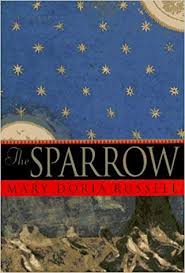
So, we’re gonna talk about Mary Doria Russell’s The Sparrow, an exposition of theodicy wrapped in a sci-fi tale that’s secretly a bildungsroman of sorts. If you’re not a theology nerd, “theodicy” is the word for the study of the problems of evil and suffering. In Christianity, in particular, this problem might be more specifically phrased as “If God is all-powerful and entirely good and loving, why does God allow evil and suffering in the world? Why do these things happen to seemingly good people?”

Job is my favorite book of the Old Testament, in part because it addresses this very question and gives us the best answer I think can be had for it. When God appears to Job at the end of the poem, God’s answer to Job’s questioning is to tell Job that he cannot understand the answer. It’s too complex, it’s too nuanced, for the human brain to comprehend in all its depths. The ultimate answer God gives that humans can understand is “Trust me.” Faith, faith that God is sovereign over all things, that God is love and intends ultimate good for God’s creation, hope that everything will one day be clear and suffering and evil will be conquered fully after having served their purposes–as inscrutable to us as those purposes may be–is the answer. It is, admittedly, an answer that I find at once entirely frustrating and comforting. It’s not my job to solve the problem of evil and suffering; it’s my job to respond to evil in suffering in the way that God has instructed me.

Part of the brilliance and beauty of Russell’s book–and only part, mind you–is that she takes the same approach. There is no attempt to answer the question of suffering, only an attempt to hold it in her hands and turn it at all angles for the reader to view, to experience in part, all of its manifest complexity and difficulty. There are no apologies here, no arguments, only an investigation of the issue that is by turns beautiful and terrifying, humbling and infuriating.

I don’t want to give too much of the plot away, but I’ve got to at least tell you what the book is about, right? All of that investigation into theodicy is not exposition or diatribe, it is examined through the experiences and humanity of the characters.

The Sparrow tells of the aftermath of a first-contact mission put together in secret by the Society of Jesus to the planet of Rakhat, discovered by the Arecibo facility in Puerto Rico in 2019, when the astronomy equipment there picks up radio signals that turn out to be the singing of the indigenous peoples of Rakhat.

Only priest and linguist Emilio Sandoz survives the mission; the handful of clergy and layperson companions that accompany him to Rakhat do not. The time dilation of space travel, the reports of the second, secular mission to Rakhat, and reports from the first missionaries themselves seem to tell the tale of a horrific fall from grace and into depravity on the part of Sandoz. The story jumps back and forth between the Jesuit interviews with the recovered Sandoz (in an attempt to discover the truth of the reports and, hopefully, salvage something of the Jesuit reputation after the reports of the missionary journey have decimated it), the first discovery of Rakhat and the synchronicity that brought Sandoz and his companions into the mission in the first place, and the events that actually unfolded on Rakhat. These separate narratives meet, as it were, at the climax of Sandoz’s telling of his story.

That main thread, and its analysis of theodicy, contrasted with the modern missionaries’ own thoughts about their relationship to the 16th century missions of the Jesuits to the “New World”, form the core of the text, but Russell’s writing of the missionary characters, their backgrounds, their feelings, their developing relationships to one another, their thoughts about their places in Creation as they confront their missionary (or priestly) status, provides just as much literary joy and human insight as the “mystery” that frames all of these subplots.

This is, after all, a sci-fi story (one for which Russell won the Arthur C. Clarke award in 1996, the year the book was published), and great detail is paid to the physiology and culture of the peoples of Rakhat, to the methods of space travel (the missionaries convert a mined-out asteroid into their spaceship) and the believable physics of story. At the same time, those elements never get in the way of the narrative; no time is lost on long exposition about the nature of technologies or theories of culture and alien psychology. These run seamlessly throughout the text, woven in with the unfolding plot instead of interrupting it.

The writing itself is beautiful, jealousy-inducing for an aspiring writer such as myself. The blend of familiar, practical tone with clever description and amusing turn-of-phrase reveals the intelligence and imagination of the mind behind this tale in an ever-delightful manner. The pacing and plotting of the story are an example of mastercraft in that aspect of the art, something especially apparent to me as I struggle with revising the plotting and pacing of my own fledgling work.

I must also express a debt of gratitude to my wife for bringing me to read this book. It’s one she first read–and told me about–almost a decade ago. It sounded interesting, but I must not have been paying close enough attention to her explanations, because this a book that fits with my own interests so uncannily perfectly. Only when she announced that she was going to read it again, now that her experiences in ministry and seminary had sharpened her abilities to appreciate the tale, did I agree to read it alongside her. As I must often admit, she was right all along. I should’ve read it the first time she told me to. So should you.

Infinite Recursions

I think it was Stephen King who wrote or said that, if one wants to be successful as a writer, one needs to writing like a (second) job. I’m not one for taking people’s advice on reputation alone, especially on something so deeply personal and resistant to generalization as writing. Nevertheless, I think (maybe “worry” is a better word) that he’s right.

In light of that, I’m considering starting a Patreon. Through that medium, I’d add some focused posts on my personal worldbuilding endeavors, including fiction and roleplaying rules for those settings. Avar Narn would, of course, be a particular focus, but I also have a handful of additional settings I want to develop—especially for roleplaying (mine and others’). Posts would be at least weekly, with deep dives into aspects of setting, maps, and much more for the enjoyment and use of patrons. I don’t know if I really have a critical mass for something like that to work, but I think it would be useful to me in several ways. First, the deadlines and accountability this could bring me would, I think, help my productivity.

I’m also reminded of a story about a Russian agent working for CIA case officers at the height of the Cold War. He’d regularly ask his handlers for money in exchange for his services, increasing the amount that he wanted every time he asked. Eventually, the Soviets found him out and did what they always did to suspected spies. The CIA officers rushed to his apartment to strip out anything that could link him to others before the KGB could recover it. As they did so, they found all of the money they’d paid him. He had never been the mercenary they’d expected; the money was his way of ensuring that the information he passed to American spies was worthwhile and valuable.

I’d like to think that that’s how Patreon would work for me—as a tangible indication that people are actually interested in my creative work. It would be nice to have some associated income—either to allow me to devote more time to writing and other creative endeavors or to invest in the settings themselves—for artwork and other needs that could allow me to produce professional-grade works—but I don’t expect the income derived therefrom to be a life-changer.

One of my reservations about taking the leap, other than the possibility that a lack of response becomes a de-motivator, is some release of creative control over my productions. Which leads me to the title of this post.

As I was thinking about the prospect of a Patreon, of what it would practically look like, I realized the fallacy of thinking about absolute creative control. Once a piece of art or writing is shared with others, it irrecoverably shatters into a number of pieces equal to the number of participants in the setting.

There is no single Middle Earth, no one Marvel Universe, no absolute Star Wars (just ask Disney). And this goes well beyond fanboy-ism and head cannon—the “feel” of a setting is going to be unique in some inexplicable way to each experiencer, even before we talk about fan fiction or roleplaying games set in that world.

And that’s not a bad thing—it’s a really fascinating one to think that every fictional world becomes infinite worlds, recursions of varying degrees all riffing in some core ideas.

Like all things, that makes the creative act both deeply personal and necessarily communal if it is to be enjoyed. That dialectic speaks to my soul, if I’m going to be honest, and all my worries about whether other peoples’ ideas creep into my own creations seems stupid, honestly, in the light of our corporate relationship between a setting with all of its idiosyncrasies created by our own idiosyncrasies, and the relationship that creates between each of us.

Frankly, it makes me want to create more, write more, give others more setting to make their own in their various ways and enjoy.

I think I’ll give Patreon a shot. We’ll see what happens.

Things Unseen: After-Action Report

First and foremost: Thank you to those of you who’ve accompanied me in this process, whether reading online or off, whether sharing your thoughts with me or not. Every “like” on a chapter post gave me motivation to keep writing. I cannot say how much I appreciate your support.

It ended at 150,794 words, six weeks after I’d planned to be finished. The last bit was hard to slog through, honestly. Not only because life–as it tends to do–intervened to make sitting to write more difficult, but also because the more I realized how significant of rewriting I was going to need to do, the harder it became to sit and write an ending I knew would be subject to change, potentially drastic change. So yes, I rushed the ending. Badly. For that, I apologize.

But, I decided that there was great value to finishing the first draft in its entirety, regardless of how satisfied with it I was, and that the sense of accomplishment for doing so, however small, would be an important motivator in starting the difficult work of getting the text to where I might consider it being “great.”

I’d call it a solid “okay,” as it stands. I’ve read some things that managed to be published that I think, even in its current state, this text is better than. But that’s not saying much. And I don’t really want to be a “passable” author, I want to be a brilliant one. That’s going to require a lot more work on my part!

The good news is that at least have a solid idea of how to get there. If I had to sum it up in a phrase, the novel needs “more and less.” On the “less” side, I need to cut out some of those parts that don’t really pull their weight with regard to the main story. This includes the trip to the Crimson Close and the fight against the Child of Daea. As much as I enjoyed writing those chapters, and as much as they provide some important background to the world of Avar Narn, I think that they take up space that could be better devoted to focusing on the core story of Orren’s spirit and the interlocking desires and machinations of the people of Vaina.

And that’s where the “more” comes in. I need to deepen the characterization across the board, build more depth for the interweaving plots of the suspect and involved characters. The whole story needs to be “tighter” in that regard; gaps need to be eliminated between the logic of events and the storytelling. Which is not to say that I intend to cut out the jumps from one scene to another so much as to more carefully consider the pacing.

To that end, I’m considering this first draft more of a very extended plot outline than a full draft. Where I can, I’ll be pulling from scenes as written to form jumping-off points for rewrites. But first, I’m going to do my own readthrough, distill each chapter to its plot points as an updated outline, and then use that to create a new outline that goes not just scene by scene, but beat by beat, notating for intended “feel” as well as plot and for the sensory details and descriptive elements I want to include.

I’ve written several times on the blog about the approach to writing as “brain hacking;” that good writing carefully constructs the string of thoughts and emotions in the reader. I don’t want to commit to that thought as the One True Way of writing, but I do feel that it describes the approach I think I need to take to take the novel from “meh” to amazing. And I’m really just not willing to settle for less.

It’s going to be a lot of work, but I’m looking forward to it. I hope you’ll continue the journey with me.

Things Unseen (Working Title) Excerpt, Chapter 18

Friday, I posted some of my thoughts on the UMC “Protocol of Reconciliation and Grace Through Separation.” My position has apparently ruffled some feathers, called some trolls out of the woodwork and brought a number of unexpected readers to my little blog. None of that is unexpected nor terribly troubling–although I find little value in spending time debating those who feel a need to start (and then try to “win”) an argument with me. More important, I very much appreciate the thoughts of anyone who’s taken the time to read my take on the subject, whether or not they agree with it (given the situation that has given rise to the Protocol in the first place, it would be foolish indeed for me to expect everyone to share my point of view, nor do I expect to convince everyone of it). I have more to share on the subject, particularly as events continue to unfold in the march toward the UMC 2020 General Conference, but there will be time enough for that and I feel that something altogether different is in order in the meantime.

So, I’m posting an excerpt of a (long) chapter from my novel-in-progress (tentatively called Things Unseen) for your enjoyment (I hope). As I’m continuing to push forward on the novel to complete a first draft before beginning the long process of revision, this excerpt is almost entirely unedited, so pardon my typos and infelicities of language in advance. Without further ado:

Things Unseen, First Draft, Chapter 18

I startled awake as the door to my room swung open, rebounding from the stone wall of my chamber it had been pushed so hard. Aryden, fully dressed and armed, flanked by Savlo and Gamven, entered imperiously.
“Get dressed,” the lord said.
I looked to the window. Dark. The faintest tinge of light peeking around the far edge of the Avar with the promise of a morning still distant in the coming. “Huh?” I managed, rubbing the sleep from my eyes.
“We’re going hunting.” For his sudden energy, the lord looked like he hadn’t slept during the night, his hair wild and only cursorily brushed into something approximating a tuft of wild weed, wet with dew. He wore a breastplate and tassets, just as Gamven did.  Savlo, though, wore only a simple hunting jerkin, long knife in his belt and a linpiped hood pulled over his head and shoulders.
“Hunting?” I repeated slowly, still in the daze of dreams not yet forgotten.
“Disposing of the people in the Close didn’t work, lord thaumaturge,” Aryden said,the dubiousness of my title fully evident, “so we go to the next possibility, yes?”
“Yes,” I agreed.
“Good. Get ready and meet us in the stables.”
As suddenly as they’d entered, the three departed, the door rattling as it slammed home in its frame. Only then did I remember the missing woodsman and the reason for the extemporaneous hunt.
I took little time to ready myself, splashing enough water over my face to gain some modicum of wakefulness, arming myself much as I had for the Close the day previous, but leaving my pistols empty of charge and shot. Before I left, I pulled the drawstring bag of runeshot from my backpack and secured it on my belt. The other foresters had claimed to have seen some unnatural beast, and I thought the shot might prove useful.          The light at the horizon seemed to have moved only imperceptibly as I left the keep for the stables. Outside the building, Aryden and his two trusted retainers sat astride their horses already, not proud and haughty warhorses, but lean and nimble palfreys, suited to the hunt. A recurve bow occupied a wide sheath set against Savlo’s horse’s flank, forward of the saddle. Aryden leaned a wheelock musket over his right shoulder, reins held loosely in the left. Gamven held a light lance aloft, a banner with Aryden’s crest on it flapping in an early breeze. Varro, astride his own mount, waited patiently at the edge of our group, looking the mounts up and down to ensure his satisfaction with them.
Vitella amn Esto stood nearby, back turned to me and dressed in a tight-fitting riding jacket with impressive decolletage and flared at the waist, the tails drawing attention to her hips. A cigarello hung from her lips, the end of it blooming into reddish-orange life whenever she drew upon it, which was frequently as she checked that her horse’s girth and stirrups had been properly configured and tightened. No servant assisted her, which might have been a point of pride or a matter of her family’s diminished wealth—an issue soon to be rectified if the amn Vaini and Valladyni had their way. Like Aryden, she had brought both a single-edged, curved hunting sword and a wheelock musket, the sword hanging from her side and the musket in a sheath near the saddle.
Behind her, Edanu mounted his horse, a jet black destrier he must have brought with him from elsewhere—the kind one might find in the Ealthen Empire or the Tatters but only rarely in Altaena. He had traded his Artificial crossbow for a matchlock musket, perhaps Medryn’s—we’d decided as a group that he ought not recover those bolts expended in the Close, just for good measure. He sat a good deal higher than the others on his beast of a mount, the thing stamping the avar impatiently and snorting derisively at its company.
Part of me had feared that I’d be riding behind on Windborne, chagrined at the poor choice of name and eating dust all day. Fortunately, one of the grooms led another palfrey to me, a brown beauty of Altaenin stock, perhaps not powerful but with a comfortable gait that made long riding tolerable to the ass.
“Iphadrex,” the young man told me, handing me the reins.
A name from a forgotten kingdom, dead and gone long before the rise and fall of Ealthen imperialism. And I thought I could be pretentious.
I mounted the horse, who shifted easily under me, ready but not impetuous, and neither so sluggish as the horse I’d rode in on. With a click of his tongue, Aryden started his mount moving. The rest of us exchanged looks with one another, trying to calculate who had rights to follow closest to our host lord. I motioned for Vitella to pass before me once she’d mounted; she directed her palfrey to a position behind amn Vaina and angled his right, waiving for me to come alongside her on the left. The others formed up behind us so that we made a wedge, like some gallant charge in ages past. Gallant and foolhardy, no doubt. And much slower.
We processed thus through the courtyard, those servants already set to work in the wee hours abandoning their tasks momentarily to watch us pass by with a mix of awe and fear. They’d already heard tales of our misadventures in the Close and certainly some of them would be mourning the absence of Errys and Medryn. Myself, I tried to push them out of my mind for the present, lest distractedness send some of my present company to join them.
Our handsome wedge condensed into a small clot of horses and riders as we passed under the gateway from the inner courtyard to Old Vaina, Edanu falling behind to avoid his horse biting one of the others. Warhorses and their knights have far too much in common—both full of violence and without sense enough to know when it isn’t warranted. That Edanu pretended to such a status surprised me, given his preference for foppish dress and feigned nonchalance—and yet didn’t. There’s not a member of an Artificer House I’ve ever met who wasn’t cold, calculating and ruthless, ambitious at any cost. Subtler on the whole than men-at-arms, but equally deadly and uncaring.
Although the craftsmen bustled about, already setting to their daily tasks, and the merchants had already begun to open the windows to their storefronts and set out their prized wares, the townsfolk of Old Vaina paid little attention to our hunting party, and I enjoyed the lack of wary looks cast in my direction followed by the sign of the Tree or apotropaic spitting—not that either had any effect.
The gates to New Vaina had not yet been opened, and the night watch, perhaps only moments from a changing of the guard, scrambled to pull the winches to raise the portcullis and open the doors before they forced us to stop and wait. The constable Daedys waited for us on the other side, atop a working horse arrayed in simple but well-made tack. A matchlock musket occupied a sheath next to the saddle in the same fashion as Vitella’s and he carried a boar spear in his hand, a heftier companion to Gamven’s light lance.
“My lords,” the constable nodded, letting go the reins for a moment to remove his flat cap in deference.
Amn Vaina nodded back, barely, without breaking stride, leaving Daedys to fall into the last row and sort out a position for himself.
“I’m sorry for the loss of your men,” I could hear Daedys tell Gamven behind me.
“It was a close thing.” the master-of-arms returned. I fought a smile as cold and bitter as a new tomb.
“Anything you can tell us about the creature the woodsmen claim to have seen?” I asked, turning in my saddle to look at the constable and straining in the effort.
“Only that they agree that it’s an unnatural thing. Everyone’s story is different, and I’m inclined to believe that they are just that—stories.”
“Then what of the missing man?”
“Kalvor, his name. As I said before, most likely wolves or some other natural predator. It’s not unknown for them to take a stray woodsman who’s wandered too far from his fellows. Hasn’t happened in several years—until now, I suppose—but it happens ever so often. If he’s dead at all. Timbering is hard work, and there’s always some who find they haven’t the mettle for an honest living.”
“And you think Kalvor was such a one?”
“Perhaps. He was young, hadn’t been at the work for too long, no wife, no children. Nothing to hold him down if he decided to leave.”
“That’s the same story I’ve heard of your nephew Orren, Master Daedys.”
He harrumphed.
Savlo joined in. “I spent the day yesterday looking for tracks in the area Kalvor supposedly went missing in. No wolves.”
“What did you find?” I asked.
“Nothing unusual.”
“So what are we fucking looking for?” Gamven growled.
“Whatever there is,” Aryden spat without turning, an equal amount of gravel in his voice.
“Of course, my lord,” Gamven corrected.
We took a side path through New Vaina that led along the hillside to the stream running parallel to the town, providing running water to the larger homes in Old Vaina and supplying the New Vaina wells at the base of the hill. But before they did either of those things, the flowing water supplied a trio of mills, the fast flow steadily turning wooden wheels and the gears connected to them. This flow had evidently been diverted after a stone channel,complete with sluice gates to control the water had been built into the hillside with a drop above each waterwheel, making them more powerful pitchback mills. The lowest of the three, most accessible to the townsfolk, was a gristmill for the products of the many surrounding farms. The second mill emitted the steady rhythm of blade against wood while the highest sang with the bass thump thump of pounding. Industrial music, of a sort.
We made for the timber mill in the middle of the trio, where men already stripped to bare chests in the heat of the summer morning and of exertion worked in teams to remove branches and bark from felled trees before carrying them to the mill’s hungry mouth. A foreman, less sweaty than his fellows, bowed to his knee upon seeing our approach. The gesture, somehow both overwrought and embarrassingly amateur, made me uneasy, though Aryden and Vitella both nodded with satisfaction.
“My lord,” the foreman began, “I had not expected you to come personally to see to the loss of our man. We were thankful that you sent your master of hunt to search yesterday, especially since Master Daedys’…inquiry…turned up nothing but tales from the men and, I presume, no indication of where to search for Kalvor, since he made no effort to do so.”
Daedys shifted uncomfortably in his saddle while Vitella grinned at the man’s brazenness to speak so poorly of his landlord before their mutual liege lord. Aryden remained stonefaced.
“My brother had just been put in the Close, my lord, and I had to make sense of his papers to step into his place as the head of our family,” Daedys offered, driving his boar spear into the ground next to his horse so that he could push his hair back under his cap, looking away from amn Vaina as he did.
“We’re here now,” Aryden said simply, “and, as you see, with capable assistance.”
Turning to me, he continued, “Well, lord thaumaturge?”
I dismounted and handed the reigns to Savlo before approaching the foreman. “This man, Kalvor, do you have anything that belongs to him?”
“Hmm, let me see.” The man wondered off to talk to those in his charge.
“What does that have to do with anything?” Gamven asked. Behind him, Edanu smiled knowingly.
I ignored them both. “Savlo, how far did you range from here in search of the missing man?”
“A mile or two in every direction from the farthest reaches the woodsman work at.”
“And you found no sign of Kalvor?”
“None.”
“No prints, no broken boughs, no blood?”
“No.”
“It’s been too long since his disappearance to expect much of that, hasn’t it?”
“Yes.”
“And animals?”
“Nothing unusual.”
“Predators?”
“No.”
“Has anyone seen a dragon or drake in these parts in recent memory?”
“Only closer to the mountains, days from here, and even then only rarely. Why?” Aryden interjected.
“No griffins, anything like that?”
“No. No signs of flying predators, if that’s what you’re getting at.”
“It is,” I affirmed. “Doesn’t give us much to go on.”
At this point, the foreman returned, holding his closed fist out to drop something into my hand. I held it out for him and two knucklebones fell onto my palm, blackened pips delicately marked on each of the faces. “Kalvor’s lucky dice,” the foreman said.
“Not that lucky,” Vitella remarked, Edanu smiling along with her.
“Why didn’t he have them?” I asked.
“Lost them in game a few days before he went missing.”
“Perhaps lucky is too strong a word,” Vitella continued.
“How long had he owned them?” I pressed.
“Long time, I guess,” the foreman said. “Talked about ‘em a lot. Big on games that one. When he won a decent haul from the others, he’d not show up for days after, spending it all on drink and women in Vaina. He’d always come crawling back when the drink went dry and the whores turned him away.”
“How do we know that he’s not somewhere drinking and cavorting?” Daedys asked.
“Because he lost his dice,” I said flatly. “He hadn’t won anything before he disappeared. And I imagine that no one’s seen him in town for some time, or he wouldn’t be called ‘missing.’”
“Hmph,” the constable responded.
I continued my interrogation of the foreman. “You’re sure that he owned these for a long time?”
“Yes, what of it?”
Rather than respond, I took the bones, smooth on the edges from long use or from nervous rubbing, and moved away from the mill’s activity, my companions and the foreman all following behind. Where I found a flat- and large-enough stone in the ground, I placed the dice down upon it, procuring the chalk from my belt pouch and drawing a set of circles around the objects followed by glyphs at the edges. I heard the foreman spit behind me and turn away, but I continued unperturbed. Once I’d drawn the symbols for my working, a bastardized hybrid between a theurgy and a thaumaturgy, I returned the chalk to its pouch and pulled my wand from its small sheath. Touching the tip of the wand to the dice, I closed my eyes and focused, muttering soft words to guide my mind through the structure of the working.
I know not how my fellows reacted to this, my concentration drowning out all sense of the world around me. My use of the Art complete, I opened my eyes, swept up the dice into my left hand and clutched the want lightly in my right. I waited for a moment before feeling the first subtle twitch in the wood, its pull turning my hand, the wand now pointing as a compass arrow, straight into the woods to the east. To be sure, I deliberately turned the wand away from the direction it had indicated and felt it pull back to true.
I began to walk, not fast, but steadily, waiving with my free hand for the rest of the hunters to follow. We proceeded in this manner for at least an hour, passing near the old road I’d followed previously to Falla’s cottage, buried amidst the ruins of a that forgotten Aenyr outpost. No one spoke as they followed, or if they did I could not hear them, but as we neared that maligned practitioner’s abode I heard amn Vaina and amn Esto pull the hammers of their wheelocks to a ready position, the snick of the retaining pin snapping into place unmistakable. The sound of a friction striker followed as Edanu lit his matchcord.
Still convinced that Falla had nothing to do with the Vaina castle haunting, or the disappearance of Kalvor for that matter, I cringed at those sounds. The wand tugged us along a path that soon diverged from the Aenyr road and Falla’s cottage, and I breathed a little easier at that. For several more miles I walked, my mounted companions followed behind but leaving an increasing berth between me and them. The forest became thicker the farther we progressed, the hills leaving the ground broken and treacherous, forcing everyone to dismount.
“Iaren,” Aryden said softly, the hunter’s concern for noise having taken him at some point along our journey. I turned with my torso and head, leaving my feet still aligned with the wand and careful not to move it from the direction it currently pointed. “Should we leave the horses?” Lord amn Vaina asked.
“They’re not my horses,” I returned. “You do as you think best.”
“What are we going to find in these woods?” Savlo asked.
“Hell if I know,” I told him. “I’m just following the direction the wand points. It should lead us to Kalvor, but I have no idea what we’ll find along with him.”
“What if he’s gone a great distance away?” Vitella asked, not so amused now.
“Then it’s going to be a very long walk,” I smiled. The suns had by now risen in the sky, the morning growing warm with customary summer heat. But it was early in the day yet, and I was willing to walk a good distance more before calling my working a failed effort.
“Varro,” amn Vaina began. “Stay here with the horses. If we’re not back within a few hours, make a camp for us. If we don’t return by tomorrow, go home and seek for more soldiers to come after us.”
We paused for a moment as each member of the party transfered weapons and other useful belongings from saddlebags or sheaths to their persons. Those of us with arquebuses carried them at the ready now, silent smoke trailing from Edanu’s match, the chemical sent sure to give us away. Savlo must have had this thought, too, for he continually threw disapproving glances to the Meradhvor dignitary, but decided not to verbalize his complaint.
Once everyone had satisfied themselves with their gear, we set out again. We took heavy steps, the dry grasses crunching softly underneath our feet, that cloud of sulfurous miasma preceding us. Our journey continued until the suns had reached the apex of their daily circuit, their rays piercing the canopy above us like spearpoints that illumined small pockets of the forest with the full light of day, leaving the rest in a twilight liminality.
Suddenly, there came a tap on my shoulder, and I turned to find Savlo motioning for the entire band to freeze in place. We did so, leaving only the tension (and that damnable sulfur stench) hanging in the air. For a moment, I stared blankly at the hunter, waiting for some explanation of our brief respite. Seeing my lack of understanding, he silently tapped his ear and pointed upward. Then I realized his intent: only the tension and smell of burning matches lingered. The birdsong had gone silent, as had the incessant clicking of the cicadas, the occasional tumble and creak of branches from fleeing or pursuing fauna, any of the customary sounds of forest life.
“A predator is close,” Savlo whispered to me, his voice barely the suggestion of speech.
“They’re not reacting to us?” I asked quietly.
“No. This silence just started.”
I took a few steps back to the rest of the party, my feet harsh upon the forest floor, a reminder of my lack of serious experience in the wilds. Savlo followed behind, his presence felt more than heard, another stalking thing in the shadows under the canopy of the old trees.
We huddled together, faces shining now with summer sweat, the clanks and clicks of Gamven’s armor audaciously loud in the relative silence. “Savlo and I will move forward and scout ahead; there’s something up there. Something dangerous.”
“We can’t go around it?” Aryden asked.
“Kalvor is close. I’m guessing we’ve found the creature the woodsmen were complaining of,” I told him.
“When you say, ‘creature,’ what exactly do you mean?” Edanu followed.
“You can’t feel that?” I asked him. “That’s no child of Avarienne. It’s something from beyond the Avar, intruding here.”
“You mean the spawn of the forbidden ones?”
“The get of Sedhwe or Daea, most likely, yes.” Faces sank all around, and our day in the Crimson Close seemed a relaxing stroll through town in comparison.
“How?” Vitella asked.
“Like other spirits, they can sometimes cross the Verge and pierce the Veil,” I told her. “When they do, they tend to stay here. Whether by choice or by necessity is anyone’s guess. Some are left from dark times past, hidden and biding their time.”
“For what?”
I shrugged. “And, of course, sometimes they are brought to the Avar Narn purposefully.”
“Who would do such a thing?” Gamven asked.
“The power-hungry, the desperate, the mad, the curious, the arrogant. There is a reason the Vigil exists, after all, even if it is not recognized in the Sisters.”
“Is this the source of the haunting, then?” Aryden asked, hopeful.
“Doubtful. At least not directly. If it has killed Kalvor, then I suppose the likelihood that his spirit is haunting your home is increased, but these sorts of creatures are not typically known for subtle action.”
“But if we’re nearing its home—or lair—or whatever you want to call it,” Savlo said, “Then it ranged quite a ways to seize upon poor Kalvor.”
“Yes,” I said.
“Assuming it is such a creature, how do we defeat it?” Gamven asked.
“Such things are difficult to kill, it is true. But anything that has physically manifested in the Avar may be defeated through force of arms.”
“Good,” Gamven responded. “But how?”
“That depends on what it is, particularly. Until we know that, I cannot say. If things are as I suspect, though, you will find that your weapons are far less effective than against other foes. Still useful, but far less effective. The foe will be a truly dangerous one. We will need to be careful and cunning to defeat it.”
“Have you done this before?” Edanu asked.
“No. Of course not,” I told him. The group let out a collective sigh of trepidation.
“Must we do this?” the Meradhvor emissary challenged?
“We’ve come all this way. We know that the creature is a threat to Vaina and will continue to be so, and there is still the possibility that it is Kalvor’s spirit haunting Vaina castle and that we might put him—and this whole affair—to rest by recovering his body and properly honoring it.”
“Alright, then,” Savlo resolved. “Let’s get to it. I’d rather have this done by dark if we can.”
“Agreed,” Gamven said grimly.
Savlo and I moved forward cautiously in the direction the wand pulled; I tried to follow behind him precisely, stepping where he had stepped and matching his movements in avoidance of obstructing branches or brush. My lack of skill proved plain, and Savlo shot me constant looks of silent frustration combined with exasperated hand signals I did not understand. The undergrowth complained with nearly ever step I took, and the heavy feeling of being watched by an unseen predator fell upon me.
Even at the height of summer, the foliage over which we passed had become brown and dead despite the regular rains. The trees bore no leaves and showed signs of dry rot, bark cracked and peeling with decay. The very life of the woods had been sucked away here, a sure sign of some malevolent presence manifested across that dark divide of the Abyss. I noticed that my knuckles had become white over the grip of my wand, the fingers of my free hand nervously contorted, stretching in anticipation of urgent need of them. The pallor of corruption filled the air, and as we continued onward the trees became not only bare and lifeless, but twisted into unnatural forms, bulbous knots protruding from unexpected locations, the tips of dry branches sharply pointed.
Savlo noticed this, too, of course, and his hands quietly slid an arrow from his quiver and knocked it against the string of his bow. He never stopped or looked down as he did this, working by practiced instinct as he continued to sneak quietly forward, scanning the gaps between the now-sparse trees for threats.
We moved forward like this for several moments, the dead grasses and shrubs under our feet giving way to dry dirt. Only then did my feet agree to silence as we moved. Presently, we reached a rocky clearing at the base of a rising hill topped by a copse of thick trees. The wand trembled in my hand in indication of immediate proximity; Savlo pointed to a cave opening in the side of the hill’s ascent before returning the hand to its position just behind the arrow’s flights.
We stood at the edge of those final trees that had not yet been corrupted to oblivion by the monster’s presence, neither of us ready to move into the clearing itself, despite the fact that we had no concealment where we stood nor any to be found in the vicinity.
Only a short time passed before a shadow moved within the darkness of the cave’s mouth. For a moment I remembered the dream I’d had when I’d arrived in Vaina; the thought that such an unrequested divination seemed to have foreshadowed present circumstances steeled me somehwat—or at least kept my feet from turning and moving despite my will to stay.
A long, snakelike neck emerged from the obscured interior of the cavern, scaly and tipped by a sharp beak not unlike the kind you’d find on a falcon or some other bird of prey. Above that daunting protrusion sat two clusters of eyes, spider-like, their dark pupils searching independently of one another briefly. When the thing had spotted us, all of the interior eyes shot into formation, piercingly focused on we intruders. Those eyes on the outer edge of each cluster continued to sweep about, searching the thing’s peripheral vision for hidden dangers.
Satisfied that only the two of us had come, the monster emerged fully from its lair. Scales became dark feathers of a shadowbending sheen where the protruding neck met the corpulent and misshapen body, seven legs, some like those of a wolf and some like those of a chicken—each tipped in deadly claws—moved the thing along in a waddling gait of unnatural speed. A long, leathery tail, like a newly-shorn sheepskin, trailed from the darkness of the cave, ending in a set of bony, mace-like protuberances. A creature out of some fever-dream, sharply defiant of the natural order of Avarienne’s children, and one that I would not soon forget.
We thought that the thing’s size might allow us some protection amongst the more closely-spaced trees, though in retrospect their rotting and dying condition would have left them crumbling and broken with even the slightest force. But this mattered not, for the monster squeezed and contorted itself in its pursuit of us, body bulging at one end and then the other as it effortlessly moved between obstacles without disturbing them.
I dropped my wand and drew my sword; it had decided to kill me first. I waived to Savlo to make use of the distraction; he dodged back and withdrew, dropping his bow and arrow as he did. At first, I thought he’d lost his nerve and run, but I had no time to revel in anger or despair over that—the monster struck at me with withering fury, neck weaving between and around trees with unnatural celerity to strike first from my left and then my right, unrelenting in the assault. I warded with blade and dodged as best I could, the sword’s edge having little effect on the beast’s scales but at least knocking that striking neck enough to purchase a short space between that beak (which I now noticed was lined with a predator’s teeth within) and my flesh. My saving grace was that it was a duel of sorts, the kind of fight to which I was most accustomed, and my feet proved agile and steady enough to keep injury, if not the monster itself, at bay.
A horn sounded, loud and nearby; Savlo had chosen to sound the alarm and call our fellows to our aid rather than to take a shot of unknown efficacy with his weapon. A wise choice, though it called the attention of our otherworldy foe to him. As it turned its neck I struck a blow, one that left a shallow line across its scaly neck. It turned and snapped at me, with annoyance rather than fear or anger, and then turned to Savlo, strange form waddling and yet passing gracefully between the trees again.
Freed from immediate danger, I sheathed my sword and pulled free the pouch of runescribed shot from my belt, pouring the metal balls into an open palm. I searched for those with runes effective against either the spawn of Sedhwe or the get of Daea, dropping the rest onto the dusty ground, for there was no time to return them gently to the pouch nor were they of any use to me at present.
Which was it? A child of that demoness of deceit and damnation, or a corrupted creation of the archenemy? I struggled to remember my days of instruction at the hands of my first master, the piles of dusty tomes I’d read as a student at the university, separating the thoughts that arose into their proper categories—or so I hoped. They are so closely related, Daea being a creation of Sedhwe and his intended spouse, she the fallen spirit of the direst of fallen spirits. But Sedhwe learnt his craft from the One, or from watching the other Firstborn work; he wrought his spawn first from the darker side of imagination and later from the nightmares of the naming peoples. Daea had inherited some skill from her creator and would-be husband, but had stolen more from the secret arts of the other Firstborn, twisting them and grafting them together like some primordial fleshcrafter to create her progeny, for she could bear no child herself. This creature, then, an amalgam of parts taken from Avarienne’s children, must have belonged to that archdemoness. How it came to dwell here was anyone’s guess, but I had neither time nor care for the answer.
In his precarious flight from the snapping beak of the monster, Savlo had abandoned his bow, pulling his hunting sword from its sheath and hacking wildly to hold the beast at bay, much as I had done only a moment before. Daea’s child showed no sign of fatigue, no indication that it might offer any respite or quarter, while Savlo breathed heavily and took steps of failing soundness, rolling on his ankle painfully and hobbling thereafter, carried only by the adrenaline that no doubt crashed over him like an angry tide.
There came the crack of an arquebus, the thud of its projectile smashing into the feathery torso of the unnatural predator with little effect. “Fuck me!” I heard Edanu’s voice. “The thing shrugged it off like I’d spit at it!”
It had. The ball had rebounded from the leathery hide or bony plate or whatever foul armor lie beneath the coat of feathers, which now raised up somewhat, like the spines of a porcupine, their iridescence a visible sign of the thing’s rising ire. The beast turned to glare at our oncoming fellows, outer eyes still watching Savlo and I from the corners of their bulbous windows.
A deafening screech bellowed from the creature’s elongated throat, stopping all of us in our tracks as we vainly attempted to stop up our hearing. I let fall the runic shot from my hand as I covered my ears, the little balls rolling this way or that according to the whim of the dirt at my feet where they mingled anonymously with the ones I’d dropped before in hopes of efficiently sorting out what I needed. Now I’d have to search out each in turn and check its rune—if I could find the right ones at all. I dropped to my knees in the search.
Occupied as I was, I did not watch the battle unfold around me. I’ve pieced together what follows from the scraps of my recollection and the tales told by my companions after the fact.
Aryden, Gamven, Vitella and Daedys drove the assault, splitting apart from one another and each darting in and out of engagement from various angles to confuse and harry the beast. Their attacks did little more than distract the creature as it snapped back and forth between them, always just too late to catch one. They bought Savlo enough time to limp away from the fray; he circled back around at a safe distance to join me as I crawled along the ground searching for shiny objects.
“Shouldn’t I be the one crawling around?” He said flatly.
I smirked, though he couldn’t see it. Daedys flew past us suddenly, picked up and tossed through the air with a violent snap of the creature’s neck. He took a moment to recover the wind that’d been knocked out of him and then rejoined the fight.
Savlo must have picked up the arquebus his lord had dropped when charging in, for he held the ornate wheelock delicately. The dogleg rested tight against the flashpan; Savlo had no intention of firing the weapon at present.
Edanu joined the two of us, planting his feet and muttering to himself before he began the long course of actions to reload his own arquebus and being especially careful not to bring his powder horn close to the waiting match.
“Wait,” I whispered to him, more than a little nervous that the three of us standing together and moving but little might draw the attention of the creature to easy prey.               “You’re going to need something better than regular shot to stand a chance of seriously injuring that thing, and it looks that we’ll tire long before it does if we try to do things the hard way.”
I’d been grasping at the metal balls one by one during all of this, checking each rune and tossing hard and far those with markings unhelpful to the present struggle. So far, that had been all I’d inspected. Now, though, I chanced upon the first projectile bearing the proper marks. I held it up over my shoulder to Edanu and said, “load this one.” I could hear him pulling the ramrod free of his weapon to tamp down the powder and wadding before loading the ball I’d given him.
The grunts and shouts of our companions provided a constant harmony as I searched, Edanu loaded and Savlo waited.
“What the hell are you three doing over there?” came Aryden’s voice, thunderous and imperious.
“Looking for our balls!” Edanu shouted back with a smile.
“When you find them, we could use some help!” the lord returned. A grunt and a scraping sound followed his words as the creature’s beak slid across Aryden’s breastplate, a bite than might otherwise have proved fatal.
At that time, I’d found a second ball of the proper marking, which I handed to Savlo.
“I’m already loaded,” he objected.
I opened my mouth to answer the hunter, but Edanu had finished loading and brought the caliver to his shoulder.
“Wait!” I said, louder than I’d meant to. “Wait until we’re all loaded!”
“They’re running out of time,” Edanu replied, his voice firm but trembling with anxiety at its edges.
“A single shot won’t fix that. Savlo, you’re going to have to fire your piece and reload.”
The hunter grunted in response. We all knew that his doing so would bring us unwanted attention; I was thankful he held the ball tight in one hand and bided his time.
While I continued to search, our fighting companions were taking a beating. The monster had struck no life-threatening blow as of yet, but Gamven had been injured sorely enough to be forced to withdraw. Repeated bludgeoning with its strong neck and many close calls with its razor beak had taken a toll on both the vigor and morale of the others. Daedys’ thrusts with his boar spear became ever more cursory and obviously intended to gain the creature’s focus rather than to do real harm. As it realized this, it had begun to ignore him, turning its attention toward Aryden and Vitella.
Where they had begun by distracting the beast and forcing it to maneuver back and forth between them, now the creature had seized the initiative, forcing the pair to suddenly change direction to avoid snapping jaws and to step lively to avoid colliding with one another as they continuously repositioned, Daedys trailing behind in an effort to remain relevant to the fight at all.
Again the monster issued its bloodcurdling screech, driving the combatants back and almost to their knees as the sound pierced their ears and plunged cold and sharp into their very minds. Even somewhat removed from the monster’s presence the shriek filled the three of us with pain, our own cries drowned amidst the sea of sound the beast had created. It was as if the sound pushed my spirit from my body and I looked down momentarily on the scene, unable to act or to think with clarity while the echoes of the sonorous attack coursed through me.
I felt rather than heard the concussion of Savlo’s arquebus firing into the air, emptying itself of its contents to be filled afresh. When only the ringing in our ears remained of that scream, Savlo motioned to Edanu for his powder horn. The emissary passed the container to the hunter without words—or if there were any I could not hear them—and Savlo set to his task more assuredly than Edanu had done with his own piece.
For wadding, Savlo tore a piece from the end of his cloak, already worn and threadbare, stuffing some down the barrel to hold the tamped powder in place and wrapping the ball in a bit before ramming it home, too. As he recovered the ramrod from the barrel he glared at me, nudged me with his foot. I realized I’d been watching him work rather than continuing with my own task, which I returned to anon.
As hearing returned, the shouts of our companions grew louder, more desperate. I’m told that Vitella and Aryden saved each other’s lives more than once, that Daedys’ efforts in spite of exhaustion proved vital. All I heard, though, was the growing doom in their voices and the sighing sounds of the beast as it attacked without ceasing.
Finally, I found a third ball marked against Daea’s brood. I wiped the dirt from it by rubbing it against my vest before popping it into my mouth—the best place I could devise to safely hold it while I loaded one of my pistols. The monster passed close by and I froze, its tail mindlessly swinging near my face as the beast turned in pursuit of one of my companions. Fingers trembling, I fumbled for one of my chargers, pulling it from the string on which it hanged and turning it over the barrel of my piece, held upright in my left hand. Some of the powder spilt around the mouth of the barrel, landing softly on the webbing between thumb and forefinger at the pistol’s grip. Tossing the charger aside, I brushed the grains I could from hand to ignition pan, hoping it would be enough.
After tamping the powder with the ramrod, I pulled a thin patch of cloth from one of my belt pouches and spit the ball into it, pulling the cloth around the shot before pushing both into the waiting barrel and ramming these home, too. Forgetting my own advice and tossing the ramrod aside in my haste, I rose with the pistol to take aim at the beast.
I tracked it with my arm, waiting until I felt I had a proper lead on the moving target, willing a flame at the tip of my index finger, which lay in the pan. A flare burst from the ignition hole, but the pistol failed to recoil in my hand; it had not fired. An agonizing second passed, the pistol’s aim lagging behind the location of the beast, before the powder finally decided to ignite, the shot spinning wild in my unpreparedness and wasted.
Not entirely wasted-the blast had captured the beast’s attention. The monster turned abruptly and charged me. In an act of will not entirely born of conscious thought, I threw up a shield of arcane force, enough to keep me from significant injury but far too little to stop the charge. Without ever touching me directly, acting only through the invisible bindings between my outstretched hand, the shield and the creature’s downturned forehead, it flung me as easily as if I’d been picked up and tossed carelessly aside by the hand of the One.
I hit the ground sprawled on my back, the wind knocked from my lungs. The creature pursued after its charge and forced me to roll away from its lunging beak. The hilt of my sword pushed into my side as I spun, bruising my hip bone but reminding me of its existence.
With another roll augmented by a quick sorcery, I recovered my feet, sword in hand and already slashing at the beast’s face as it turned to strike again. My light blade recoiled from the thing’s scales, the hilt ringing painfully in my hand as if I’d struck a wall. I felt a warm damp on my upper lip and tasted copper, whether a side effect of my sorceries or an injury from being flung, I could not tell—not that it really mattered.
A second shot rang out—I would later learn that this was Savlo’s—connecting with the creature with a wet sound not unlike the sound of stumbling into a deep and muddy puddle. Black ichor sprayed from the monster in response, thick and sticky, accompanied by another of those otherworldly screams that seemed to drive an icicle into mind and soul. I lashed out feebly with my sword in response, what might have been a deadly thrust in another fight in spite of the lack of full intent, again glanced off the creature.
Savlo’s shot had injured the creature but not slowed it much. I narrowly sidestepped the monster’s riposte, beak snapping close enough that I felt the rush of air around it. It turned now in Savlo’s direction, reaching him in three strides of its unnatural feet.
He tried to dodge, but his ankle betrayed him and he bought dear what little distance he acquired. The creature’s beak, both fast and precise, snatched a chunk of flesh from the hunter, leaving a ragged gap between neck and shoulder, having stolen flesh and bone alike from the poor man. He had only started to turn his head to the wound when he slumped over, falling face-first in the dirt, twitching his death-throes.
Anger washed over me, overwhelming my fear. I took umbrage at the creature’s fortitude, the injustice of its resistance to us, the impunity with which it assaulted us. Without thinking, I flung my sword at the thing’s side, overhand, yelling my frustration as I did.
I expected the weapon to bounce aside, casually and pathetically, but the sword instead penetrated halfway to the hilt, which bobbed up and down happily as the blade flexed with the force of the blow. My shout had not just been some exasperated expletive—it had accompanied a further sorcery, one that had empowered the weapon to do its work. I had no time to recall how I’d extemporized such a fortunate working; the creature returned to press me.
Willingly disarmed, I drew my parrying dagger as a desperate last line of defense; it did me little good. By now, Aryden, Vitella and Daedys had caught up to me, their tired attacks at least pulling some attention away from me.
But the monster had been enraged now, too, and the desperation of its injuries only seemed to have strengthened it. It feinted with its head toward Vitella but kicked Aryden viciously instead, claws screeching as they left long dents in the lord’s breastplate and sprawling him.
In dividing my attention to my companions I had failed to maintain a safe distance from the creature; it knocked me to the ground with a casual turn of its head and neck, not the devastating blow from its previous charge but enough to put me on my ass again. With another flick of its neck it seized Daedys’ spear in its beak, ripping it from his grasp and pulling him prostrate as he attempted to hold onto it. The weapon snapped into two halves and fell to the avar.
Only Vitella stood in defiance of the beast now, it seemed, for I could not see Edanu. I presumed he’d lost his nerve and ran. Like mine, the Lady Vitella’s blade left only light scratches—minor annoyances—in the monster’s hide. But cold determination had replaced the aloof amusedness in her expression and I wondered to myself—inappropriately given the situation, I realize—at a sort of beauty that existed in such a frank display of willfulness.
The monster turned its neck to look at her, and I knew that hers would be the next life taken by the beast if nothing could be done. Still driven more by rage than hope, I grabbed the metal-tipped end of Daedys’ hunting spear and drove its point into the base of the creature’s neck. It didn’t penetrate, instead cutting only a shallow groove where scales met with leathery, feather-covered hide. If only I’d had been conscious of what I’d done to injure the creature with my sword!
The monster turned again, pulling its neck up into an “S”-like curve so that it could look down at me, its spider eyes intently focused upon me. It opened its beak slowly, pointed teeth within glistening with slavering spit. Slowly, it extended its neck, beak and tearing teeth coming ever closer to my face. I pushed against its neck with my hands, but even hale I’d not have had the strength to resist the force with which it approached.
Just as I’d resolved to look it in the eyes as it killed me, to defy it in that one meaningless way left to me, a shot rang out and a black fog exploded from the side of the thing’s head. As it fell on its side, lifeless, I saw Edanu standing there, still holding his caliver at the ready, close enough he must have almost pressed the muzzle to the monster’s face as he pulled the trigger.
I guffawed with surprise that he’d have bothered to save me; I would have expected him to wait until I, too had a massive chunk of flesh liberated from my body before he made that mortal shot. The emotion that followed, irrational as it might have been, was chagrin. I hated that I owed him something, the kind of debt not easily repaid.
My thoughts must have been plain on my face, for Edanu only shrugged. “You gave up your balls for this fight,” he smiled. “You shouldn’t have to sacrifice anything else.”
Despite myself, I smiled, too.