
Christianity and Fallout (Part 2: Redemption Stories)

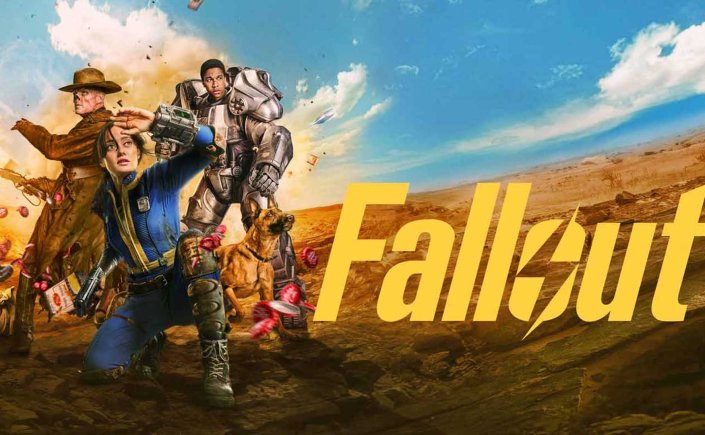
Let’s start with a warning: if you haven’t played Fallout 4, or watched the TV show, this discussion may not make a lot of sense. I chose characters from 4 and the TV show in the expectation that the greatest amount of people were likely to have played that game, if any of them, or to have become interested because of the television program. Also, of course, spoilers for both the game and the show, so if you’re not caught up, you might want to avoid this post until you are.

The Fallout world is full of redemptions, both minor and major, amongst characters you encounter and those you only hear about. I think it would be difficult to avoid these kinds of stories–a post-apocalyptic world certainly carries the atmosphere of a fall from grace, and the struggle to survive in light of scarce resources and centralized civilization or authority begs the question of what people are and are not willing to do to others–and for what purposes.

I’m interested in examining some of those stories here, but not in some allegorical way. I don’t think you find any analogue of a sacrificial Christ in the games or the TV show (maybe there’s an argument based on your choices at the end of Fallout 3), but that’s just fine. In fiction, I’m more interested in investigations into the human experiences and struggles relative to morality and redemption than in having a symbolic retelling of the truth I already believe in (sorry, C.S. Lewis).

Hancock (Fallout 4) – The Redeemed Rogue

As one might expect for Fallout, this example’s a little ragged around the edges, as Hancock remains a somewhat questionable character given his prediliction for violence resolutions and, if you are persuaded that drug use is inherently immoral, add that to the mix. Maybe that’s why I’m starting with him: to show that, as is often the case in real life, redemptions are not black and white, and no human (or ghoul, as the case may be) becomes perfect. We do well to remember that all of our mortal heros have their moral failings.

Nevertheless, I think there’s a credible redemption story for Hancock. If you’re not familiar with Hancock’s back story, or need a refresher, here it is. Hancock was the younger brother of Mayor McDonough in Diamond City; he left Diamond City when he failed to stop his brother from expelling all of the ghouls. He became a drifter and a heavy chem user, eventually landing in Goodneighbor, a town ruled by a mobster. Hancock tried to get some of the displaced ghouls from Diamond City to take refuge in Goodneighbor, but this didn’t work out as well. The mobster in charge of Goodneighbor, Vic, ruled as a tyrant, allowing his goons to torment civilians for fun. Hancock witnessed these goons murder a fellow drifter and failed to intervene, further driving him into despair. It was this despair that drove him to take a unique chem that gave him the best high of his life and turned him into a ghoul. In conversation, he’ll tell you he’s happy he’s a ghoul now because he didn’t want to see his old face in the mirror ever again.

When Hancock came to from his bender, he was in The Old State House in Boston next to some of the clothes from the historic John Hancock–this is when he took on the name by which he is known. Returning to Goodneighbor, he organized a massacre of Vic and his goons before taking over the government of the settlement himself, where he seeks to protect those who need protecting under the maxim, “Of the people, for the people!”

In a certain sense, Hancock’s redemption has already occurred by the time you meet him. One of the reasons he chooses to accompany you in the wasteland is to avoid letting the power of his mayorship corrupt him into becoming the tyrants he finally found the strength to fight against. If you peek behind the scenes to the in-game actions that award you affinity with Hancock, it’s almost entirely about protecting the innocent or weak (with a smattering of delivering wasteland justice to those who would prey on them). His journey is not about discovering right from wrong–he knew this from the beginning. His redemption is about believing in his own agency to do something about the injustices of the world.

Hancock’s redemption is, tangentially, about the turning away from sloth. Although this category of cardinal sin formulated by the early church varied in its specific meaning from one theologian to the next, I think it’s safe to settle on two parts to the idea–particularly if we go back to the original word used, acedia. The term means either an apathy toward God and God’s desires for us or a knowledge of what is just and right but a reluctance to work for those things. As usual, I have some caveats. First, we must be careful in using this category, because there are places of significant overlap with mental health struggles, particularly depression. Second, when, as in Hancock’s case, the issue is a lack of courage or self-confidence rather than a desire to do what is just, I think we need to keep some charity in mind for the frailties of the human condition. This latter point, is exactly what I think Hancock’s “redemption” tells us.

In a game in which you play the redoubtable hero, expected to overcome any violent encounter, trap, puzzle, or ambush, the primary question is not about what you can accomplish (at least not in the long-run) but the choices that you make. Hancock stands as a reminder that that’s not the case for everyone. It’s not the case for the vast majority of us, especially when acting alone.

In the present time in the U.S., I think we can sympathize with both fear of standing up for justice and a lack of confidence in one’s ability to actually make a difference against the tide of hate, selfishness, greed, corruption and anti-democracy that has taken hold in this country. When ICE seems to be able to kill peaceful protestors with impunity, when trumped up charges are brought against political enemies and dissidents, when due process has been ignored and the rights of the people trampled upon, the danger of standing up for justice has become palpable in a way that I have never before seen in my lifetime. The dangers faced by the heros and advocates of the Civil Rights movement are the closest I can think of.

Had you asked me a decade ago, I would have foolishly thought that we (at least most of us) had moved beyond such discrimination, hatred, and exclusion as those faced by Black Americans, indigenous persons, people of color, members of the LGBTQIA+ community and all others who have been discriminated against because of race, ethnicity, nationality, skin color, gender, sexuality, self-expression or religion. But even now, Governor Greg Abbot and his cronies raise the old canard about “Sharia law coming to the U.S.” and the pathetic assumption that any organization related to Islam must be linked to terrorism so that they may use governmental power to deprive real people of real rights that they are guaranteed under our Constitution.

Both the costs of and the need for action in the pursuit of justice are very real in this country–and undoubtedly elsewhere abroad. Hancock’s redemption is about willingness to take the risks to make change, however, small, because it is the right thing to do, despite it not being the easy or safe thing to do.

To be clear–as is hopefully obvious to those who have read much of this blog, or even the first post in this series–the analogy and example ends where Hancock uses violence to achieve his ends. Morally, I do not believe that violence and evil can be truly defeated with more violence and evil. Pragmatically, violent protest in the U.S. would feed into the narrative that those in power want us to believe about those who are standing up to the totalitarian tactics of ICE and protesting the other outrageous actions of the current government and escalate conflict in an unproductive way. I think we’ve seen that non-violent protests where the protesters accept their vulnerability (despite it not being just that they should need to do so) and that have used creative tactics rather than aggressive ones (I think of the inflatable costume protests in Portland calling to attention the utter surreality and nonsense of the beliefs and actions of anti-immigration apparatus) have been most effective.

For me, my return to this blog is in part my attempt to do something, however small, to push back for justice. It is my hope that I can help lay out a Christian theology that wholeheartedly rejects the actions of those who are doing evil in our country without rejecting the people themselves–a hard line to walk, I fully admit. But, let’s onward to continue the point of this post in particular.

Cait (Fallout 4) –

Fallout 4’s Cait is a redemption story that follows all of the usual tropes–but it’s also the one that potentially hits closest to home. Here’s the recap:

Cait was born into an abusive family that tormented her until she was 18, and then sold her into slavery. That the designers made her Irish seems a low blow and a lazy stereotype given her story. As a slave, Cait was used for the “entertainment” of the slavers, only adding to the already significant emotional trauma she must’ve experienced as a child. She eventually bought her way out of slavery, tracked down her parents, and murdered them. She then became a cage fighter and a drug addict in attempts to stave off her pain, developing the tough outer shell to protect a fragile interior that makes her believable as a character despite the stereotypes. She is also the most sexualized character, or at least the one who makes the largest number of comments with innuendo (sometimes not so subtle); for someone who has come to view relationships as transactional, this rings true.

On its surface, Cait’s companion quest is about getting clean; you’re tasked with taking her to Vault 95, which possesses a machine that can remove even her deep-set addiction. But it’s not really about that, or at least not only about that. Your assistance of her in a time of need gives her, at least in theory, someone who cares for her without expecting something in return. It’s the first non-transactional relationship she’s experienced, and it shows her something about the world that she had stopped believing was true or possible. That, experiencing love (I mean this more in the sense of philia or agape than eros, despite her being a romanceable character), is her redemption.

I admitted that Hancock’s redemption, as I argued it, wasn’t really a sort of salvific redemption. Is Cait’s? I’d argue that it is, or at least the start of one. Let’s start with what I call the “transitive property of love.” That is, if God is love, and one knows love, then one knows God. Usually, I use that as an argument that people who practice love have a share in God’s redemption whether or not they speak particular words about what they believe theologically. Here, though, let’s flip this. If a person has never known love, real love rather than affection doled out as a means to an end, have they ever known anything of God? If there is no belief in the possibility of love, can there be a possibility of belief in God? Imagine the profundity of such despair if you have not experienced it directly; there are undoubtedly those who have suffered such a fate. Now imagine that someone breaks through the armor you’ve donned to protect you from such despondence and plants the seeds in your imagination of a world full of love instead of dark. Such an experience must necessarily be transformational. A theologian or biblical scholar would call this transformation metanoia.

Cooper Howard/The Ghoul (Fallout TV)

Now we get to what I think is the most interesting example. This could be a matter of my esteem for Walton Goggins as an actor, or it could be because the more traditional narrative format makes this arc easier to see. Maybe its that we’re getting to watch it unfold in realtime. Maybe, and this is what I’ll stick with, it’s because Cooper Howard’s story–provided the writers stick the landing–has a poetry to it that sings a harmony that suits me on some level.

Before the Great War, Cooper Howard is an idealist. He’s a war hero, an American patriot, an example of the American dream, and a man of principles. We watch as his naivite sloughs off and those principles are challenged. His wife, Barb, is instrumental in his fall. First, she convinces him to star in commercials for Vault-Tec. This is already a compromise of his values, as he’s never worked in advertisements before–and admits that he’s only doing it for Vault-Tec because his wife asked him to. As Charlie Whiteknife introduces him to Moldaver, the facade of the American ideal begins to crumble. At the same time, as he learns about Barb’s role in Vault-Tec, and Vault-Tec’s own plans, any hope of returning to the good ol’ American cowboy retreats from sight.

Two examples of the “poetry” (or at least good writing) in the story here. First, when Cooper is filming the movie scene in which he reluctantly shoots the bad guy instead of arresting him, pay attention to the short speech he gives: “Feo, fuerte y formal…it means he was ugly, strong, and had dignity.” (This phrase comes from what John Wayne wanted inscribed on his tombstone, which itself creates some interesting connections we won’t explore here). This is exactly what Cooper becomes when he transitions into The Ghoul. Dignified, yes, but also morally questionable (if not deplorable, which seems to be Lucy’s point of view), having lost all of the ideals he held as a human.

Second, the conversation between Barb and Cooper in the hotel after Cooper’s meeting with Robert House. He questions whether Barb was always a monster or became one working for Vault-Tec. When he incredulously asks whether she’d kill millions, billions, of people to save her daughter, she responds by asking, accusatively, “Wouldn’t you?” He may not be operating on Barb’s scale (Eddie Izzard might comment that she must get up very early in the morning), but as The Ghoul he certainly succumbs to her logic.

Here is the arc as we have it for Howard–weltschmerz has rendered him nihilistic, amoral. Can his view of the world, and thus himself, be redeemed and returned to the man of ideals and principles he began as? It’s a classic story of “the Fall” writ large in the blood of countless raiders and wastelanders.

With the latest episode (S2, E6), Howard says his real name as The Ghoul for the first time. We’ve learned more of his history with Hank MacLean, and he’s rejected an alliance with the super mutants for the war that is coming. In the latter act, he’s shown us that he has not fully succumbed to his nihilism, and I expect that his betrayal of Lucy, subsequent defenestration, and need to be rescued will function as the low point from which he begins his redemptive climb. I’m excited to see!

In the last post in this series we’ll look at the Fallout universe’s satire and criticism of late-stage capitalism, particularly in comparison to the Gospel according to Luke.
Christianity and Fallout (Part I: Violence)

One of my most popular posts (maybe the most popular) was a post about Christianity and the Warhammer 40k universe. I thought I might write on a similar subject with another beloved setting.

I cut my video-gaming teeth on Fallout, playing both 1 and 2 when they came out, and pining for Van Buren until it was finally cancelled. I’ve played through Fallout: Tactics, 3, New Vegas, and 4 multiple times, the non-canonical Brotherhood of Steel games (set in my home of Texas) spent more time fooling with Fallout Shelter than I ought to have, and have had my share of adventures in West Virginia (the only place I’ve lived outside of Texas, coincidentally) in Fallout 76 (although that’s been long enough I ought to go back, as there’s a lot of added content I’m haven’t played). I’ve loved the TV show so far; Walton Goggins has become one of my favorite actors (and the show has given him a character with a wide range in which he can shine), and I’m decidedly less grognardian about supposed retcons and changes to canon the show has made (I just don’t think it ultimately matters if Shady Sands was located in a slightly different place in the games than in the show, for instance). With my bona fides established, let’s talk about the setting and where it might or might not intersect with the Christian faith.

At the outset, I want to address a question that I see with some frequency on the internet: does Christianity survive in the late 23rd century of Fallout? The answer, emphatically, is “yes,” though the extent to which it does probably cannot be known. Rather than lay out the examples, I’ll point you to an article on the subject on the Fandom Fallout Wiki (which, I’m given to understand, may not be as reliable or accurate as some of the other available wikis, but it has plenty of citations from the games to make the point on this subject).

But, unlike my discussion of Warhammer 40k and Christianity, there will be fewer direct theological comparisons of in-setting ideas. Instead, Fallout provides a potential for examining Christian values in a setting that takes some of the moral dilemmas of our own world and dials them up to eleven.

If Warhammer 40k is “grimdark,” how should we categorize Fallout? Is it “grimlight?” I’d certainly argue it’s a grim setting; if you doubt that, read up on the Vault-Tec experiments in the vaults. Or consider the body horror of forced conversion into a super mutant or unexpected conversion into a ghoul. Or the things the raiders do to people for fun. Or maybe just the state of America before the Great War. Like cyberpunk settings, we daily find the ideas more prescient of the current history than is at all comfortable.

Here are a few additional examples: (1) Vault City is a slave-owning society; (2) New Reno is a hive of scum and villainy; (3) the Enclave represents the worst facets of American government and political discourse; (4) the Brotherhood of Steel, for all its initial ideals, is a fascist and intolerant organization that has deviated significantly from the spirit of its initial purpose.

But, while it’s certainly dark, there’s a lot more light in Fallout than in Warhammer 40k. There’s a lot more humor, and while “war never changes,” we’re beyond there being “only war.” Both the games and the TV show have a smattering of the comic, the satirical, and the “wacky” parts of the wasteland to balance out some of the grim and grit. But more than that, there are many examples of goodness in the Fallout world that do not exist in the same quality or quantity within Warhammer 40k. Naive as she may be, Lucy (as well as most of the other vault dwellers not in on Vault-Tec’s schemes) wants to do good. Shady Sands was a place of hope and tolerance. The NCR in general attempted to rebuild some semblance of a civil society.

These are beacons of hope in a largely corrupt world, good people fighting against the weight of the world for something better. And here is where the Fallout setting shines, I think: it doesn’t shy away from tough moral decisions and doesn’t leave decisions without their consequences. Neither do the games judge you for taking the low road and, in a fictional setting, it’s worth being able to explore the nuances of immoral or amoral behavior as a practical thought experiment or maybe just to let off some misanthropic steam–fantasy is a much better place to do that than the real world. That same factor–that Fallout is primarily encountered as a video game–is also its major weakness. If you don’t approach the game with the discipline of roleplaying a developed character encountering the Fallout world for the first time (and I don’t think most people do this or want to do this, and that’s fine), then meta-considerations creep in. Instead of asking “What is the right course of action in this situation?” or “What would my character do in this situation?” the question often becomes about the choices necessary to get the best game items. While there’s a potential investigation of amorality there, I think it largely breaks down the value of the moral quandaries that can be thought through in the Fallout world. This requires a sense of immersion.

I’ve been listening to Tom “Robots'” Fallout Lorecast the past week or so as a break from reading for school. If you just want to explore the lore of the Fallout world, I’d recommend you just follow rabbit trails on the several fan-made wikis. But what Robots does differently is that he often asks you to step into the shoes of someone in one of the Fallout situations: What would you feel and do if you were Paladin Danse upon his life-changing discovery? How would you feel and respond if you were a member of Vault X and discovered the experiment being conducted on you there? Robots’ background in philosophy comes to the fore as he uses the Fallout world to create immersive thought experiments.

It’s one of his podcast episodes that became the impetus for this post, in fact. If I remember correctly, it was his episode on Vault 3, where he discusses the naivite of the vault dwellers, their takeover by Fiends, and the philosophy of violence as necessary (with a mention of just war theory thrown in). Those of you who’ve followed the blog for a while know that the Christian ethics of violence is a topic that continues to fascinate and confound me. I think the Fallout setting is a great place in which we can look at the topic again.

If I understood him correctly, Robots’ core argument is that violence is necessary to keep evil from winning. I think that’s a commonly-held belief. Certainly, it’s the justification used by the “good guys with guns” argument in America, to which I once subscribed. But are things that simple?

Let’s except from consideration the Tactics and Brotherhood of Steel games which, by their very nature and design are fundamentally based in violence. In the true RPG Fallout games, the world seems like one in which violence is inevitable. You’re given weapons early on, and the wasteland is replete with creatures and people who unambiguously wish to do you harm. Within the genre itself, there’s an expectation that combat and violence will be aspects of the experience. There’s a whole ‘nother conversation to be had with why we often want combat and violence to be part of the games we play as a matter of interesting and high-stakes conflict, but this is a long post as it is.

If you’ve played through any of the Fallout games, did you ever consider that non-violence might be an option? I took for granted that violence would be part of my experience in every single one of the games–hopefully with me doing more of it than receiving. And yet, there are discussions and demonstrations of pacifist runs of the Fallout games all over the internet. Some people, whether through moral righteousness, creativity, or the simple love of a challenge, had the thought that they might survive the wasteland without becoming its moral victim. Until the most recent episode of the TV series (Season 2, Episode 4, “The Demon in the Snow”) and with the possible exception of her treatment of Snip-Snip, this was the journey Lucy trod. With the Ghoul as a ready foil, her character arc seems to be devoted to the question of whether one can maintain one’s values upon encountering and living in the wasteland.

Certainly, by “common” standards, much of the violence in the TV and the video games seems to be “justified.” There aren’t a lot of ways to talk a super mutant or a radscorpion out of violence, and–as with Vault 3–the raiders are an ever-present threat to those who would seek to live in the wasteland in peace and mutual cooperation. But terms like “justified,” and “just war” are often confused with “good violence” and “good war.” Is there ever really such a thing? Here’s maybe the more difficult question: is it ever acceptable to make a potentially immoral choice in favor of survival–yours or someone else’s?

Let’s take an example from Season 2 of the Fallout TV show (SPOILERS AHEAD!). Let’s look at Maximus’ killing of Xander Harkness. He does it to save lives, the lives of children no less, and in opposition to what amounts to racism. Certainly, in the moment, killing Xander and thereby preventing the murder of children is justified (and, in meta-narrative, I think the writers intended this moment to be a callback to the fact that the first Fallout games faced pushback and censorship because of the possibility of doing violence to children, but perhaps I’m reading too much into it). But every character who comments on what happened is clear that Xander’s death means war with the Commonwealth Brotherhood.

This, I think, is a good example of the theological belief I’ve come to (the argument for which must be relegated to another post) that one of the most profound messages of the Incarnation is that, on a cosmic level, evil cannot be overcome with violence or force; it can only be overcome by love. Violence begets more violence.

If we turn to very recent events in the U.S., let’s consider the violence perpetrated by I.C.E. Every tear gas cannister, every pepper-loaded gel round fired point-blank in the face of a peacefully-protesting pastor, every murder of an innocent woman, every violent arrest in violation of civil rights, every unnecessary use of force increases the likelihood that someone responds with more violence. I applaud the restraint and discipline of the many, many, peaceful protestors who have endured all of this violence without responding in kind; I believe that truly is the only way to achieve justice. If nothing else, it makes clear who the “good guys” and the “bad guys” are, and both the rest of America and the world are watching.

Not only is the response of non-violent protest the moral one, but it’s also the practical one. Should someone respond violently to I.C.E., our government will use that incident, no matter how limited, to justify the deployment of greater violence against the populace. Which will engender more violence from the populace. So on and so forth. When Ron Perlman’s gravely voice opens the early Fallout games with the now emblematic “War…war never changes.” This is what he means. Violence only begets more violence, one war only sets up the conditions from the next. It’s only when we choose non-violent resolutions that we truly move toward the peaceful world God wants from us, where no one “studies war anymore.”

But the brilliance of Fallout as moral thought-experiment is that it does not simply leave us with satire of the violence in human nature. Let’s consider Vault 3 again. Even accepting my argument that, at the level of eternal redemption, on non-violence drives out evil, the question remains of whether violence is necessary, acceptable, perhaps even “good” to buy some time for love to win out. Put another way, if we have to choose between the naive but generally moral vault-dwellers to survive or the violent, immoral, and–we’re tempted to say despite not knowing the truth of the statement–irredeemable raiders, is it moral to allow the raiders to kill the vault-dwellers?

The question may perhaps be boiled down to this: do we prioritize the possible redemption of the raiders over the current moral superiority (in a general sense, of course) of the vault-dwellers? The knee-jerk response is an easy one. Theologically, though, the question is extremely complex.

Our soteriology frames the question. If we believe that the only possible salvation comes through the confession of Jesus Christ as Lord and Savior, there isn’t a salvific calculus here: those who believe in Jesus are saved and those who do not are not, and that’s that, no matter who kills whom. But if we’re willing to consider a God who is more compassionate and less arbitrary than that (particularly in a world where the raiders may never have had an opportunity to hear the Gospel, depending on how things played out for them), the question is more complicated. And, if we consider the morality as a separate (but still theological) question from salvation, we cannot escape some sort of judgment at all.

Let’s work through this. If, arguendo, God redeems those who know and practice love in addition to those who have faith in Jesus as God1, we have to look more closely at the original question.

One might argue that, if one is assured of their own salvation and God’s promise of eternal, abundant, life, the determination of a need to kill someone else, however bad that person may be, to survive, is a rejection of faith in God’s ultimate justice. That, I think is where all of the complexities enter in. If moral questions prioritize this life over belief in eternal existence, then the idea of “just war” and “just violence” is easier to come to. But, if we believe in eternal life and cosmic justice over temporal concerns, what does it matter if someone assured of their eternal life is unjustly murdered by an immoral person? Faith in God’s promises is vastly more important. This idea lies behind the actions of the martyrs. What if God’s idea of justice is not about people “getting what they deserve?” I’ll argue that its not in another upcoming post, but even without those arguments, the sacrificial salvation through Christ of undeserving mortals seems to discount a cosmic justice as a matter of dessert.

And yet, if we’re called to make this world like the Kingdom of God (I need to discuss alternatives to this phrasing in a separate post and soon), doesn’t that include protecting the innocent against the iniquities of predators? Is there a sort of “double justice” we must try to pursue simultaneously–a “worldly” or “temporal” justice and a cosmic and eternal justice? How would we balance such an idea?

There is no easy answer. In this life, we have to weigh the possibilities and do the best we can, never knowing until we’re face to face with our Creator whether we did the right thing. We can say that violence is never the best or righteous act while acknowledging that, in a fallen world, it may sometimes be the lesser of two evils. But it’s also possible to reject that position in favor of unflinching pacifism. We might believe, as Aasimov tells us in Foundation, that “violence…is the last refuge of the incompetent;” that we only ever choose violence because it’s the easier option, never the better one.

Fallout as the best fiction does, gives you space to consider the possibilities, not with a heavy-handed resolution in view, but as a thought experiment to help you determine where you might best position your belief. Fallout unflinchingly gives us views of the best and the worst of humanity, it acknowledges both the baseness and sublimity of human nature, just as life does. It reminds me of a quotation from beloved Christian author Frederick Buechner: “Here is the world. Beautiful things will happen. Don’t be afraid. I [God] am with you.”

I’d hoped to make this a single post, but my loquaciousness again gets the better of me. Two more posts on Christianity in Fallout will be forthcoming: one about the many examples of the journey to redemption that Fallout gives us, and one about the meek and the powerful, particularly with reference to late-stage capitalism.

  1. For those who read this sentence and assumed we’re falling into a works-based or “Pelagian” idea of salvation, I disagree. There are several ways to get to my point. We might use simple logic through the transitive principle: If we accept the doctrine of the Trinity, then Jesus is God. If God is love, and those who believe in Jesus are saved, then those who believe in love are saved. We might also argue that the knowledge of Jesus as God and Savior is itself a transformative vehicle through which one achieves the totality of salvation, but if it is the transformation and not only the knowledge of God that is operative here (with Jesus being the clearest and most direct way to transformation, I’d argue) then the soteriological question remains complicated and mysterious in ways that should give us pause in going beyond attempting to “work out [our] own salvation through fear and trembling.” Yes, in making the argument above, I’m doing just the opposite, but this is one of the reasons I think we ought to hope for, if not definitively believe in, as expansive a view of salvation as possible–while perhaps holding in tension that God respects our free will and independence so much as to never force anyone into the acceptance of salvation. ↩︎

Cyberpunk 2077, Phantom Liberty: Agent 0010101001

As usual, I’ll lay out my biases first–unlike many, I enjoyed Cyberpunk 2077 when it first came out. I played it on an Xbox One X and really didn’t have too many glitches or infuriating experiences. I played it enough then to play through the entire main story. In fact, I wrote a review of the original Cyberpunk 2077 back in 2021 (click here for that).

Later, when I’d sold the Xbox and returned to a gaming PC, I bought the game again. I liked it enough to start a few new playthroughs (that I didn’t finish), mess with some mods, and generally muck about in the game. I’d played a lot of Shadowrun tabletop in my youth, and my proficiency in math is probably due more to FASA games (cyberware calculations in Shadowrun and mech-building in Battletech) than formal education. I make no claim to be a math wiz, it should be said. But the RPG Cyberpunk I was familiar with had a lot of fantasy mixed in, and I’ve still never played a TTRPG in a cyberpunk setting without all the fantastic elements–though I’m convinced of the value of those settings and I’m starting to wonder if I’d like a tabletop cyberpunk game that doesn’t deal with the fantastic better than something like Shadowrun. Remains to be seen. In that way, Cyberpunk 2077 was an eye-opener for me.

So, I was excited for Phantom Liberty to drop and started a new Cyberpunk 2.0 playthrough in advance of the release. Y’all, I liked Cyberpunk 2077 in its original form, but 2.0 made a lot of wonderful changes. The choices of cyberware are more interesting, and the “allowance system” for cyberware more closely matches tabletop Cyberpunk (though it’s far from exact). Crafting was vastly improved, cool new weapons were added, removing the link between clothing and armor allowed for style to be a more prominent feature of the video game, as it is for the tabletop. Here, it’s worth a brief aside that the “style” aspect of Cyberpunk is a little lost on me–I have no sense of style, nor care for one, whatsoever. I’m morally opposed to the “style over substance” mentality in real life, though it fits well for the cyberpunk aesthetic.

Happy with the new changes to the system itself, I was in a good mood when my V got the call to venture into Dogtown to see if I was a bad enough dude to save the president. Not sure that mattered–Phantom Liberty throws you into the deep-end, with a true in-media-res insertion into a confusion but undoubtedly epic course of events. With a brief introduction to the situation and a vague promise of saving you from the Relic, hacker-extraordinaire Songbird, pushes you in the direction of a crashing Air Force One (I don’t remember what they actually called it, and it was an orbital craft, so it may well have been Space Force One).

What ensues is a protracted action sequence as you race against the forces of Kurt Hansen (Captain Kurtz of Heart of Darkness/Apocalypse Now, anyone?), the de facto ruler of Dogtown, to reach the NUSA president first. At least, it was a long running-gun-battle for me, but I was rocking a Sandevistan instead of a cyberdeck, so there could definitely be a stealthier approach available. I don’t remember being excited about a video game fight like that in a long time (frustrated, made anxious and paranoid, sure, but excited? Nope). It’s not that Cyberpunk has particularly innovative gunplay–the cyberware makes things interesting, but I much prefer something like a Tom Clancy game for gunfights, or, if I want to get serious, Ground Branch. Nevertheless, the frenetic pacing, the amped up music, the neon signs backlit by muzzleflashes, it was a good time.

From that whirlwind introduction, the storyline moves into a veritable wilderness of mirrors. You’re linked up with several burnt NUSA spies ready to get back in the game and everyone’s motivations, words, and promises are suspect. As I’ve said many other places on the blog, as uncomfortable as it can be in the moment, I love a game (whether tabletop or digital) that puts characters and players into tough situations without adequate information and difficult moral choices thrust upon them–this makes for the most interesting stories, I think and, you’ll keep thinking about whether you did the right thing (or even the “best” thing under the circumstances) long after you’ve left your chair. Video game designers may like that for its replay value, but I like it for its artistic and philosophical value (unfortunately, I have no brandy to swirl while making such a snobbish statement).

It’s almost like the writers of Phantom Liberty started by going to TVTropes.com and taking note of all the tropes of the espionage genre–in the best of ways. Phantom Liberty takes you through action-movie over-the-topness (see above), gives you Mission Impossible-style encounters where high technology and assumed identity are the name of the game, puts you in fancy dress and lets you meet your opponents at the gambling table, sets Tom Clancy-like political stakes, and introduces you to the gritty backgrounds of characters who’d be at home in a John le Carré novel.

As with a good spy story, nothing is what it initially seems, and it’s not really clear who the “good guys” and “bad guys” are. That plays well with the cyberpunk genre, anyway, n’est pas? So, there are really three ways you can make decisions as you progress through the plot as V: (1) you can look up which decisions get you the best iconic weapons and gear (or at least the ones you most want) and follow a meta-mercenary approach, (2) you can wade into the ambiguity and follow your whims and impulses in the moment, or (3) you can play a character. In this last approach, you’ve got to decide what V really believes in (if anything), and make your choices according to the ideology you’ve assumed in playing the character. That, perhaps, is the best part of Phantom Liberty; it truly invites you to step into V’s head and become the character for a time–that’s really the only way to have coherence to the (many) choices you’ll be asked to make in the story. Many of those choices are truly significant, both for V and for others.

The set-piece battles are amazing, don’t get me wrong, but it’s the humanity of the story that really won me over. In a cyberpunk setting, there’s something about that that feels right. There are four endings to Phantom Liberty (I’m told, having only played through once and personally experienced only one of those endings). The one I got seemed meaningful, poignant–and very cyberpunk.

Not only that, but you get some denouement as well–you’ll get some after-the-fact contacts from characters you encountered in Phantom Liberty and get an idea of what happened to them based on the choices you made. More than a “here’s the consequences of your playthrough” tidy wrap-up (something Starfield does), this gives a sense of living in that world, and living with the consequences of your choices.

Phantom Liberty also adds an inexhaustible, procedurally generated side mission involving boosting cars. These missions are fun, usually net you some skill experience that might be hard to get otherwise (like Netrunning for my V) and earn discount coupons that reduce the price of a single vehicle purchase. These “coupons” stack up to a total 95% discount (meaning you’re buying the Aerondight “Guinevere” for under 10k) but all are spent when a purchase is made and then you start collecting them over again. Between the new Gigs and Side Missions, improvements to crafting and weapon ability, and potentially unlimited funds through grand theft auto, money is no longer an issue for V in Cyberpunk. I’ve got just about all the cyberware I want to be able to use, I’ve rented all of the apartments, and I’ve purchased most of the vehicles (at least the ones I want), and I’m still sitting pretty on four hundred thousand EB.

My enjoyment of the auto-theft missions and the style of cyberpunk missions in general has made me think that we’re in for quite a treat when AI gets more closely integrated with our video-gaming. Imagine endless procedurally-generated but detailed and varied missions available to make a merc career on. I envision something like Cyberpunk 2077 crossed with the “career”-style play of Sid Meier’s Pirates, where each playthrough could be an entirely different experience.

The Side Missions and Gigs added through Phantom Liberty are characterful and interesting–you’re getting more new playtime here than just the main story.

If you enjoyed Cyberpunk 2077 at all, or even if you tried it when it first dropped and didn’t like it, I highly suggest you return to Night City to see if you, too, are a bad enough dude to save the president.

Running Heists in Cortex Prime (using Doom Pools)

I’ve been working on some Cortex rulesets for a number of different settings and games that involve dramatic heists, espionage, and the types of tense action found in as varied places as Andor, For a Few Dollars More, Heat, Inception, the Gentlemen Bastards series, Mission Impossible, the Ocean’s films, etc., etc. I also recently watched most of Netflix’s Kaleidoscope (very much worth seeing), which might have been the direct catalyst for this write-up.

Regardless, these are the rules I’ll be using to run heists in my Cortex games until playtesting moves me to modify them. Maybe they’ll be useful for you, as well. If you’ve got criticism, thoughts for expansion and improvement, or stories of using the system, I will very much look forward to hearing them.

Heists

Rather than the default difficulty rules, Heists use a variation of the Limited Doom Pool system as well as Crisis Pools (Cortex Prime Handbook, pp. 32-33). Note that this system is only one in the toolbox for resolving actions—some “heist-like” activities (like a smash-and-grab) may be better served by the Narrative Action or Combined Action systems.

The Heist itself has a Doom Pool, starting with dice that represent the difficulty and complexity of the Heist (a low-level job begins with d6, d6; while breaking into the highest security facilities may start with a d12, d12 (such facilities should likely be the grand target after a series of set-up heists and should be used sparingly). We will call this specialized Doom Pool the Heist Pool.

Play starts with a brief Legwork phase as the players take actions to discover the countermeasures, security, and particular nuances of the heist they’re planning, then proceeds to the heist proper, and then to the aftermath.

Legwork

In the Legwork phase, each player describes an action their character is taking to learn about the target person, object, or facilities. The GM and player determine the Traits applicable to the test and then that pool is rolled against the Doom Pool.

If the test is successful, the character’s Effect Die is added to the characters’ collective Plan Pool. At the same time, the GM may purchase hitches from the player’s pool to add to the Heist Pool, representing security features identified, the target getting some indication of a potential attack, etc.

Each participating player should get at least one Legwork test. Once each player has had a chance to make a Legwork test, the players may discretionarily make additional rolls. Bear in mind that each roll carries the risk of increasing the Heist Pool as well as providing additional dice to the Plan Pool. Regardless of the number of tests made, no test may duplicate the action of a previous test made by another player; each new test must involve a new method of inquiry or course of action.

The GM should allow the players to see both the Plan Pool and the Heist Pool. If, after conducting their Legwork, they look at the relative pools and decide not to proceed, jump to the Aftermath phase.

Execution

Once the Legwork phase is complete, the players determine the general layout of the plan; they do not need to go into too much detail—the broad scope of who is doing what should suffice. Once established, the Plan Pool is rolled against the Heist Pool; this is called the Position Test.

If the Plan Pool beats the stakes established by the Heist Pool, the Effect Die may be used to reduce or eliminate a die from the Heist Pool. However, the GM may purchase hitches for the Heist Pool as usual.

The general result of the test should be interpreted to determine the general situation when we jump into the action of the heist. If the Plan Pool defeated the Heist Pool, the heist is going relatively smoothly when detailed play begins. If it failed, an unexpected complication has thrown a wrench into the works, part of the plan didn’t pan out, or something else has happened to leave the players scrambling to react and adapt to complete the mission.

At this point, use the Doom Pool to play out the heist. In addition to the other options, players may spend Plot Points for a Flashback; this allows a player to create Assets representing previous actions taken before the heist to set up the current action even though they had not been previously described. This ability is essential to ensuring that play keeps moving and that players don’t get incapacitated trying to plan for every possible scenario in the Legwork phase.

During a heist, the expenditure of d12, d12 (to end the current scene) indicates that the heist has failed and moves play to the Aftermath—with the characters all having successfully escaped without further consequences over those suffered during the heist. If the initial difficulty dice in the Doom Pool were d12, d12 (which should be an exceedingly rare event), do not spend those dice to achieve this effect.

The expenditure of d12, d12 is not the only way the heist may end unsuccessfully. If a series of failed tests against the Heist Pool results in a narrative where failure makes the most sense, declare that to be the result and move to having the characters attempt to escape before being capture, killed, identified, or otherwise inconvenienced.

Once the characters have escaped, move to the Aftermath phase.

Aftermath

Some consequences of the heist (including but not limited to injury) will undoubtedly occur during the heist itself. But no heist goes entirely smoothly, and here is where the GM gets to put some additional pressure on the players and their characters.

The mechanics of this are simple: the GM may transfer the remaining dice from the Heist Pool to one or more Crisis Pools representing continuing consequences of the heist. These may represent an institutional response to increased crime, investigation by law enforcement, a team of hit men dispatched by the target to recover lost goods, the betrayal of a fence or other trusted person, the ignition of a war between criminal or other factions, etc.

The players may attempt to address these crises per the normal rules—taking actions to throw pursuers off the trail, getting revenge on traitors, etc. They may also attempt to avoid these consequences as best they can—lying low for a while, fleeing to another jurisdiction, or taking other actions to let the heat die down. If the narrative militates that a crisis pool should no longer exist, take it out of play whether or not the characters have acted against it directly. Cases and trails go cold, new crises of the day emerge, the news cycle refreshes, and even the biggest of jobs becomes history eventually.

Milton’s Areopagitica and the Christian Gamer

Nearly all of us are familiar with Milton’s Paradise Lost, having voluntarily read it–or, more likely, having been forced to read it in school at some point or other. But John Milton wrote far more than that, and while there is a special place in my heart for Paradise Lost, my favorite of his works is undoubtedly his Areopagitica. If you want to read the full text, you can find it here. I’ll endeavor to summarize the text in this post to spare you (mostly) the irregularities of spelling and unwieldy grammars of times long gone.

Areopagitica was written in 1644 (at the height of the English Civil War) against censorship, particularly the prepublication censorship of England’s Licensing Order of 1643, which required texts to be reviewed and licensed before they could be published. The censors were aggressive, and the punishments were severe. Keep in mind that this was a time when harsh physical punishments: time in the pillory, floggings, brandings, ear-clippings, and more were more common than imprisonment. For a more complete background on Areopagitica (as far as information on Wikipedia is “complete”), go here.

Those of you who have read Milton widely or who are familiar with his life and biography know that he was in many ways a radical–he was a Reformed Puritan and, at the vary least, probably not much fun at parties. He vehemently hated Catholicism. Scholars have sifted through his works and life to make arguments that he may have adopted some unorthodox religious views and interpretations. All of this is to say that my endorsement of (some of the ideas of) Areopagitica is not an endorsement of the man himself or the totality of his ideas. While I, personally, find aspects of both Calvinist and Catholic theology unworkable and potentially harmful, I have no ill will toward those who practice those versions of the Christian faith and do not (at least no longer) have the arrogance to presume that I have the truth of all things. Most important, this article is not about Milton in general or large-scale theological beliefs, so we can leave all of these issues for some other time.

We live in a time where there is much in Areopagitica that we ought consider. In America, we have extremists using all means possible to ban books in schools, often for reasons they’ve constructed themselves instead of based on reality. Elon Musk claims to be an absolutist when it comes to free speech, and then uses his ownership of Twitter to silence those he doesn’t like. Both of these are elements of a larger debate in American culture about the scope of and limits that might be placed on speech in a free society.

As an aside, since this gets bandied about so much: the First Amendment of the U.S. Constitution protects individuals from infringement of free speech of citizens by the government. It does not apply to corporations or private individuals who do not want certain speech to occur in the forums over which they have control. There is a difference–a broad difference, between the right to say what you want and entitlement to be heard. Too many loud voices are currently conflating these things. A person should be protected from criminal punishment for uttering hate speech (provided that, as the law considers, it is not made with the intent to instigate criminal activity), but that person should also be ridiculed by society at large and not given a forum to spread groundless, harmful, and blatantly wrong ideas. Despite this mini-diatribe, this is not the point of this post, either. I hope you’ll allow a little authorial (in)discretion in this tangent.

I lured you here under the pretext that Areopagitica has something to offer Christian gamers; it is my intent to make good on that promise. To do that, we’re going to look at arguments–mostly religious based–about censorship in Areopagitica and see where it gets us.

Milton begins by reasoning that books are like those “fabulous Dragons teeth” of Greek legend that spring up warriors when planted–books can spur dangerous ideas and actions. I can’t disagree with this; I can think of many books that have spread harmful ideas to the detriment of humanity. But with this concession to the censors, he begins to deconstruct the reasons for the Licensing Order.

He urges caution in the censorship or destruction of books, saying:

…as good almost kill a Man as kill a good Book; who kills a Man kills a reasonable creature, Gods image; but hee who destroyes a good Booke, kills reason it selfe, kills the Image of God, as it were in the eye. Many a man lives a burden to the Earth, but a good Booke is pretious life-blood of a master spirit, imbalm’d and treasur’d up on purpose to a life beyond life.

For Milton (and I think he’s right), ideas are eternal; if we believe that we are creatures destined for an eternal life beyond this one, then ideas and knowledge are the only things we can take with us, and they ought to be treated as having that kind of value. For Milton, this militates for caution in deciding that a “Booke” is not “good.”

Some of Milton’s earliest arguments in the text are his best, and the ones which concern us (or me, at least) most. He writes:

…Read any books what ever come to thy hands, for thou art sufficient both to judge aright, and to examine each matter….Prove all things, hold fast that which is good….To the pure, all things are pure, not only meats and drinks, but all kinde of knowledge whether of good or evill; the knowledge cannot defile, nor consequently the books, if the will and conscience be not defil’d. For books are as meats and viands are; some of good, some of evill substance, and yet God in that unaprocryphall vision, said without exeception Rise Peter, kill and eat, leaving the choice to each mans discretion. Wholesome meats to a vitiated stomack differ little or nothing from unwholesome; and best books to a naughty mind are not unappliable to occasions of evill. Bad meats will scarce breed good nourishment in the healthiest concoction; but herein the difference is of bad books, that they to a discreet and judicious Reader serve in many respects to discover, to confute, to forwarn and to illustrate.

To put it plainly, the person strong in spirit is not corrupted by mere exposure. Quite the opposite; the exposure to different ideas allows one to test their beliefs and confirm what is and is not good, growing in understanding (and, I’d argue, compassion, which seems to me to necessarily accompany understanding).

Milton says further:

They are not skilfull considerers of human things, who imagin to remove sin by removing the matter of sin; for, besides that it is a huge heap increasing under the very act of diminishing, though some part of it may for a time be withdrawn from some persons, it cannot from all, in such a universall thing as books are; and when this is done, yet the sin remains entire.

From there, Milton reminds us that few arguments, texts or broad ideas are entirely good. It is a consequence of the limitations of human intellect that even our best ideas are often muddled with those that are mediocre, indifferent, or outright bad. He asserts that, were we to try to rid ourselves of all the bad by some means other than knowing good and evil and separating the good things from the bad things as they come, we’d have to do away with (or at least require licensing for) all good pleasures: music, art, dance, fraternization between men and women. For me, Areopagitica itself is an excellent example of this precept; I love it for the excellent points it makes, despite the points with which I disagree (such as Milton’s unreserved bigotry).

The next point is especially poignant. To summarize, Milton reminds us that the Bible itself is full of “untoward” stories: stories of violence and greed and corruption. And yet, when these kinds of stories are in Scripture, we view them as instructional, not corrupting. Why can that not be the case in other works?

Next, Milton flexes his classical muscles and looks to historic censorship in Greek and Roman culture for examples of what ought be banned. He settles on two major themes: atheism (represented by the books of Protagoras, Plato’s archetypal sophist, who wrote in ambivalence about the existence of the divine and in favor of the belief that all truth is relative) and libel (represented by Ben Jonson’s satirical Vetus Comoedia. He specifically mentions that neither Epicurus nor the school of Cynicism were censored in ancient Greece. For reference, Epicurus was a materialist who advocated for the pursuit of (moderated) pleasure free from fear and anxiety as the proper goal of life, while Cynicism advocated for “living naturally,” that is, in accordance with one’s nature–and rejecting common desires for wealth and power, as the desirable method of living. Milton seems to treat both as examples of “libertine” works that ought still be allowed. He continues with his historical review, but the argument flows from the above, so we’ll move along.

After this, Milton examines the role of the church (after the conversion of the Roman Empire to Christianity) in censorship. He notes that books (of heretics) were not forbidden or burnt until they had been “examin’d” and “refuted” by church councils. This flows with Milton’s overarching argument: remember, he is not writing against the banning of books per se, but against the Licensing Order that created a system of pre-publication censorship. Milton is perfectly fine with books being burnt and banned if they are determined to be “blasphemous” and without redeeming quality; his caveat is that they should be subject to publication and public review of their ideas before the determination of banning is made. In this sense, of course, Milton’s advocacy against censorship does not go as far as would many today (myself included) or who would follow him historically.

He notes that the church councils mostly determined what books were “not commendable” but left the determination as to whether to read those books to the individual. And now his hatred of the Catholic Church rears its ugly head and he blames the pope and the church councils of the 16th century (the Counter-Reformation Council of Trent in particular) for going too far in efforts to censor. He laments in particular the Index Librorum Prohibitorum. In subsequent parts of the text, Milton argues that the Catholic Church’s prohibition of books (through the requirement of an imprimatur certifying that books were allowed by the Church) derived from a desire to generate revenue rather than any desire to direct the goodness of humanity.

Here, the argument turns toward the inadvisability of having a small group of licensers determine what is and is not fit to print–and this is the crux of Milton’s point. He haughtily reminds us (perhaps speaking of himself) that the licenser may be too stupid to understand the content of the writing and may censor it unjustly. He asserts that the whim (or personal leanings) of a single reviewer may cause a book to be banned when it should not be. In one of the key sentences of the text, Milton writes, “Truth and understanding are not such wares as to be monopoliz’d and traded in by tickets and statutes, and standards.”

After comparing England’s situation to those of other nations, Milton turns his argument to the ineffectiveness of censorship, writing that it, “…stops but one breach of license, nor that neither; whenas those corruptions which it seeks to prevent, break in faster at other dores which cannot be shut,” and following with the statement that, “The punishing of wits enhaunces their authority, saith the Vicount of St. Albans, and a forbidd’n writing is thought to be a certain spark of truth that flies up in the faces of them who seeke to tread it out.”

In other words, as my constitutional law professor liked to say, “sometimes more speech is better than less speech.” Sometimes speech needs to be dragged out into the light and ridiculed for its stupidity rather than forbidden if we want to take away its power. For a tangible example, investigate the background of the “Clan of the Fiery Cross” run of the 1940’s radio program Adventures of Superman, which exposed (and made fun of) the Ku Klux Klan, permanently damaging its reputation and reducing its membership.

In true Protestant fashion, Milton then argues that religion is a personal and continuing endeavor, a responsibility that may not be given away to another without consequence. He writes:

Truth is compar’d in Scripture to a streaming fountain; if her waters flow not in a perpetuall progression, they sick’n into a muddy pool of conformity and tradition. A man may be a heretick in the truth; and if he beleeve things only because his Pastor sayes so, or the Assembly so determins, without knowing other reason, becomes his heresie.

Maybe he goes too far in the supposed consequences of not heeding his warning, but I do think he’s correct that Christians have some responsibility, to the extent that they are able, to make their own determinations of what is and is not acceptable in the light of their faith. Milton follows the spiritual warning with a more practical one–the withholding of knowledge from the people can be a factor in dulling their overall inquisitiveness and intellect, and this should not be allowed.

After this, Milton returns to his previous thought, arguing that it is better to put ideas–especially religious ones–in the open where they may be fairly tested rather than spreading them by whispers. He then waxes polemic again to compare the Licensure Act to attempts by the Catholic Church to stamp out the Reformation; we’ll glide by these allegations and leave them to history.

In the following paragraph, Milton fulfills that obligation of all learned men of the 17th century: use of ancient myths and cultures to demonstrate one’s learnedness. He likens the Christian Truth to Osiris’ destroyed and scattered body, arguing that the truth shall not be fully known until the Second Coming, but that we nevertheless have the task of seeking out and reassembling all the truth that we can. Given the debate that persisted from at least the Renaissance as to whether it was proper for Christians to study pagan thought, Milton can only be drawing this comparison purposefully; by using pagan myth to illustrate his own argument, he thereby demonstrates the value of non-Christian thought, culture, history and myth to the Christian. He blames the religious who forbid non-Christian texts and ideas simply because they are not Christian as doing a disservice to all, writing:

They are the troublers, they are the dividers of unity, who neglect and permit not others to unite those dissever’d peeces which are yet wanting to the body of Truth….A little generous prudence, a little forbearance of one another, and som grain of charity might win all these diligences to joyn, and unite into one generall and brotherly search after Truth; could we but forgoe this Prelaticall tradition of crowding consciences and Christian liberties into canons and precepts of men.

In other words, as he said at the beginning of the tract, we need to continuously confront ideas that differ from our own to test the rightness of our beliefs.

Perhaps my favorite sentence of the whole work is: “How many other things might be tolerated in peace, and left to conscience, had we but charity, and were it not the chief strong hold of our hypocrisie to be ever judging one another.” These words remain as true today (in my own experience in the split within the United Methodist Church) as they were when Milton wrote them.

Milton concludes by returning to the his argument citing Acts 10 (“Kill, and eat.”) that God has given us freedom and knowledge to determine what is good and what is not, and that no good can come from the prepublication censorship of books.

Great. Well, what does all of this have to do with Christian gamers?

As it turns, out, one of the most popular posts on my blog, one that is read by someone almost daily, is my post on Christianity and Warhammer 40k. There seem to be a large number of Christians who are gamers who yet feel some guilt about playing in fantasy worlds, like the act of doing so is itself somehow blasphemous. To my mind, Areopagitica’s arguments address this directly. In summation:

  • Playing in fantasy worlds will not corrupt you in and of itself. That you are worried about such a thing should be taken as evidence that you know how to discern between what is real and what is not, and between what is good and what is not. Games allow us to safely explore alternate realities, cosmologies, situations and experiences. This is both fun and edifying. Gaming doesn’t threaten your faith; it strengthens it by exposing you to new and different ideas that you can then examine in light of your beliefs and convictions.
  • You should not rely solely on someone else telling you what is and is not acceptable in light of your faith. As a Weslayan, I’m a firm believer that spiritual questions ought be answered by resorting to Scripture, Reason, Tradition and Experience (Albert Outler’s Weslayan Quadrilateral). Don’t let someone tell you that Harry Potter or D&D is blasphemous simply because it isn’t overtly Christian. I’ve yet to meet someone whose exposure to either has lured them into demonaltry. On the other hand, I’ve had many discussions with Christians whose experiences in those or other created worlds have brought them increased understanding of their faith.
  • Few ideas, narratives or texts have solely good or bad ideas; you have to separate the wheat from the chaff. This is good preparation for actual living, where you’ll often have to judge between what is good and what is evil. And let me tell you, in the real world, some of those choices can be damned tough.
  • Sequestering oneself from all that may be disagreeable only results in stagnation. Exposure to the fantastic is mind-expanding in the best of ways.
  • Harmful ideas are rendered harmless by identifying, discussing, and rejecting them, not by hiding them.
  • At the end of the day, it’s your conscience, and not someone else’s, that you must confront and satisfy. Do what you think is best and have the humility to allow others to do the same.

Maybe you read through all of this and end up not agreeing with Areopagitica’s arguments or my conclusions. In such a case, I’d posit that you’ve proved the very point–the reading or experiencing of something by itself is not going to change you against your will.

I hope that this gives those of you who read it some comfort to lay some of these questions aside and to live a life that is both one of faith and one that is filled with wonder, the fantastic, and games.

Happy New Year.

“Fluff,” Lore and Mechanics

“What, drawn, and talk of peace! I hate the word as I hate hell, all Montagues, and thee, [fluff]!”

I absolutely hate the word “fluff” as it is applied to gaming worlds. If I understand correctly, the term was first used by wargamers to discuss the information given about the world in which their chosen wargame takes place (for me, it was first used in “Warhammer 40k fluff.” The word is, of course, derisive, with the connotation that “fluff” is not necessary, but only a nice addition to have. I understand why some wargamers might have coined and still use the term if they only carry about the actual game they’re playing itself (they want to know which options make for the best Tyranid warriors but don’t give a fig about Tyranid biology, for instance), and the word makes this plainly evident.

Even in the wargaming realm, though, I think the word does a disservice. Maybe I’m just not as competitive a wargamer as others (or maybe I think I’m not until I sit down to a game and take it overly seriously!), but the narrative of an unfolding combat is just as or more interesting than all of the rules themselves. Games overly based on the army you bring and the synergies between unit selections quickly bore me over games where on-the-field decision making and use of resources takes center stage. I want to know a reason the forces are fighting for me to be interested in outcomes more than winning and losing. I think that’s a more fun approach, too, as you can celebrate the sudden reversals in fortune for your opponent with them instead of lamenting as “unfair” every time the dice turn against you.

As a curious aside, I find in interesting that some fictitious settings get “lore” or a “legendarium” while others have only “fluff.” I’m not quite sure where the distinction lies, but I’d love to locate the line. It’s not simply that games have fluff and speculative fiction has “lore”–the Elder Scrolls and Dragon Age worlds are often spoken of in terms of “lore” and not “fluff.” Maybe some of this is just a matter of how seriously a particular person takes a particular settings; almost certainly some of it is a matter of semiotic fluidity and carelessness with words.

But I do think it matters. Over the past fifty years, roleplaying games (and games based on fantasy and speculative fiction in general) have increased both in popular appeal and in the seriousness with which the writing of gamebooks and the playing of the game are taken as artistic and literary pursuits. Academia is studying and writing about roleplaying games more and more, and I think that’s an amazing thing; there may be more to learn about how humans examine and work through their own existence in the roleplaying game than in the solitary virtuoso’s classic novel.

When it comes to roleplaying games, I absolutely detest the word, “fluff.” I like a good set of mechanics for a game and I have a great interest in analyzing, modifying and creating RPG mechanics, as some of the posts on this blog demonstrate. I don’t want to fall into the trap of proclaiming the “one true way of roleplaying,” so take my opinions for just that: opinions. But I believe that the setting in which a roleplaying game takes place is not only just as (or more important than) the hard-coded rules, but that the setting and lore surrounding the game are part of the rules.

Those of you who read my RPG-related posts with some frequency know that I gravitate toward narratively-focused games, and especially Fate. But my posts on character-building for Shadowrun are probably the most-read posts on the entire site, so I’m not averse to rules-heavy games either. Still, the games I favor tend to explicitly incorporate setting as mechanics. Fate uses Aspects as a mechanism for those things that are narratively important to affect the dice resolutions, Cortex Plus and Prime do the same thing in a slightly different way. These rules are both focused on providing flexible mechanical systems to handle those points of narrative where randomness and insecurity of outcome is beneficial to the game, while keeping the narrative at the forefront. There are not rules for every case, nor do these rules get too bogged down in exceptions, combos, etc., leaving both Fate and Cortex as RPG toolkits for those gamemasters who like to tinker with and personalize their rules without having to start from scratch.

Forged in the Dark and Powered by the Apocalypse take a different, maybe even more direct, approach to setting as mechanics. They call this narrative or fictional “positioning,” and they don’t need hardcoded rules to do it. The premise is simple–when deciding how successful and effective an action is, we look at the context of the action to make the determination rather than resorting to a “margin of success” or other explicit rules. In a gunfight with a knife and you’ve out-rolled the opponent? Maybe you’re able to get a good slash on the opponent and disarm him. Had you been using a gun of your own, maybe the result would have been a John Wick-style headshot, since you’d have had a much better fictional possession relative to your opponent.

Both systems can use the “hardness” of a GM response, cost of success or degree of success or how many pieces of a clock are filled in for a more specific tracking system.

But neither of these system is necessary to use the “setting and situation as rules” approach. In fact, I think it’s fair to argue that all games to this to a greater or lesser extent. Even Dungeons and Dragons, where you might have a discrete dice roll for damage or to determine whether a condition is suffered, many tests (especially skill tests) are wide open to interpretation of result by the GM. Genre, setting and situation can be drawn upon to determine results in such cases.

A few notes on this:
(1) I think that this is part of what OSR gamers are looking for–greater acknowledgment of setting and situation for resolution rather than specific rules for every action authorizing what can and cannot be done. There’s an opportunity cost for writing rules for specific actions, one most evident in feats and abilities for characters, I think. If there’s a “Great Leap” ability that allows for a jump attack, there’s, at the very least, an implication that characters without this ability can never make (Brad Pitt as Achilles in Troy-style) badass jumping attacks.
(2) Also with reference to D&D, the opposite situation–when mechanics are treated as the physics of the setting, even when that doesn’t make rational sense–occurs. I think that this is part of what drives me away from the D&D system as a whole (among other things). I think of Jake Norwood, writing in the preface of his awesome game The Riddle of Steel, when he states that part of the impetus for creating his game was a D&D experience where his character stood on the edge of a cliff, a horde of orcs rushing towards him, and he realized he’d take less damage jumping off the cliff than fighting the orcs. It’s okay to say, “if your character does this, he will die”–even if the rules say otherwise. Unless you’re trying to play a goofy slapstick game (power to you if that’s how you roll), everyone at the table should understand that logic trumps rules when they’re in conflict. A good example, I think, was how the Serenity RPG handled being thrown into space without protection. The rules state (in paraphrase): “The character dies. If you really need to, roll all the dice on the table and apply that much damage.” Note that I’m not saying that it’s inappropriate for a game to have a mechanism for resolving falling damage, only that that mechanism should give way to the fiat of death (perhaps modified by whatever “barely escape from death” points the system has) when it is logically appropriate.
(3) No rules system can cover all situations, nor can it possibly account for all of the minute variables that might factor into a resolution roll, so by necessity we resort to using setting and situation (as our form of internal consistency and logic) to structure resolution rolls in the first place. Is this a one-die penalty for difficulty or two?

And, of course, the lore of a setting tells us what types of things are likely to happen in that setting, what things are extremely unlikely, and how actions or events are likely to play out. You can, and sometimes should, homebrew and modify rules to reflect those realities, but the truth is that you don’t necessarily need to if the setting itself provides the North Star in guiding the structure and interpretation of rolls.

For all of these reasons, I’d argue that setting is a much a part of mechanics (or at least should be considered such) as everything that falls within the “rules” section of the books. When that’s the case, there’s no such thing as “fluff,” there’s only information about the setting that helps us understand how to position the mechanics we use when playing in that setting.

(Review) Cyberpunk 2077: This Isn’t the Future I Ordered

[I started to write this review back in mid-January, but I got distracted by life events and other writing projects and have only now come back around to finishing it.]

[WARNING: SPOILERS INCLUDED IN THIS ARTICLE.]

I waited a few weeks before I picked up my copy of Cyberpunk 2077. My brother had been playing since release day on a stock Xbox One and swore up and down he wasn’t having massive crashes or game-breaking bugs. So, about the start of the new year, I plunked my creds down and unlocked that deluge of bytes and bits that, a short time later, coalesced into the game on my Xbox One X. It seems only fitting to get the game through such a method, though I didn’t manage to find a way that I could download the game straight into my brain. Some of the things I was promised by the Cyberpunk of my youth are yet to come to fruition.

I played through most of the available content, having fewer than half-a-dozen side missions left and about as many of the available NCPD gigs. In that time, the game hard crashed fewer than tens times and, between the system’s assertive autosaving and my own constant backups, I never lost more than five minutes of playtime when a crash happened. I lost much larger chunks of play when AC: Valhalla crashed on me, which happened with less frequency than Cyberpunk crashes, but not by much.

I only noticed one other major glitch while playing, and that was that, once I equipped the Mantis Blades, they would never retract, even when I switched weapons, and continued to take up a good half of the screen. The issue resolved when I switched back to the monowire cyberweapon instead and I didn’t try the Mantis Blades again during my playthrough. There were a few minor visual bugs or errors–such as being unable to pick up certain (very low value) items that had been marked as pick-upable. Overall, the game played smoothly, was pretty to look at on an few-years-old Samsung HD flat screen, and didn’t suffer from the litany of problems I’d been led to expect. The game actually convinced me that upgrading to the Xbox Series X might not be as imminent a necessity as I’d previously thought. Your mileage may vary.

A subsequent second full playthrough (and about half of a third) had me see most of the rest of the game’s side missions, with fewer crashes or issues each time–thanks to consistent updates by CD Projekt Red.

Let’s Talk About Sex

Let’s talk about the ugly first; get it out of the way: Cyberpunk 2077 decided to resort to gimmick and shock value in its treatment of sexual issues. The range of gender presentations that had been promised in the character builder was lacking at best. Instead, you can pick your penis size, or have a vagina. None of the choices matters, and there’s really no purpose to them. I don’t mind sex and romance relationships being part of the story lines of video games–I’m a generally hard person to offend, so those things merely being there don’t incite me to anger. That said, I’m not sure that I’ve ever come across a romance system (or dialogue) or a “sex scene” in a video game that didn’t make me feel awkward and uncomfortable. You can find elsewhere a deep discussion of some of the sexualized gimmicks and mistakes made by the game designers. For my part, what I really want to comment on is the missed opportunity here, with the clumsiness of the shock-value choices made by the developers underscoring the lack of thought given to their approach. I’m not interested in the debate of whether sexual topics should have been omitted from the game altogether; with regard to such issues, my first question is always “what does the inclusion accomplish for the story” and, while the answer in Western media is often that it’s included only to pique the prurient interests of the audience, I also stand amazed, like G.R.R. Martin and others, that American society in general is simultaneously so uncomfortable with sexual issues and so comfortable with the graphic depiction of violence.

Cyberpunk, as a genre, provides us with warnings not just about technology used without regard for ethical considerations, but also the commodification of everything human by ultra-capitalist systems. While the former is certainly an increasing worry for modern society, the latter is the far more pressing issue in my mind–after making it through the widespread disaster that was Texas’s (lack of) preparedness for winter storms last week, which to my mind clearly demonstrates the problem with allowing profit-driven private interests to trump public welfare (as does the system of pharmaceutical development in the U.S. and its effects on the current pandemic)–the increasing dangers of a society caught in a death-spiral propelled by the veneration of capitalism above all other ideologies feels close to home. So, when Cyberpunk resorts to using sex and nudity only as window dressings, instead of commenting on the increasing commodification of sex and human desire, I honestly feel a little cheated about what could be meaningful narrative that could pull Cyberpunk 2077 from entertaining game into the realm of participatory literature. Even the plotline with Evelyn and her fate does little more than provide plot points without much consideration of what it means to be a “doll” sacrificing personal identity to satisfy the needs of others (sexual or not) and the plots that revolve around Clouds likewise use the profound sexual issues as a backdrop without making profound use of narrative potential.

You Get What You Give

I read another review of Cyberpunk 2077 that criticized the lack of defined personality for V, complaining that The Witcher had you play a character with a defined personality for whom you still had meaningful choices to make and further lamenting that V’s personality can swing psychopathically based on the whims of the player. I’d like to respond to that evaluation and, since it’s my blog, I will. My kneejerk reaction to this sentiment is that the critic needs to play more roleplaying games (pen and paper, preferably) to appreciate a video game in which you have the opportunity to create a personality for your character without having that personality defined for you. I, for one, would rather play a protagonist I get to design for myself rather than playing someone else’s character in a story. If the character comes across as inconsistent, that’s on the player more than the designers, because you have opportunities in Cyberpunk to make consistent character choices. If, on the other hand, you approach every dialogue option from the perspective of yourself staring at a screen where you have an avatar to wonder around in making choices according to your every whim, of course you’re going to end up with an inconsistent character. Feature, not bug, in my book.

That said, not all of the character choices have enough effect in the game to be meaningful. Some aspects work well without changing the storyline much or at all–the developing relationship between V and Johnny can be cathartic, dramatic and satisfying on its own (though this is undercut somewhat by having a “secret” end-mission option based on your relationship score with Johnny causing a split between immersively playing a character and meta-gaming the program). Otherwise, though, many of the choices are too limited in effects to truly be felt. Yes, some choices will open up romantic relationships, and some will allow for different end-game missions and resolutions to the main plot, and there are a very select few that will have a later result (freeing Brick in the initial confrontation with Maelstrom may have a later effect if you play through all of Johnny’s missions), many follow the pattern of “let them say whatever they want so long as they do what you want them to.”

Maybe I’m chained to my existentialist leanings, but it seems that there’s a lot of Cyberpunk’s story and main character that only bears the meaning you personally create for it. Just like the ambiguity of life in general, that could be immensely freeing and satisfying or terrifying and ennui-inducing. Or both at once.

Gameplay
I played my first playthrough on the “normal” difficulty setting, increasing the difficulty for each subsequent playthrough after I’d grokked the game’s systems and idiosyncrasies. My first character ended up as a sort of generalist, my second a street samurai foregoing any hacking for a Sandevistan and later a Berserk module, my third going full Netrunner.

The game is devastatingly easy, even on the highest difficulty setting, for netrunner characters. One reviewer compared netrunners to wizards in fantasy settings, with programs approximating spells. I think that’s relatively true, especially because the programs work in ways that are especially “gamey” and unrealistic. If you’re going to implant yourself with cyberware, you’re not going to allow that cyberware to be wirelessly-enabled for any punk with a computer to hack into, and you’re probably going to invest in a decent firewall as well. Systems aren’t going to be designed with such blatant faults in them that you can electrocute or overheat the user. So yes, the hacking in Cyberpunk is essentially magic.

The pure combat approach, even with a good deal of stealth, is much more difficult, especially on higher difficulties. Without the ability to hack cameras, you have to be especially careful. Attacks must be carefully planned so as not to be overwhelmed. I kind of think that this was the most enjoyable approach to the game, though, both for pleasure of gameplay itself and the satisfaction of achievement. There’s something thrilling about beating a machinegun-wielding punk to the punch while swinging a katana, and the gunplay in Cyberpunk 2077 is pretty good, too–and I love a good tactical shooter.

Another exploit to use or avoid is finding the Armadillo mod blueprint. I don’t think that there’s any Technical skill requirement on being able to craft the Armadillo mod at any rarity level–the rarity level of each one you make is just randomized–and few materials are required to make them. If you keep to clothes with multiple mod slots and fill them all with level-appropriate Armadillo mods, you can maintain an Armor rating sufficient at any given level to feel nearly invulnerable.

The game lacks some of the exploration elements you might expect in an open-world RPG; you’re not going to find as many of the sorts of locations that tell their own little stories like you would in Fallout or Elder Scrolls. But the side jobs are interesting–some of them more interesting than the main story, I think–and search them out, as well as the NCPD hustles, fills some of the gap.

Substance and Style
The feel of Cyberpunk 2077 is the feel of 80’s sci-fi in the setting tone and dressing. On the one hand, that’s fitting; cyberpunk was born in the 80’s. But it’s also been more than 30 years since the end of that decade. Technology and culture have changed. Our cultural fears and suppositions have evolved. World events have shown us that, while the danger of megacorporations is real, it might not be so melodramatic as we expected. We’ve had Brexit, the War on Terror, the War on Drugs, the realization (by us–often willingly–ignorant white folk) that racial injustice has never been overcome, the resurgence of far-right terror groups and white nationalists, and the shift of widespread economic fears focusing on Japan to focusing on China. But we’ve also seen some things change for the better–green energy is innovating and being taken seriously, a majority of the world (if a slight one) believes in the reality of climate change and the moral obligation to do something about, technology has provided for democratization and methods of social resistance as much as domination.

Bear in mind that the original Cyberpunk RPG setting took place in 2013; the most popular version of the game was set in 2020. Moving the timeline forward (either all the way to 2077 as in the video game or to the 2050’s as in the tabletop Cyberpunk Red) begs the question–why hasn’t anything really changed? Yes, Mike Pondsmith and the other members of the creative teams of both projects did hard work in balancing a setting that feels at once like nostalgic Cyberpunk and just a bit different. That’s a difficult line to walk, so I’ll admit that my comments here should really be applied to the cyberpunk genre in general and not to the Cyberpunk setting specifically, in any of its guises.

But I’m ready for cyberpunk as a whole to grow up, to evolve with us. It’s insufficient to continue to dwell on the cyberpunk of the early years–though we must acknowledge a debt to Pondsmith, Gibson, Stephenson and the early fathers of the genre. Where’s a cyberpunk for my middle years, one that includes all the myriad shades of gray endemic to any genre born from noir, but that also includes some dashes of color hear and there, that gives us a gritty optimism, reasons to fight the evil in the world to preserve the good, reasons to do more than only survive?

Maybe I need to read more cli-fi and other developments out of the cyberpunk genre. My own fiction writing, while fantasy in genre, takes a number of cues from cyberpunk–but that’s not quite what I’m talking about either. Where’s the wise old cyberpunk that’s introspective in new ways? I’m seriously asking–if you’ve found it before me, drop me a line!

So, while enjoying the neon retro-future that Cyberpunk 2077 offers, I’m also left wanting something more.

Conclusions
I enjoyed Cyberpunk 2077 well enough to return to play it with different character builds, and it’s definitely reminded me of my nostalgia for the cyberpunk genre. I think that it’s the gameplay, though, that did it for me more than anything. The narratives have their clever points, drama and empathy-invoking aspects, but if you’re looking for storytelling on quite the same level as The Witcher, you’re not going to find it here. Maybe it was just too much hype for its own good. Maybe too many promises that didn’t make it into the release build. Or maybe it promised us a world we’ve already left behind in our hearts and minds.

Patreon Planning Update

As I continue to plan for a launch of my Patreon at the beginning of the new year, I want to keep you apprised of the details so that you can determine whether this is something you will be interested in. A few changes or additions to the plans in previous posts:

(1) I intend to have only one Patron level instead of three to simplify delivery of “the goods.” This level will be $5 per month; I’m anticipating a $50 per year alternative if you’re the kind of daring soul willing to take a risk up front.
(2) I am establishing an account on WorldAnvil, which will be used to organize content for your reading pleasure. It’s my understanding that access to WorldAnvil can be synched with Patreon, providing some nice compatibility on that front.
(3) I have been working to write, compile, revise and codify existing worldbuilding material for Avar Narn, with the intent of having a ready reserve of material to post to hit promised monthly quotas. However, I’ve decided it’s better on all fronts for me to open with as much material as I can muster by the end of this year and to devote myself to new material when the first month begins. This way, you’ll have some background on the world to explore from the second your Patreon becomes active. Some of this will be rough works in progress (particularly the long history of the world), but some will also be focused write-ups on particular topics of importance to the setting. I believe that I currently have somewhere around 25,000 words of material to begin from, and will be working as furiously as I’m able over the course of this month to increase that number as much as possible for launch. I’m also working to have a new map of Altaene (the islands that are home to the “Seven Sisters” cities and the setting of Things Unseen) by launch.
(4) 10,000 words of new setting material (or equivalents in maps and visual design work) will be the bare minimum I strive to deliver each month. Additional features beyond that amount will include: new short stories, early access to revisions of the Things Unseen novel in progress, development toward a complete roleplaying game using my own developed system–Patrons will be encouraged to playtest and provide feedback once the ruleset becomes workable, and behind-the-scenes commentary on my work progress and methods. It is my intent for the Patreon to provide broad access to the world of Avar Narn, however you want to interface with it–whether that is enjoying fiction, becoming immersed in the lore and history of the world, or leading and taking part in your own adventures within the setting.
(5) It is my intent to pour all proceeds from Patreon back into the setting itself. Funds will pay for maintenance of the hosting and other costs of online material, the purchase of books and tools to enable me to better expand the materials available for you and, if possible, the commissioning of third-parties for high-quality artwork, maps, and layout/design for the compilation of materials into books and other media.
(6) As previously mentioned, I will also be establishing a Discord for Patrons to dialogue with me and others, pose questions about the setting and generally engage in a developing community around Avar Narn.

More to come soon!

Assassin’s Creed Valhalla – a Strange Nostalgia

I haven’t quite finished the game yet, but I’m far enough in I think I can give a good review. Here it is.

First, the ugly. Feel free to skip these minor rants if you’d like.

I have a love/hate relationship with the Assassin’s Creed games. I love the historical aspects of them: running around in reconstructions of places I’ve studied but can never truly visit, hearing at least a palatable effort at ancient spoken languages (the Old English of Valhalla being the one I’m most familiar with, as it happens), and living an adventure–if overblown and grandiose–in another time. But I hate the framing device in which all of the Assassin’s Creed story takes place. If there weren’t so many people out there trying to peddle some version of historical belief in ancient aliens (an idea I find to be demeaning to historical peoples and often invoked as a matter of racism), I might not mind it in my fantasy games. But there are, and I do.

I’m also not a huge fan of the use of Templars and Assassins as factions for what is (at least in part) supposed to be a “good versus evil through history” struggle. Both factions are too nuanced and problematic for such use, and employing them in such a way, I think, plays too much into the conspiracy theories about them. From the narrative perspective, it’s sloppy writing to resort to them. From the historical perspective, its dangerous pseudo-revisionism thinly guised by fantasy. At best, their use makes unintended assertions about history that, while placed in a fictional environment that logically has no bearing on actual history, blends enough of the semblance of history into the setting to make that easy to forget. This is only partially side-stepped by the fact that the factions we’re dealing with in this game are the “Hidden Ones” and the “Order of Ancients,” the precursors, respectively, of Assassins and Templars.

So, I try to skip through those parts of AC games (though not all the Order hunting–I’m not a philistine) and focus on the “historical” portion of the games. Thankfully, they historical portions are by far the greater part, and I’ve only really had one cut-scene of the present “Animus” framing device in many hours of play.

Gripe #2: Assassin’s Creed Valhalla has no singlehanded swords for player use. Given that the early medieval sword (those that fall under Peterson’s typology rather than Oakeshott’s) is an iconic image of the Viking, it is nothing short of a travesty that they are missing from the game. This is exacerbated by several factors: (1) many enemies use a single-handed sword, so the assets and animations are at least partially present, and the “why can’t I just pick one up” question looms large; (2) you are given several ahistorical two-handed swords to use; (3) it’s just such an obvious oversight.

A further comment about the two-handed swords (with the caveat that I’ve mostly been using one in the game): my supposition is that the choice not to include dedicated one-hand swords arose out of a perk that allows you to use large weapons in a single hand (thus pressing the two-handed sword into service as a one-handed sword). Yes, it’s a video-game, but that choice strikes me as dumb anyway. From a mechanical standpoint, it reduces the value of choice of weapons, with the realism sacrificed for the “cool” value a bit over the line for my taste (which I admit is a personal matter). From a historical perspective, it pushes the problem of the lack of historicity even further.

You see, there really weren’t two-handed swords in the 9th century (when the game takes place). There are several reasons: first, the metallurgy of the time was not a precise science by any means, and making a durable blade of two-hander length wasn’t likely enough to succeed to be worth it. Viking blades, like katana, were created through the “pattern-welding” process of steel-making, which relies in turn on “forge welding.” In forge welding, several slats of metal are heated until they begin to fuse and then wrapped and twisted together into a cohesive whole, where the flaws of one original piece of metal are hedged by the presence of the other pieces. Because of the differing carbon content in the finished piece, a blade could be acid-etched to reveal the patterns in the twisted metal. The result is what the Vikings purportedly called “the serpent in the steel” and is often mistaken for Damascus steel.

There are a handful of photos sometimes claimed to be of archeological finds of two-handed swords, but these photos make their argument based on the length of the grip. That itself is problematic for two reasons: (a) these photos are not of complete weapons in useable condition, and it’s difficult (perhaps impossible) to know how much of the blade’s tang that would extend into the pommel is being touted as space for a hand, which it is not; (b) without full provenance and scholarly descriptions of these blades, the photos aren’t really that helpful anyway. The second and third reason two-handers weren’t common are related to the style and nature of early medieval warfare.

Valhalla never demonstrates this (missing some interesting mechanics, I think), but battles in the 9th century (and surrounding centuries) were largely fought based on the shield wall (as since ancient times with Romans and Greeks before them). For the shield wall to work, your shield is responsible for protecting part of your body, but also part of the body of the man standing beside you. That means that everyone in the rank needs to carry a shield. That leaves no place for two-handed swords.

There are anecdotes about brave warriors moving in front of their shield wall, exposing themselves and demonstrating that bravery, while throwing spears, collecting the gear of a fallen enemy, or undertaking other exploits, but it is the fact that this is extraordinary behavior, not common behavior, that makes these descriptions part of sagas (with parallels in Celtic literature and probable other cultures’ tales of the same period).

The two-handed sword largely (but not solely) developed in the high and late middle ages for a single reason–plate armor. The reliability of plate armor meant that a shield became unnecessary as a weapon of war, and that new weapons were needed to confront the threat. The acute-pointed, two-handed blades of the late 14th and the 15th century were a response to changes in armor, allowing a weapon that could be “half-sworded” to find the chinks in an opponent’s plate at close range and that could be wielded with greater speed, power and precision generally.

There is debate (and perhaps some consensus that the answer is “no”) as to whether a single-handed sword can break through the riveted maille used by Vikings and Anglo-Saxons. Even if it doesn’t, though the force exerted by a blade hitting mail can break bone and cause significant internal injury (of course, a padded gambeson was worn under mail to help resist this). Regardless, the single-handed sword (as well as spears and axes) where largely seen as sufficient to address this problem (or the metallurgy issue trumped all in preventing two-handed swords).

Okay, enough of that.

My third issue really has nothing to do with the game proper, so I’ll keep it short. I am concern about the idea of the “modern Viking.” I’m seeing an increase of clothing brands using that kind of terminology (on them or in advertising) in soliciting buyers in the tactically-minded, survivalist, or militia-type categories. This disturbs me because: (1) Vikings were not people to be emulated; (2) our society has no place for the kind of behavior for which Vikings are seemingly idealized; and (3) identifying oneself in such a way (except for a very small minority of people, perhaps) is not realistic. Even where it may be realistic, I’m not sure that it’s healthy. It’s essentially saying “I’m someone who thinks violence is the best answer.” I cannot disagree more. Alright, that’s done and done.

Now, what do I actually think about Assassin’s Creed Valhalla? A few things, in fact. Is it fun? Yes. Is there a lot of content to play through if you want it? Yes. Is it a beautiful game? Yes. If you liked AC Origins or AC Odyssey will you enjoy it? Absolutely.

All of that said, I have some reservations about Valhalla as an “Assassin’s Creed” game. This game has added some great elements to enhance the Viking side of things, but I think that this comes at the cost of the “Assassin’s Creed” heritage. The Raiding mechanic (in which your longboat crew assists you in attacking and pillaging monasteries to steal supplies and materials used to build and enhance your own settlement) is fun and, at least on a stereotypical level, emblematic of our ideas of Vikings. Likewise, references to holmgangs, weregilds and althings help immerse one in the Viking and Anglo-Saxon cultures. The reliance on tales of Ragnar Lodhbrok may lean too heavily on the recent History Channel (which, ironically, isn’t usually that great in its historicism, preferring in both documentary and fictional programming to serve entertainment over accuracy).

As an admission, I’m playing on “Normal” difficulty. I tell myself that this is because I don’t want to devote the additional time required to play at a harder difficulty level, but you’re free to substitute whatever rationale or psychology you’d like. On normal difficulty, there quickly becomes little reason to resort to stealth, as you become powerful enough to wade into even the most heavily-guarded fortresses and take out everyone without breaking a sweat. Very Viking saga, yes, but not very assassin-y.

Overall, the game has a lot more in common for me with the Witcher 3 (although less well-written, less complex, and generally less interesting than my travels with Geralt) than with the early AC games. Gone are the desperate roof-top escapes from guardsman in a world where everyone is inexplicably a parkour master. Gone are the hit-and-run tactics. Gone is the aching for the time when you unlock the second hidden blade to take out those pesky pairs of door guards. Do I really miss those things? I miss the Florence of AC 2 and the pirate shenanigans of Black Flag, but I’m not sure I miss the stealth gameplay as a whole. It is, though, notably deficient. Again, a higher difficult mode may sufficiently remediate that problem–at the expense of no longer feeling like a powerful Viking warrior in a saga. But, given my complaints about historical accuracy above, maybe I’m just not someone easy to please, and the fault lies more with me with the game. As you know from my last review, I just came off of playing Watch Dogs: Legion, so maybe I’ve been stealth game-played out for little while. Or maybe that’s just not my style of game, much as I’d like to think it is.

But there is an aspect of the game that leaves all of the rest by the wayside and has kept me coming back to sink hour after hour into it: the setting itself. If you’re a frequent reader of the blog, you know that my own historical study has more to do with the late medieval and early-modern periods than the time of the Vikings and Anglo-Saxons. But I took a semester of Old English in grad school; I’ve read Beowulf, The Dream of the Rood, and The Battle of Maldon, some of the sagas and the Norse mythologies. I know enough not to think of the 9th century as a “dark age.”

As with both Origins and Odyssey, the ways in which the culture, art and architecture of the setting are brought to life amaze me and put me in awe. In addition to the pure pleasure of dwelling in the setting for a while–what I’d argue is the game’s biggest draw–it’s actually helped me discover and think about some flaws in my own historical conceptions.

Some of these are part of our general culture, I think–our movies and books tend to conflate the material culture of the late medieval–knights in shining (plate) armor, palace-like fairy-tale castles, etc.–with oversimplified cultural concepts derived more from the late Viking age and early medieval.

Over the Thanksgiving weekend, in parallel to playing Valhalla, I spend some time re-reading through The One Ring roleplaying game books (impressed again at how well this system in particular captures the feel of Tolkien’s world without layering on other fantasy ideas and fandoms) and watching the Hobbit trilogy with K (we also got halfway through LotR, but some unexpected demands–mostly work in my case and football in hers–prevented the completion of the second trilogy). They reminded me how much Tolkien’s world should be conceptualized in light of the Anglo-Saxon world rather than later medieval ideas. The armored characters should be in maille, not plate, wielding Carolingian or Viking-style weapons rather than later-medieval ones. The Rohirrim embody the Anglo-Saxon feel within the films fairly directly (aside from having stirrups and cavalry), but that aesthetic, or riffs upon it, should extend far further. I wonder whether and hope that the impending Lord of the Rings reboot will follow that tack.

Since the films released, Tolkien’s Children of Hurin, relying as it does on elements of Kallervo from the Kalevala in the story of Turin Turambar, serves as a reminder that Middle-Earth belongs in the early-medieval more than the late in terms of material culture and style.

That, ultimately, is what I’ve come to love about AC Valhalla: that it makes me feel a nostalgia for a period of time I’ve discovered that I find far more enthralling and fascinating than I previously knew. I guess I’m going to have to start looking for a Great Course on the Vikings and Anglo-Saxons, or go back to reading Tolkien and Norse sagas.

Maybe this isn’t the kind of review you were looking for–with its diatribes and digressions, that’s perfectly understandable. But I’d like to conclude by saying that I think the praise I’ve given here, that the game immerses one in an amazing historical milieu, is about the best I can give. Except that, if you haven’t played The Witcher 3, for God’s sake, go play that first. Then you can play Valhalla. On the other hand, if you’ve never played an Assassin’s Creed game, Valhalla makes for an easy entry point, if one that won’t prepare you for the early titles in the series.

Rules for Piracy in Fate

Over the past few weeks, I’ve been running an RPG campaign of fantasy piracy in a nascent setting I’m calling “The Innumerable Isles.” I ended up doing a lot of work (drawing upon my The Fate of Piracy series from the not-too-distant past), to come up with some rules for pirate games in Fate.

You’ll find attached below a PDF with the rules as I currently have them. Within those pages, I’ve included a system for using Professions as Skills, rules for Ships as characters (as well as assembling and customizing a ship), general guidelines for character creation, rules for handling piratical particulars (a ship-to-ship combat system and some easy ways to run the ruses used by pirates to tempt unwary prey), and even some fantastical elements (including a magic system).

The ruleset should be easy to employ for either historical games or in fantasy games set in an age of sail analogue.

I’ll follow on soon with some background on the Innumerable Isles setting (although I am turning my main focus to writing down more of my Avar Narn material in preparation for my Patreon launch with the start of the new year) and with some additional tools for the rules included here (including some random encounter charts!)