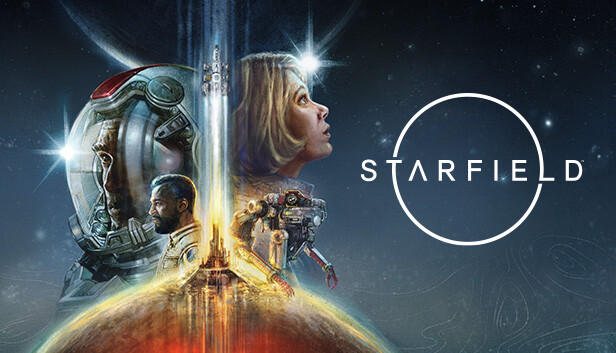
At the outset, I must admit that I had very high expectations of this game; probably unrealistic and unfair expectations. That said, I can’t help but feel disappointed after having put about 60 hours into the game. My opinion of the game may not comport with broader criticisms; I haven’t checked. But, as you already know, my opinions don’t have to be yours.
For background: I completed the main story, the companion missions for several of the characters, the Freestar Ranger questline and the Vanguard questline. I spent an inordinate amount of time taking bounty missions to neutralize Crimson Fleet ships or Ecliptic Mercenaries so that I could level up.
That last part was, perhaps, one of the most frustrating parts of the game. Character progression is locked between 82 different skills, each with four levels. Some of these skills–many of the combat ones–aren’t necessary. I found myself doing just fine at the hardest difficulty level with only about six points spent in the Physical and Combat skill trees. On the other hand, I dumped lots of points into the Science and Tech trees because some of the parts of the game I’d looked forward to most (building outposts and spaceships) required a great deal of investment to fully enjoy. The missions I completed in search of the next skill point were repetitive–just fine if I wanted somethign to do while listening to an audiobook, but insufficient for enjoying the thing itself.
In most things in life, I value substance over style. In Starfield, I loved the visual style of the game, with a mostly low-fi feel of hardscrabble colonists trying to make it among the stars. But I found the substance greatly lacking. Each faction has one main “city” (which is far too generous a word, as these were more like well-established villages), and the entire explorable system only has about ten “hub” locations where you can manage your ship, resupply, find story missions, etc. In general, for having 1,000 planets you could land on, the galaxy felt really empty, both of people and of stories. I understand that a good portion of that is a matter of the realities of programming, storage size, computing power, etc.
The factions that govern those locations seemed all too cliche as well. You have the United Colonies, your generic “democracy in space” faction with its UN-like governing council and penchants for militarism and capitalism. To counter that, you have the Freestar Collective, a generic affiliation of liberty-loving space cowboys. The third “major” faction is the Crimson Fleet, a group of space pirates. While they are a joinable faction, I shot too many space pirates too early in the game to ever have a chance of being welcome at their HQ space station. There’s also Ryujin Industries, but I lost interest in the game prior to starting their storyline.
Then there’s the House of Va’Ruun, a generic and poorly-defined space cult that likes serpents; the Ecliptic mercenaries, your generic “bad-guy” mercs who seem to be doing a lot of things across the galaxy without much reason; the Trade Authority, a generic syndicate dealing in illicit goods behind a semi-legitimate storefront; the House of the Enlightened, your generic do-gooder space atheists; the Sanctum Universuum, a generic faith organization without much explanation of actual beliefs; and the Spacers, an eclectic group of space crazies removed from Firefly’s Reavers only by a lack of grotesque body-modification and unshielded reactors.
If I’ve used the word “generic” overmuch, I hope that offers some microcosm of what I felt playing the game.
I did not form a connection to any of the characters in the game. I had to double-check to see if the voice actor for Barrett was the same person who voiced Preston Garvey in Fallout 4 (he’s not)–Barrett annoyed me to such an extent I had convinced myself they were one and the same, perhaps an intentional (and cruel) joke played on Starfield players who’d come from Fallout.
Speaking of Fallout 4, I couldn’t help but make comparisons, particularly as I got closer to the end of Starfield‘s main story. I really disliked the main line of quests in Starfield, which made me think, briefly, of how far Bethesda’s writers had fallen since the last Fallout game (not counting Fallout 76, of course, which I actually enjoyed, but more because of playing with friends than the game itself). I quickly remembered that I’d hated the main story in Fallout 4 as well, so this was probably just par for the course. But I really enjoyed individual quests and many (maybe most) of the side quests in Fallout 4, where Starfield‘s quests felt generic (there’s that word again) and, frankly, uninteresting. It was the gameplay loop of gear and gaining skill points that kept me playing the game, not the setting or the story, which ultimately left me feeling like the time spent on the game had been wasted, not used to indulge in a deep and entertaining fantastic world. As gameplay loops are intended to be addictive, and my discipline in resisting them is relatively low, the game began to feel like a hated dealer to whom I consistently returned for just one more hit, chasing a vaguely-remembered high I’d probably never find again after the first few hours of the game.
If you’ve played Fallout 4, add some quality of life improvements, then add some new quality of life problems, and then add starships and space combat, and you’ve basically got Starfield. I understand that the game was built on a “new engine” (or at least an iterative improvement on previous engines used by Bethesda), but the game looked and felt much like Fallout in its menus and UI. Also like Fallout, resource management for building outposts and improving gear was mind-numbingly cumbersome.
I did enjoy the spaceship building–modifying my existing spaceships and building new ones from scrap was my favorite part of the game–but it just wasn’t enough to overcome my other disappointments. In terms of gameplay, I really enjoyed boarding and taking enemy ships. For extra hilarity, hanging out on a planet until a Crimson Fleet or Ecliptic ship lands, running straight up their boarding ramp and inside, a jacking their ride while they’re standing around wondering what just happened proved highly amusing, if only for the first two times.
It did give me an idea, though–I’d love to see a sci-fi, less-cartoony version of Sea of Thieves set in space, with emergent story and satisfying gameplay that doesn’t need character improvement loops to make the game entertaining. Maybe we’ll see something like that in the future. I spend a little bit of time playing No Man’s Sky, which has some of that, at least.
Despite my disappointments, I see a great future for Starfield. It’ll make an amazing platform for modders to work their magic and add wonderful content (and some questionable content) to the game as they’ve done with Skyrim and Fallout. My suggestion, then, is to wait a few months or years for a plethora of mods to fill in the gaps in the base game and then venture into the stars.
One other good thing came from my playing the game–it inspired me to finally start getting Cortex Prime rules and a detailed setting together for a sci-fi game of my own. I’m calling the setting Astra Inclinant; I’m sure you’ll hear about it on the blog soon.
I’ve turned now to slowly playing through Cyberpunk 2077’s Phantom Liberty, so I’ll review that once I’m finished. Already, though, I’m enjoying it more than Starfield, and the “2.0” version of the game makes great changes, so if you’ve never played Cyberpunk 2077, or if you haven’t played it in a long while, now’s the time.
 Faith, Fiction & Fatherhood