Cortex Prime Shadowrun, Part I: Initial Rules Summary

I’m finding that I’ve got a lot of work to do in putting together the coherent and comprehensive guide for using Cortex Prime to run Shadowrun games that I’m currently working on. Because of this, I thought I’d provide some teasers of what I’ve got going on to tide you over some before I post the entire document.

What follows is a broad-strokes summary of some of the major rules selections I’ve made so far. The text is mostly taken word-for-word from the draft document for the ruleset, though I’ve made a few adjustments for clarity.

This is a work in progress, so questions and criticisms will help refine the end product!

Cortex Prime Rules Selection Summary

The following is a bullet-point summary of rules (or mod) choices that underpin the game:

• Prime Traits Sets are Approaches, Skills, Aspects, Assets and Specializations. Of course, temporary or scene-related Traits will also be included.

• SFX (and Limits) will be used. SFX are most often attached to Aspects and Assets. As will be explained below, this ruleset will make a distinction between Inherent SFX and Limits, which are automatically a part of certain Aspect or Asset choices, and Permissive SFX and Limits, which may be selected by characters in character creation or character advancement. Additionally, this ruleset uses Hardwired SFX and Limits, which are SFX and Limits that are always in play and applicable to certain situations. Hardwired SFX are described below and used primarily to translate some of the important setting ideas of the Shadowrun Universe to the Cortex Prime System—things like the difference between Augmented Reality and Virtual Reality while hacking.

• Character Injury is tracked by stress (called Shock) and trauma (called, coincidentally enough, Trauma). Per the Prime rules, this supersedes the “High Stakes” action rules. See the “Damage and Injury” Section below for more information.

• Characters are created through the “Priority Chart,” described in “Character Creation,” below.

• Plot Points are referred to as Edge when in the hands of players and Threat when in the hands of the GM. Edge and Threat are generated per the standard Prime rules except that the “Using d4 in your roll rule” to gain Edge is changed to the “Use Aspect as Complication” rule described in the “Custom Rules” section.

• The Test-Created Assets Mod is used.

• None of the Prime “Plot Point Mods” is used. Plot Points are stored in the Bank.

• Characters improve through the “Session Histories” rules.

• The standard “Effect Die” rules are used.

• Standard “Random Difficulty” Opposition is used.

“Custom” Rules

• This ruleset uses Rob Donoghue’s ideas for “Dice Cracking,” mostly during character creation. Under this rule, a die may be “cracked” into two stepped-down dice, i.e. a d8 can be used as 2d6. During character creation, this allows for more highly-skilled but specialized builds, jack-of-all-trades, master-of-none builds, and a number of steps in between.

• As mentioned above, additional rules involving SFX and Limits are used—Inherent SFX and Limits allow the feel of certain aspects of Shadowrun to be incorporated inherently into certain power sets. Additionally, Hardwired SFX and Limits help to reinforce the setting.

• Rather than Distinctions, this ruleset uses Aspects. Aspects are treated much like Aspects in Fate RPG—they may be added to a player’s dice pool when the Aspect is beneficial, or the player may gain 1 Edge by adding the die to the opposition dice pool when the Aspect hurts the character. Aspects may have dice of any step rather than always being relegated to the d8 of Distinctions, but because the same die is rolled in negative situations (rather than a d4), having a higher Aspect cuts both ways. The intent of this rule is (other than using Aspects from Fate) to play up the gritty and noir-ish feel of Shadowrun (where characters are often their own worst enemies) and to mechanically reinforce the narrative description of a character’s important qualities. Aspects may have SFX associated with them, but none are Inherent.


Fiction & Fatherhood Update and Roadmap

Most of what I’ve posted about lately has been theological in nature, so I thought it might be good to give some of my readers more interested in other aspects of the blog an update and information about what to expect in the future. Here we go:

Fiction

I’m currently working on the following for my fiction:

Avar Narn Novel

By the end of NaNoWriMo last November, I’d put on paper what I estimate to be about 40% or so of the novel. I’ve been editing and slowly rewriting scenes and plot lines for this portion of the book and have the intention of attempting to finish the first draft during NaNoWriMo this year. I may be looking for early readers of drafts, so contact me if that’s something you’re interested in.

Short Stories

I’d like to put some more short stories on the blog to give readers a better feel for my writing. I’ve got one currently under way set in the world of the Worldbuilding Example Series. Not currently sure whether most of what I work on in the near future will fall into that setting or into Avar Narn; we’ll just have to see. I’m also not sure whether I’ll try to submit the short stories anywhere before posting them here–that may depend on how good I feel they are. Again, if anyone out there is interested in critiquing and helping to edit some of these, shoot me a message.

Dark Inheritance

I’m a pretty big fan of the Warhammer 40K universe. While the logic of the setting is highly questionable at times, it’s a science fantasy setting I spent a lot of time in while I was younger, I respect the depth of accreted material over the years since, and it’s just plain fun. Also, there’s a new 40K roleplaying game (Wrath & Glory) due out about August, and I’m excited about that.

Dark Inheritance will be an expansive campaign for Wrath & Glory. It will be posted here in PDF format for any gamemaster who wants to run it for their players. I’m excited about this project as a different form of writing (for public consumption) than I’m used to, and I’ve come to the conclusion that I need to be writing full story arcs for the RPGs I run rather than building stories on the fly in the last minutes before it’s time to game.

Since the ruleset won’t be out until August or so, the campaign won’t be published until after that. But I’m working now on the story arcs, flow of the campaign and locales and dramatis personae, so it hopefully won’t take me long to add the rules-based information after I have it in my grubby hands.

Cortex Prime Shadowrun Ruleset

As I’ve mentioned in other posts, I’m a big fan of the Shadowrun setting. Not so much the rules. I am, however, a big fan of the Cortex Plus system and its soon-to-be-released successor, Cortex Prime. So, I’m working on a ruleset for Shadowun using the toolkit that Cortex provides.

This has been done before by others, but I’ve never seen a conversion done that I really liked, so I’m doing my own. Cortex Prime has also not been fully released yet, but I expect that it has enough in common with Cortex Plus that only minor tweaks will be required after I have the new rules.

The Cortex Prime kickstarter said to expect a first draft of the rules in the next week or two nearly three weeks ago, so I assume I’ll be able to wrap this project up sooner rather than later.

Yes, that’s a lot of projects. Yes, if I focused on one at a time I’d get at least something to you faster. But that’s not how my creative side works, so it is what it is.

Fatherhood

Tonight, K and I begin several days of refreshing our training as foster parents. We are currently scheduled to renew our home study on July 5th. If all goes according to plan, we should be fully licensed for a new placement shortly after that.

We’re not yet decided on the timing of a new placement, but I would expect that we will take one sometime between late July and early September.

When there are kiddos back in the house, I’m sure I’ll have a lot more to write about in the currently-on-hiatus “Fatherhood” section of the blog.

Wonder Woman: Some Thoughts

I know, I’m way late to the game. I’m not a big superhero fan (being that I like my fiction a bit grittier, though I acknowledge that there are some gritty comics), so I didn’t see Wonder Woman until it happened to show up on one of the streaming services to which we subscribe.

I didn’t like it.

I didn’t like it, not because it wasn’t entertaining (it was) or I had any issue with the acting (it was pretty good) or I didn’t like the setting (WWI is interesting). I didn’t like it because of the way it argued against its own narrative.

SPOILERS AHEAD.

If you haven’t seen the film, or have forgotten it, or have paid no heed to the spoiler warning, the main conflict of the film turns on the conflict between Wonder Woman (as champion of the mythical Amazons) against Ares, the god of war. In the story’s twist on Greek myth, Ares killed the other gods in a war over humanity but was injured himself such that he is only returning to exert his influence to destroy humanity in the early 20th century.

A key point of his plan is to create a souped-up chemical weapon (an improved mustard gas, if you will) to prevent an armistice from ending World War I so that humans will keep fighting and killing one another because Ares believes they are evil, selfish beings that deserve to be wiped out.

You can bet my ears perked up at this, because this is an existential-level question about the nature of man. An interesting set-up, but poor followthrough. Despite some platitudes between Diana and Steve Trevor about how you can’t defeat the kind of evil that Ares simultaneously represents and accuses humans of possessing with more violence, that’s really the only tool they employ (except perhaps for Trevor’s attempt to detonate the poison gas at a high enough altitude to render it harmless).

I couldn’t help but compare Wonder Woman to the poison gas itself–she functioned in most respects as a weapon against which there is no ready defense. If she entered a room full of German soldiers, you can bet that they were all dead within seconds despite the feeblest of attempts to defend themselves (which was the best that they could manage given that Wonder Woman herself is later revealed to be a god).

And thus, despite a clear intent to communicate something more, the film falls fatally into that great American lie: that the road to peace is travelled by being stronger than everyone else and able to coerce them into following your idea about what is good–or else.

Violence is never more than a temporary solution that causes as many future problems as it overcomes in the present. I’d like to say that that’s the reason I never really got into superheroes like many of my friends did–this latent power fantasy that we all in our darkest selves want to own, the ability to be forced, coerced or conquered by no man and no thing, thus establishing what is “good” and “true” by fiat.

I am not against fictional violence. I play and enjoy combat-oriented video games and tabletop games, preferring those that force tough moral choices. I watch and enjoy action movies and TV shows that often feature violence. They are exciting and when death or severe injury is on the table, the meaning of the action is heightened. This is excellent for narratives and games, but not so much for real life.

Thus, I think it’s important that we treat characters a little more realistically. Not that we can’t or shouldn’t have characters with kewl powerz, but that we take the time to nuance the choices and morality of those involved in a story. Maybe this is why, ultimately, I prefer my fiction gritty: it’s easier to put into context people who are broken and flawed participating in violence because they are unable to take more noble courses of action, separating my enjoyment of their struggles and stories from my beliefs about right behavior and moral action when real lives are at stake.

So, while the film was well-acted and well-shot, I just couldn’t get over the characters’ actions arguing so strongly against the values that they claimed to espouse. The cognitivie dissonance I felt on their behalves became too much for enjoyment.

Review: Far Cry 5: No There There

As a writer of both fiction and theology, the premise of the latest Far Cry game (creatively entitled “Far Cry 5”) quickly piqued my interest. Where the previous games in the series played upon the otherness of exotic locales, the latest installment brings the action close to home, setting us in (fictitious, though the geography is based on real geography in the southwest corner of the state) Hope County, Montana, a strange community of traditional heartland folks, stereotypical “preppers”–and a mysterious and dangerous cult calling itself the “Project at Eden’s Gate.”

The premise of such a location is full of narrative possibility, particularly in the current political and religious background of America. Here are some of the things I hoped to find within the game:

  1. Some investigation of the interplay between certain types of Christian fundamentalism and the Prepper mentality. Though entirely unscientific, my own experience with Prepper culture (some of which is through personal encounters, but most of which is through the admittedly not-entirely-trustworthy media of the internet and reality TV) seems to indicate a strong correlation between pre-millennial dispensational theology and Prepper culture. On the more disturbing end are those with even more extreme spiritually-based conspiracy theories that create within them the fears that lead to prepping for the end-times. Here, I should mention an unsettlingly-common belief that demons or fallen angels have infiltrated American government (and/or foreign governments) and are purposefully driving us to apocalypse. Yikes! This whole subject merits a post of its own, I think, but that’s for another time.
  2. Narrative that deals with the interplay between Trumpism and Christianity–the ways in which Trumpism distorts Christianity into a self-justifying parody of itself and the ways in which more honest Christianity defies the values of Trump and his compatriots.
  3. Tension between cult beliefs and traditional Christian beliefs.

Was I naive to expect any of these things? Of course I was. On the other hand, as video games are pushing into a more maintsream and respectable narrative medium, we should be expecting our games to push the envelope, to make philosophical arguments and investigate both theological ideas and political ones. Spec Ops: The Line is an excellent example of a game that’s already done this, as are the Bioshock series (is there much that’s more interesting than a well-crafted video game that investigates a philosophical system like Rand’s Objectivism?) and games like Heavy Rain.

And to be fair, the game starts off in a misleadingly promissing way for my hopes. You play as a rookie deputy sheriff in Hope County, Montana; the game starts with you in a helicopter as part of a joint sheriff’s office and federal agent task force to arrest Joseph Seed, the “father” and prophet of the Project at Eden’s Gate. Walking through the Eden’s Gate compound, surrounded by tense believers with automatic rifles, knowing what you’re there to do creates a great dramatic moment with which to launch a story.

It gets better. You approach Joseph Seed to arrest him, and he does not resist. He does tell you that God will not let you take him. Exactly what you’d expect a cult leader to say. But his prophecy becomes reality. As you return to the helicopter and it attempts to take off, fanatical cultists swarm the vehicle, with some even throwing themselves into the rotor to cause the chopper to crash. Joseph leaves the wreck remarkably unscathed and with the obligatory, “I told you so.”

That’s where the narrative peaks, unfortunately–right when it poses the following fascinating questions:

  1. Was it divine intervention that Joseph Seed walked away from the crash, or was it simply fanatical human action combined with coincidence and luck? This search for an understanding of whether some felt but unprovable synchronicity lurking behind human events is real or merely imagined is a fundamental existentional question.
  2. As a corrollary to the first, is Joseph Seed right? Is he a prophet? Of course, we never really get a clear view of the theology of Eden’s Gate, so this question falls quickly by the wayside.
  3. Has America, through its recent history, culture and politics created a landscape ripe for the likes of extremist cults?
  4. What do you do when faced with a violent cult using the trappings of Christianity but promoting patently non-Christian courses of action (Eden’s Gate are murderers, thieves, abusers, drug pushers, kidnappers and a whole slew of things that you’d think would give some of its members pause, but this is never really addressed). Is violence a legitimate means for the Christian to resist evil being done in the name of Christ (though I don’t think that Joseph actually ever mentions or alludes to Jesus in the game if I remember correctly). Under what circumstances? Can a cult like this really be taken down by violence, when the expectation of violence and aggression from external sources feeds directly into their eschatological expectations?

Instead, we are treated with a two-dimensional bad guy, a stereotype onto which the elements of religiosity have been crudely grafted. Joseph Seed is made to look distinctly like David Koresh of the Branch Davidians, complete with 90’s-style yellow-tinted aviator glasses. He quotes (paraphrases, really) the Book of Revelations, but never mentions any other part of the Bible and never makes any concrete theological assertion–only claiming that the end is coming and people must repent and be cleansed of their sin. By sin, he apparently means the extra-biblical “seven deadlies.” One minor caveat to this–the signboard of the church in Fall’s End (the one non-Eden’s Gate church in the game) does have a reference to a verse (but not the text of the verse) in Jeremiah that warns to beware of false prophets.

The game sends you on a blood-soaked path of murderous resistance to Eden’s Gate without sufficient self-awarness to question what that really means, underlining it only with a repeated chorus of “America, Fuck Yeah!” The other characters in the story are likewise various survivalist and prepper stereotypes that bleed into a muddy morass that deprives the game of any real humanity.

And the cultists aren’t really even that convincing. Turns out, it’s drugs, not beliefs, that create the fanaticism of the “PEGgies,” as the game calls them. The enemies are dehumanized and the bodies in your wake only a tally of progress. This may be lamentably American, and perhaps that disturbed me most about the game (kudos to the writers and designers for that if it was intentional and not a sad symptom of our culture).

If you came to this post looking for a review of what gameplay is like, I’ll have to direct you elsewhere, as there are already a plethora of reviews to handle that. But I will admit that, if you like the previous Far Cry games, you will enjoy playing Far Cry 5. It’s the “theme-park” experience to be expected in this line of games and it does have a humor and gameplay style deep enough to entertain. I played through the entire campaign and–so long as I didn’t think about it too much–enjoyed it.

But I finished the game disappointed, as is common when some narrative promises us great ideas and interesting story in the previews but fails to adequately exploit and explore those ideas in the actual doing of the thing. In my struggle to ideologically bolster the lackluster storytelling, I even watched (yesterday) the half-hour movie teaser that Ubisoft made for the game (it’s on Amazon Video). This did nothing for me (though I did like the one they put out for The Division some time back).

And maybe that’s the greatest commentary about current culture to get from this game, whether the creators made the commentary intentionally or just happen to magnify this running theme. And that’s the idea that much of American Christianity is really only the cultural stylings of the faith appended to ideas that may be “American” but almost certainly aren’t Christian–the idea that Christianity is a style of doing things rather than a substantive approach to existence. Then again, that could be a concern of mine fully projected onto the game in a desperate attempt to create some meaning where I could find none.

That ultimate emptiness and sense of unfulfilment was all that remained after I finished the game and when I think back on the hours I spent playing it–a great opportunity lost by the writers, either because they did not understand the subject matter well enough to intelligently comment on it while coopting the trappings for the style of their game or because they opted not to make any particular commentary for fear of hurting sales. That’s understandable in a commercial sense, and money often influences all forms of art. But I can’t help but feel that it’s a cop-out anyway.

So, for the TL;DR (I know, it should be at the beginning, not the end): Far Cry 5, a game to play for mindless fun and a few cheap laughs, but don’t expect any depth. There is no there there.

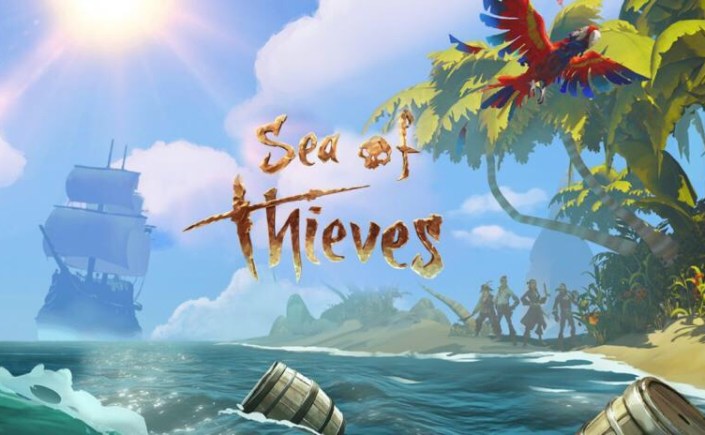
For the Love of the Game: Sea of Thieves (Mini) Review

I love to sail, but I have few opportunities to do so. K’s not a fan, and I do not own a sailboat. We probably live close enough to water where I could rent a sailboat, but it’s something I’ve never really thought to do (though I’m thinking about it now!).

As you well know, I also like to play video games. I have to admit, though, that this is a guilty pleasure. Most of the time I’m playing games–though I’m enjoying that time–I wish I was doing something more productive (like writing). Perhaps what frustrates me most is that I recognize I’m often falling victim to the addiction cycle purposefully designed into modern games–do repetitive acts to be rewarded with more prestigious (but ultimately meaningless) rewards for your efforts.

This is what I like about Sea of Thieves. It has the typical multiplayer online game addiction cycle, but it’s just not that addicting. The game content is relatively limited and will certainly need to be expanded for the game to survive (I have some recommendations if Microsoft or Rare would only ask), but for now, I think it’s a benefit. It’s a benefit because I find only one good reason to play the game: because you enjoy it.

The “analog” feel of the game is its strongest point. Want to read a map? You have to hold it up to your face and read it. Need to count paces to buried treasure? Hold up your compass to count your steps. Need to sail the ship? You need to work the anchor, the wheel the length of the sails and their angle to the wind. I certainly wouldn’t call the physics perfect, but it provides enough realism that you can gain advantage when attacking another ship by holding the wind gauge, can use the anchor to execute a bootlegger turn, can (and sometimes must) effectively tack into the wind and generally get the feel for sailing.

If your ship takes damage, you’ll need to get out your wooden planks to patch the hull, and then you’ll need to get out your trusty bucket to bail out water.

Although I’ve been completing “voyages” (the games version of missions or quests), it has been the enjoyment of sailing, of searching for treasure, of moving around the ship to do all the things that must be done to effectively sail or fight, that keeps me coming back to the game.

I’ve been a big fan of the game “Artemis,” in which you and friends operate the various stations of a Star Trek-like spaceship to accomplish missions (mostly defending space stations and destroying enemy ships). I love the necessary cooperation of that game, and Sea of Thieves hits that sweet spot in a more polished game. Working with my friends to effectively sail a galleon has been great fun and–sometimes–realistically frustrating.

It’s the game for the game’s sake that is so refreshing. Play of the game is player-driven and somewhat open-ended. Will this keep me coming back over the long term? I don’t know, but I hope the immersive style of the game that begs you to play just to play becomes a future trend in games as a whole.

Kingdom Come: Deliverance – Playing at History (an early review).

I backed Kingdom Come (KC:D) a long time ago–maybe more than two years. An open-world historical medieval RPG? Yes, please! Just the sort of thing that pulls at the desires of a person whose favorite video game is the Witcher 3 and who, for a time, was a professional student of the medieval.

There was, of course, a long roller-coaster of development that followed–teasers, delays, the realization that my computer wouldn’t be able to run the game, the revelation that it would be released on console and so my computer didn’t matter, etc., etc.

Finally, it arrived this week, and I’ve spent some significant time becoming immersed in the Bohemia of 1403. With the caveat that I’m nowhere near finished with this game, this is what I have to report to the present:

If you are the type of person who plays Fallout and Skyrim on survival mode, this game will appeal to you. You must sleep and eat. Your food rots over time, and spoilt food will make you sick. Eat too much and you’ll be sluggish. Take an injury (whether in combat or not!) and you might begin to bleed. Fix it with a bandage quickly or prepare to die. Keep your weapons and armor in good repair or they’ll become ineffective. Get your clothes bloody or dirty and people will notice–and they don’t take you as seriously when they do. Carry weights are (relatively) realistic, and you improve your skills by using them–not easy to do when it comes to using a sword.

The game is relatively “on rails” for the first few hours of play–while you can do your own thing for long whiles at a time, only advancing the main quest will get you to the point where you can seriously begin to play the game. It’s a slow start that left me, at first, with an unfavorable impression of how gameplay with develop that is still being dispelled as I move through the game.

So far, the game doesn’t feel as “open world” as I had hoped. It is true that there are sidequests (and perhaps I just haven’t discovered many of them yet) and you can easily spend hours just “living” in the medieval world–practicing a trade, acting as a merchant, traveling and fighting bandits, etc. In a certain way, I think you could ignore the quests altogether and simply view the game as a “medieval emulator.”

Further, there seems to be an intimation that the world will be expanded and even more opportunities for self-directed tasks will become available as the game progresses. Despite my several hours of play, I’m sure that I just have no gotten that far into the story yet.

And that main story is, at least, an interesting one. Set within a discrete historical event–King Sigismund of Hungary’s invasion of Bohemia on “behalf” of his half-brother King Wenceslaus IV (“the Idle”), who Sigismund had kidnapped, you are thrust into the world as the son of a blacksmith and the vassal of a lord loyal to Wenceslaus and targeted by Sigimunds’ invading army.

The attitudes and motivations of the characters seem deep. You get the expected behavior of some nobility toward the peasantry (particularly in Sir Hans), but this is never flat or without nuance:you earn the friendship and respect of Sir Hans as the story progresses and he is–in private at least–willing to admit his own faults and the shortcomings of his behavior. The struggle between adherence to duty and ideals when faced with the grim necessities of the day plays out on multiple levels, both personal and political. No assumption of medieval life is treated as straightforward, with a range of different lifestyles and living situations that more accurately portrays the era in a way we often miss in movies, dry history books and, especially, fantasy roleplaying, where the “medieval” is more often a pastiche or a facade than an actual description of setting.

Despite this, at least as far as I’ve played, the real joy of the game is in the way it immerses you into the historical world with a sense of realism and reasonableness. For instance, fighting several poorly armed bandits by yourself is difficult; attacking multiple well-armed or well-trained enemies (to say nothing of those who are both) is near suicidal. Unless you use tricks, like stealth, surprise and ambush, weakening the enemy with ranged weapons, hit and run tactics and any other approach that generally makes the fight less fair. This was the reality of the middle ages, just as it is today–no matter how good you are, fights are brutal and deadly, and fighting honorably will likely just get you killed.

Each fight is, however, very interesting. As a student of historical medieval martial arts myself, as both scholar (my Master’s Thesis was entitled “Shakespeare, the Sword and Self-fashioning”) and a martial artist (mostly with the Association for Renaissance Martial Arts or ARMA), I’m especially keen on in-game fighting that captures something of the speed, grace and precision of actual swordplay–something very difficult to do in a video-game because of the infinite array of techniques, maneuvers and responses in combat with a blade. KC:D does the best I’ve seen yet, with the combat not only accounting for the directionality of attacks, but incorporating parries, feints, grappling, counter-attacks and animations that perfectly capture some of the techniques used. This is no clumsy hack-and-slash; the only video game that has even come close to this kind of swordplay was Mount & Blade (whose new edition should be out later this year). While satisfying, this also means that combat is difficult and partially based upon your own twitchy-skill. It should be noted that there is only one difficulty mode for the game (so far as I’ve discovered): realistic.

As a side note, I am note a fan of the Dark Souls games. I just feel that should be said when I communicate how much I’ve enjoyed the difficulty of the game.

For the first few hours of the game, I was very frustrated by the save system. The game automatically saves when you sleep, complete an important quest step, or drink Saviour Schnapps. Saviour Schnapps is expensive, takes up inventory space, and can get you drink. At the beginning, when your skills are low and the game is at its most difficult, you will die a lot and have to replay moderate sections of the game (at least I did). As I progressed into the game and got into the mindset, I actually began to enjoy the save system. In a game that strives for immersion and realism, this save system reinforces these without becoming full-on rogue-like. You cannot get lucky for a minimal gain, save, and replay until you get the next minimal gain and save again. Three men in armor down that path? Best just to go a different way. This goes a long way into breaking the hero mentality we usually carry with us into video games; I particularly respect that.

This is not to say that playing heroic (or superheroic) characters in games is not appropriate, good design, or fulfilling–it certainly can be. But the occasional game that makes us live in an alternate world as a regular person–even one who may be an exceptional fighter (though still clearly mortal) provides a truly rewarding exception as well. In some sense, I do wish the game had some aspect of the fantastic to it, but that’s really only because I’m such a fan of fantasy. Realistically (and more sensibly), it’s great to see such an enjoyable game and interesting world and narrative created without any need to resort to the “unrealistic.”

As is probably indicated by the amount of words I’ve dedicated to this preemptive review, I’m really enjoying this game. If you’re willing to devote the time to acclimate to this game’s approach to play–and you’re willing to accept the design principles on which the game was built–I think you’ll find a lot to enjoy here.

In some ways, at its heart, this game is a history lesson you play–one about everyday living in the medieval world.

Destiny 2: A Horror Story in Reverse

I’d fought my way through waves of countless enemies, scaled strange landscapes and tracked down my quarry, a Fallen Captain supported by underlings, powerful Servitors and other baddies all determined to end me.

Getting to the point where I’d finally cornered my prey and he could no longer flee had cost me dearly–I had no ammunition for my Power weapon, only a handful of rounds left on my Energy weapon, and my Super would not be charged for what seemed like an eternity.

Desperate, I charged in, Kinetic weapon blazing. Return fire shredded me to pieces in milliseconds, my body ripped apart. I died.

Seconds later, I was back, resurrected by my Ghost companion. Seconds after that, I was dead again, but so was one of the Captain’s minions. This process repeated in multiple iterations–I respawned, I took out one more enemy, I died.

But respawning in Destiny is not merely a handwaved mechanic–it is a conceit of the gameworld. As a Guardian of the Light, your Ghost has the ability to reconstitute your body infinitely. There is no death for a Guardian.

As I whittled down the my enemy through sheer will, pure attrition and an unending supply of lives to throw at the problem, I began to think how that Fallen Captain must feel, watching as he repeatedly defeats an enemy who simply returns a few seconds later to destroy more of his brothers-in-arms. Movies like Friday the 13th and Halloween immediately came to mind–the unstoppable, unkillable force who relentless pursues his vengeance.

The terror and helplessness the Captain must have felt surely became too much to bear. I shortly relieved him of his worldly worries, but I can’t say that I felt good about it. Certainly not heroic (no matter what the difficulty level told me).

That’s when I realized it: Destiny 2 is not sci-fi; it’s a horror game where you play the role usually referred to as “the bad guy.” While the world does set things up as a struggle between Light and Darkness, and you are told that you’re on the side of peace, truth and justice, and your enemies do some despicable things, I’m not sure that the gameplay bears that out.

Destiny 2 was not a game I expected to give me some sort of existential crisis; I was only looking for some fun co-op with friends or a mindless activity for my hands while I listened to an audiobook. But what I got was a great uneasiness about the setting, one I can’t seem to shake.


Punctuation

This is going to seem like a relatively random posting, but as I’ve been writing on my novel, reviewing a friend’s novel and having some discussions about Biblical interpretation, I’ve been thinking a lot about punctuation lately. Here are some of my musings:

Punctuation is critical in all forms of writing; understanding and properly using punctuation lends authority to anything you write. In my experience, most people do not use proper punctuation. I don’t mean that they make occasional mistakes in their punctuation–everyone does that. I mean that they flagrantly ignore the rules of punctuation and how to use (and intentionally misuse) those rules to greatest effect.

The most egregious culprit is the semi-colon. When I was a graduate student and teaching assistant in English, I would (usually frustratedly and spontaneously after grading the first round of tests) spend a class period reviewing grammar and punctuation with my classes, with a particular focus on the semi-colon. Much to my dismay, what I typically found is that after this session, many students would liberally disperse semi-colons throughout their writing in an effort to seem more capable writers. “What’s the problem with that?” you ask? Nothing, if done correctly. But my students seemed to sprinkle semi-colons over their papers like literary glitter without regard for whether their sentences required glitter. Have I mentioned that I hate glitter? It’s craft herpes–once you’ve contracted it, you’ll be finding it on you forever.

So my students committed a cardinal sin of writing–using something (whether punctuation, a word, a stylistic device, etc.) you don’t understand in an attempt to come across as more talented than you are. Like most good writing techniques, punctuation is most effective when subtle, when it influences the reader without their perceiving that it is doing so. Like much social subtlety, this is crass when recognized and only acceptable in polite society when carefully concealed. The improper use of punctuation breaks the illusion, making this manipulation painfully and embarrassingly clear. A misused piece of punctuation–whether a comma splice or an unneeded semi-colon for instance–thrusts itself into the mind of the reader like an unwanted and socially awkward guest who cannot read the room. It breeds mistrust of the writer and should thus be avoided at all costs.

I think many of us, myself included, are embarrassed to look up rules of punctuation when we don’t know a proper usage. These are things we’re taught in elementary school, so we assume that they are so basic that a person of reasonable intelligence would not forget them. Nothing is farther from the truth. We start learning punctuation and grammar early because these things are difficult and require much practice. Writing is like a muscle, not like riding a bicycle–it atrophies if unused. Because of that, there is nothing wrong with having to refresh your memory about “basic” grammatical concepts. If it’s that big a deal, clear your browser history afterward. But, for the love of God, look up the rule in the first place if there’s any question.

The opposite of the above is, thankfully, also true. The proper use of punctuation is an extremely effective aspect of writing style. To be clear, the word “proper” as used here relies heavily on context. In (most) professional writing, rules of grammar and punctuation should be kept religiously. In fiction writing or circumstances where the perspective and mind of the author are part of the writing itself, the rules should be liberally–but carefully and thoughtfully broken.

I came across an excellent example of this (and probably the impetus for this post) while starting to read a friend’s young adult novel. The novel (at least as far as I’ve gotten) is told in the first person point-of-view of a sixteen year-old young woman. The style of the writing is clipped, using short sentences, sentence fragments and well-placed punctuation to convey the fleeting, sometimes confused and quite excited thoughts of this character as she attends a sort-of debutante party that she knows represents a crucial fork in the road of her life. The character comes to life not just in her words, but in the way that the punctuation groups her thoughts into clusters, abruptly changes subjects and gives us a feel not just for what she thinks but how she thinks. That is great writing; the kind we should all strive for. I’d love to include some examples here, but it’s not my writing to share.

And in that effort, we should bear in mind that there are a number of approaches to punctuation in any writing, but fiction in particular. I would–admittedly making this up as I go–call the above example an heuristic approach to punctuation. But maybe I ought to be less pretentious and call this a “character-based” approach. Alternatives, if you like, might be to call this a “stream-of consciousness” approach or even a “Joycian” approach. The punctuation defines the character, not the author or the style of the writing itself necessarily.

We might alternatively use a dramatic or theatrical approach. In dramatic works, actors are trained to use the punctuation as keys to the pacing, pauses and breaths in speech. Here, the punctuation serves as a code to help the written word mimic normal speech patterns. I find that most people naturally follow this approach when reading aloud, whether or not the piece is dramatic. So, using this method, good punctuation should be used to assist the flow of the text for the reader and to enhance both comprehension and enjoyment of the text. Does this sometimes overlap with the first-described approach? Probably, but not necessarily. Some people don’t think or speak in ways that are easy for others to understand, and not all points of view in narrative are going to be able to characterize and define those involved in the action described.

A more formal adherence to the “rules-as-written” of punctuation would likely serve the same function as the theatrical approach, though perhaps with a different feel. The ease of communication of content is paramount here, but should not be sacrificed for other cognitive effects that might be created in the mind of the reader through creative and effective punctuation.

I don’t think that it’s necessary, nor probably even helpful, to spend a lot of time trying to categorize your punctuational approach by the groups given above (or any others for that matter). What is important is to be intentional about your punctuation. This takes us back to Professor Brooks Landon’s comment that writing is “brain hacking.” Punctuation is an integral part to how your text creates, divides and sequences images and thoughts in the mind of the reader. Your punctuation should always be calculated to bolster the substance of the text to your desired effect. Is that easy? Hell no. But it’s certainly worth the effort.


Review: The Last Jedi

This is my first review of a film instead of a book, but Star Wars merits an exception, doesn’t it?

Disclaimer: I’m a huge Star Wars fan. I don’t own a lightsaber or much in the way of memorabilia; I’ve never been to a Star Wars con; and I don’t spend any time on Star Wars-specific forums or subreddits. But I’m still a huge Star Wars fan.

I grew up on the original films, and my first roleplaying game was the second edition of the old West End Games Star Wars RPG. There’s a special place for Star Wars in my heart, and it’s probably fair to say that, as a young person, it and The Lord of the Rings had the greatest influence on my fascination with fantasy and science fiction. I’m not sure I’ve played all of the Star Wars video games ever produced, but I’m sure I’m close. When Disney “reset” the canon, I began to pick up the books as well, vowing that I’d try to keep up with the universe this time in a way I never did previously.

So, like most of us, I think I went into this film with great expectations. I enjoyed The Force Awakens, but it followed too closely to the formula of A New Hope for my tastes. A few days before my trip to the theater, I heard a glowing review for the film on NPR–this only increased my anticipation.

The Last Jedi is, to date, my favorite Star Wars film. Before seeing it, I probably would have said that Rogue One was my favorite, as (predictably) I loved its grit and its willingness to take some narrative risks that the “main” films mostly shied away from.

The Last Jedi is currently my favorite Star Wars film because it does an excellent job of capturing the wonder of the original films while throwing in modern sensibilities. From the tactical gear worn by stormtroopers to the new variety of settings (like the casino-city of Canto Bight), the visuals of the film expanded on and brought the setting out of the late 70’s and early 80’s (while still sporting that retro style and incorporating the feel of McQuarrie’s art).

More important, the film moved away from pure Campbellian structure and adopted a depth and complexity that made everything feel that much more real. Both Rey and Kylo Ren have a depth to them that lacked in previous Star Wars films, and Skywalker himself added bore a combination of concealed hope, determination and burned-out jadedness that made us (me, at least) simultaneously love and hate him.

It’s quite possible that what’s going on here is that nuance is one of my very favorite things; The Last Jedi brings nuance to Star Wars in spades. One of the greatest things about the Star Wars universe is the ability to explore it–through the films, other media, roleplaying games, etc. The latest installment gives us permission to explore more than just the variety of the aliens and worlds in the setting, but a variety of moral questions and morally ambiguous characters–such as the rogue DJ.

In this, Star Wars has finally come into its adulthood. At forty years old, it’s certainly a late bloomer, but well worth the wait.

Additionally, this film follows some very interesting trends in the setting since its acquisition by Disney. The first of these is, as a friend put it, “the democratization of the Force.” We’ve seen that in the series Star Wars: Rebels, which adds several surviving Jedi other than Luke to the canon, and its certainly a driving force (pun intended, I have) in Luke during this film.

For me, this is very well taken. As much as I love Jedi as the samurai priest-knights of science-fiction bushido–Buddhism, I’ve long been of the opinion that, from the perspective of the common person in the Star Wars universe, they’re more trouble than they’re worth. From that perspective, they tend to be self-righteous, religiously fanatic, prudish and unwelcome intervenors with a tendency to bring at least as much (and possibly more) conflict than peace. Their obsession with balance in the Force makes them seemingly culpable of making peace with some injustices and the Jedi Code (to me, at least) reeks of insupportable philistinism–they are supposed to represent light and good, but are told that they should never love and should avoid attachments. Rather than embracing suffering and attempting to overcome it, they simply attempt to avoid it altogether. If the only thing we have to fear is fear itself, the Jedi Code is–again in my estimation–emblematic of the corrupting power of that meta-fear.

I realize my nerd is showing; but you knew what this was before you started reading.

As Luke says, it is time for the Jedi to die. They ought to be replaced by a new type of Jedi who eschews a rigid and unflexible Code in favor of striving for the greatest good–in favor of following the Light side of the Force with reckless abandon. But keep the lightsabers, because they’re cool. Before the film released, there was much speculation that there’d be movement toward the philosophy of the “Gray” Jedi (look it up). I think The Last Jedi has given us some indication of that.

Not to overly combine my interests in this blog, but the message of this film regarding the Force is quite apropos for the times. It is a call to move away from the uncompromising nature of fundamentalist religion and toward the truer (but more difficult) ambiguity of seeking after good and valuing Creation and relationships. It is a condemnation of the consequences of unquestioning religious fanaticism which, paradoxically, tends to ignore and reject the deeper and more important ideals on which the religion (whichever it may be) is based.

And maybe that’s what I liked so much about this film. Yes, it was a lot of fun. Yes, it was well-written (there are some arguments about this, but I stand by my statement). Yes, the characters were good. Yes, it’s Star Wars. But most important, it’s a deeper Star Wars that allows us to struggle with philosophical, moral and existential ideas rather than giving us a mythopoeic argument for a two-dimensional worldview. It’s Star Wars that is, at its core, theological.


Review: Scott Lynch’s Red Seas Under Red Skies

I love pirates. Maybe it’s the frustration in H.L. Mencken’s quotation (“Every normal man must be tempted, at times, to spit on his hands, hoist the black flag, and begin slitting throats.”). Maybe it’s the rawness of men living by their own ideals (however misguided) and skill and cunning. Maybe it is the more idealistic aspects of piracy–a good scholarly argument exists that American democracy has more in common with how pirate vessels voted on their leaders and courses of action than with ancient Athens. I can’t put my finger on it, but I just love pirates, whether historical or fantastic.

If you read my review of the previous novel in this series, The Lies of Locke Lamora, you know that I had many good things to say about it. The characters, the tightness of the plot, the fantasy heist–all of these worked in concert to create a story I very much enjoyed.

The sequel, more or less, picks up where the first novel lets us off. I don’t want to go to far into the details lest I give too much away, but Red Seas Under Red Skies takes what works in the first novel and throws in some maritime hijinx and semi-fantastic pirates. I must admit that I had my doubts about this at first; it seems a strange turn for the novel to take after its opening (and in light of the substance of the first novel). By novel’s end, my reservations were allayed; the story and its nautical elements manage to work their way in while preserving the atmosphere and mystique created in the first book.

Again, Lynch proves a master of “narrative circles,” those precognitions and slight references that turn out to have great significance before all is done. I’m not sure that I can remember any “loose ends” left at the end of the novel that proved unsatisfactory.

What really interested me about this novel was its focus on the relationship between Locke and Jean. Their brotherhood drives the plot, the complexities of their emotions toward one another and their interactions ring true of familial relationships, and the story ultimately turns on the extent of their willingness to sacrifice for one another. That’s a strong–and effective–message for a fantasy novel.

Perhaps that’s the best compliment I can give Mr. Lynch. If stories ought to entertain, educate and inspire, the fantasy genre manages to reach its highest art when it manages to effectively do these things with style. As more writers like Lynch are able to do this, the fantasy genre gains legitimacy, legitimacy it greatly deserves, as the fantasy genre allows us to address all manner of existential and philosophical questions with creativity and relative safety (compared to the cost of exploring these questions in “real life”).

Don’t start with this book; I don’t think it stands alone without the extensive character background for Locke and Jean in The Lies of Locke Lamora. But if you’ve read the first novel, I highly recommend that you proceed to the second.